
Global Flexible Packaging Market: Trends and Forecast 2026-2031
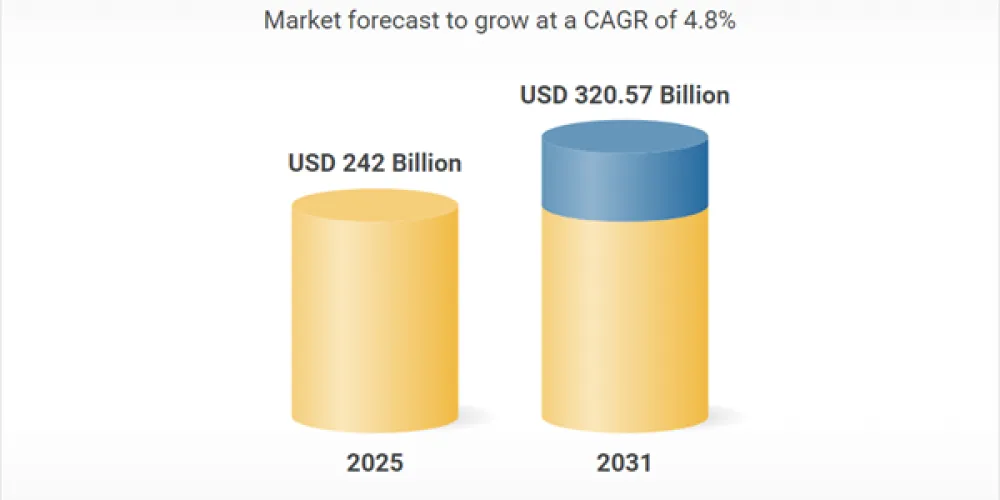
According to a comprehensive research report published by ResearchAndMarkets.com, the global flexible packaging market is on a robust growth trajectory. The industry is projected to expand at a Compound Annual Growth Rate (CAGR) of 4.80% between 2025 and 2031. It is estimated that the market valuation will rise from $242 billion in 2025 to $320.57 billion by the end of 2031. Currently, the bags and sacks segment dominates the landscape, commanding a 43% market share.
The APAC region remains the global leader, holding a 38% market share fueled by the growing demand for packaged foods, the rapid expansion of e-commerce, and regional initiatives focused on recyclable packaging. China and India are central to this growth, supported by large consumer populations and increasing packaging manufacturing capacities. Meanwhile, Europe continues to sustain its market position by placing a significant emphasis on recyclability and waste reduction protocols.
Strategic consolidation has been a major theme in the industry. In April 2025, Amcor successfully merged with Berry Global, significantly increasing its footprint in the consumer and healthcare packaging sectors. In another major move, TOPPAN acquired Sonoco's Thermoformed & Flexibles Packaging business for $1.8 billion, demonstrating a clear focus on strengthening market presence in sustainable packaging solutions. These mergers reflect a broader trend of large-scale industry players positioning themselves for future R&D-driven innovation.
Product development is increasingly defined by sustainability and logistical efficiency. Berry Global recently launched the Bontite Sustane Stretch Film, which incorporates 30% post-consumer recycled content. Similarly, Amcor has collaborated with DCM to introduce recycle-ready mono-PE fertilizer packaging, which reduces the carbon footprint by 17%. These innovations underscore the industry's commitment to creating lightweight, cost-effective solutions that cater to high-volume product categories while meeting environmental targets.
Despite the positive outlook, the industry faces persistent challenges, particularly regarding raw material price volatility. Packaging converters are actively implementing strategic sourcing and pricing management to mitigate these risks. As the demand for extending the shelf life of food and produce remains a critical priority, companies are continuously investing in technology that offers superior environmental protection. The industry’s ability to balance cost-efficiency with functional performance and sustainability will be the key driver of long-term success.
Not yet comments. Be the first!
Comments · 0