
Europe weighs fertiliser risks as the Iran war disrupts supply routes
EU agriculture ministers are assessing fertiliser supply and cost risks after disruption in the Strait of Hormuz. Brussels is preparing both emergency relief and longer-term measures for farmers and the fertiliser market.
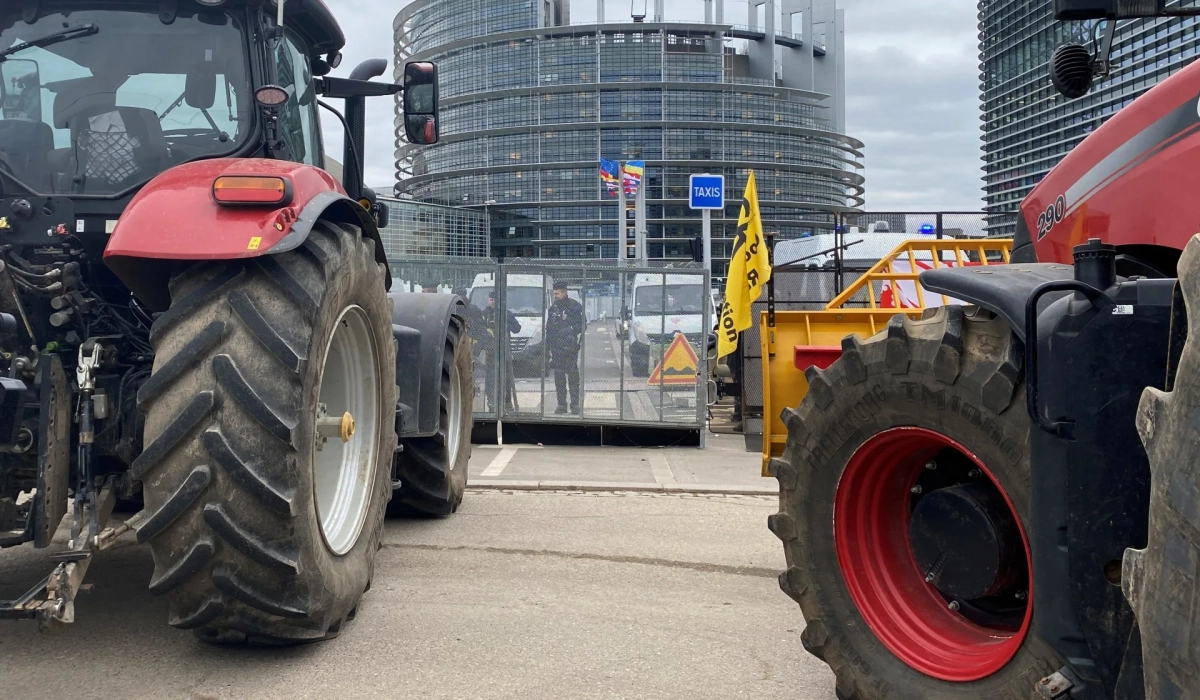
EU agriculture ministers met in Brussels on May 27 to discuss fertiliser availability as the war involving Iran disrupted global supply chains. The immediate trigger was the European Commission's new Fertiliser Action Plan, which is meant to soften cost pressure on farmers, support output inside the bloc and reduce dependence on outside suppliers. The central concern is less a sudden physical shortage inside Europe than the risk of another cost shock spreading across the food chain.
According to figures cited in the Al Jazeera report, the European Union imported about 2 million tonnes of ammonia, 5.8 million tonnes of urea and 6.7 million tonnes of nitrogen fertilisers and mixtures in 2024. Europe also makes its own nitrogen fertiliser, but that production depends heavily on imported gas. When conflict in the Gulf lifts gas prices, fertiliser made inside Europe becomes more expensive as well, even if direct deliveries from the Middle East remain relatively limited.
The Strait of Hormuz matters because roughly one-third of the world's seaborne fertiliser trade normally passes through it. For the EU, the direct exposure is modest: the Middle East accounts for only about 3 percent of the bloc's ammonia imports and 1 to 2 percent of its nitrogen fertiliser imports. Even so, Europe is being hit through higher global prices and higher energy costs. The report says nitrogen fertiliser prices in Europe are now about 70 percent above their 2024 average.
The Commission's plan combines several responses. It includes emergency financial support for farmers through the EU farm budget, liquidity schemes and more flexible advance payments under the Common Agricultural Policy. Brussels is also looking at support for more efficient fertiliser use and bio-based alternatives. In parallel, the EU has suspended duties on some nitrogen fertiliser imports, including urea and ammonia, from countries other than Russia and Belarus; those tariffs had ranged from 5.5 to 6.5 percent, and Reuters said the move could save importers about 60 million euros.
Exposure is uneven across member states. Ireland is described as especially vulnerable because it has little domestic fertiliser production and relies heavily on imports; it imported 1.7 million tonnes in 2025. Finland has long kept security-of-supply stockpiles that include fertiliser, grain and fuel, while Sweden has announced plans to stockpile fertiliser, seeds and grain as part of its total-defence strategy. At the same time, divisions are widening inside the bloc as France and Italy seek more relief from carbon-related import costs while Poland and Germany worry about protecting domestic producers.
EU officials do not expect an immediate retail food-price spike because many farmers are still using fertiliser bought before the latest disruption. But they acknowledge that the effect can arrive later: gas affects fertiliser costs, fertiliser affects crop costs, and crop costs feed into food prices, often with a delay of up to six months. For farmers, that means another period of pressure on margins; for policymakers, it raises the risk of renewed rural anger at a time when energy, fuel and input costs are already politically sensitive.