
Energy ambitions meet farmland concerns in Quebec's Montérégie region
A significant wind energy project has been proposed in the municipality of Saint-Urbain-Premier, located in Quebec's Montérégie region. The developer, FirstLight, is planning a 100-megawatt wind farm consisting of up to 15 turbines, which would generate enough electricity to power approximately 30,000 homes. However, the proposal has hit a wall of local resistance, as farmers express fears that the industrialization of their fields will permanently damage the region's agricultural viability.
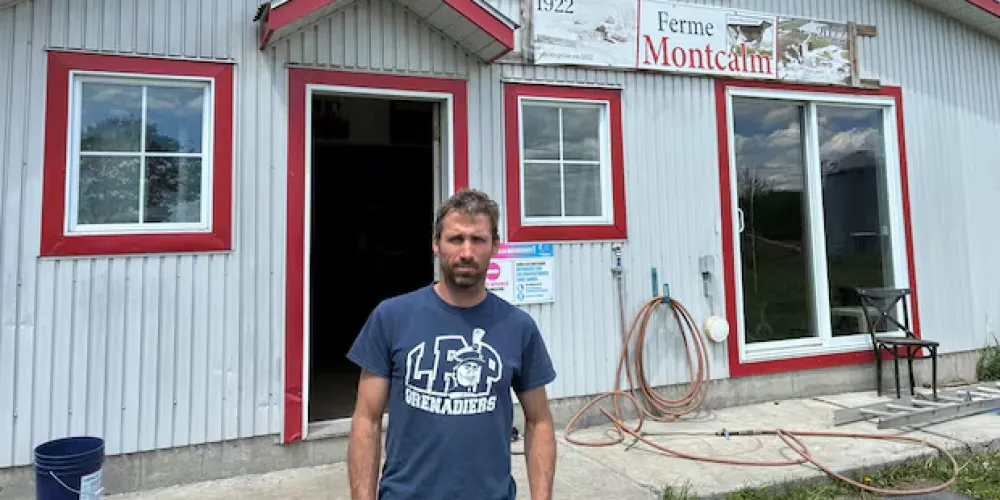
Nicolas Montcalm, a fourth-generation dairy farmer from Ferme Montcalm in Saint-Louis-de-Gonzague, highlights the emotional and economic weight of this decision. When company representatives mapped out potential turbine sites on his property—including his family's maple grove—Montcalm felt a disconnect with the legacy of his ancestors who spent decades improving the land. For many in the Beauharnois-Salaberry region, the choice represents a conflict between the push for green energy and the necessity of preserving rare, fertile farmland.
Maxine Mongeon, chief development officer at FirstLight, noted that the company has already secured option agreements with area landowners. They intend to submit the proposal to Hydro-Québec's tender process on February 26, 2027, provided they receive local municipal and regional support. Despite the technical potential of the site, local farmers face a difficult moral and financial dilemma: accept the turbines on their own property, or risk having them installed on a neighbor's land, where the noise and visual impacts would still affect them without the benefit of a financial lease.
Jérémie Letellier, president of the local branch of the Union des producteurs agricoles (UPA), emphasizes that the issue has deeply divided the farming community. While some farmers view the turbines as a source of stable, non-cyclical income, others argue that only about 1.8 per cent of Quebec's total land area is suitable for farming, making every acre precious for long-term food security. There is significant concern that turbine infrastructure could impose permanent restrictions on farming operations and future development.
Meanwhile, proponents of the project, including Luis Calzado of the Association des producteurs d’énergie renouvelable du Québec (AQPER), insist that coexistence is entirely achievable. He notes that Quebec aims to scale up its wind capacity significantly and must build where the wind and grid connections are viable. Calzado rejects the narrative that the province must choose between farming and energy, advocating for a model of integrated land use. Despite these assurances, farmers like Montcalm remain firm, arguing that while energy can be produced in many areas, high-quality agricultural soil is a finite, irreplaceable resource that must be protected for food production.
Not yet comments. Be the first!
Comments · 0