
Drought-tolerant Xynisteri grapes cut water use in South Australia
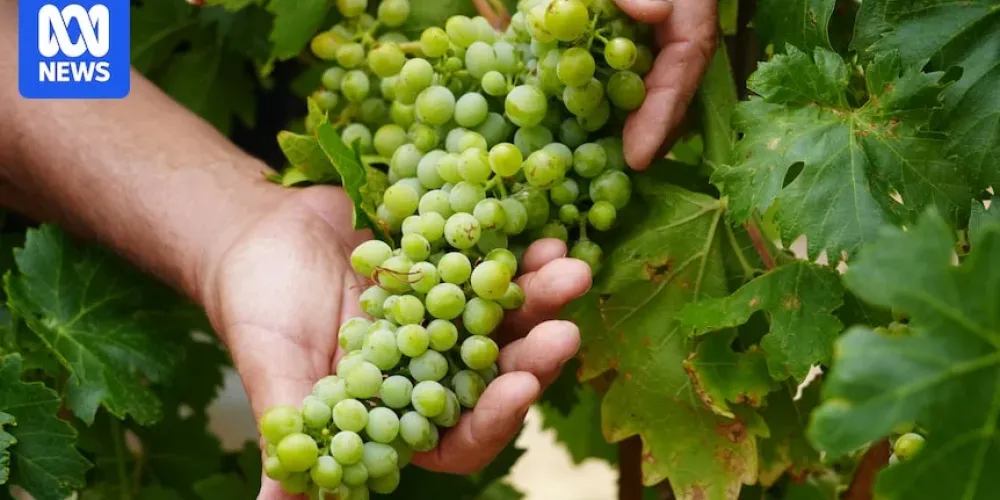
The ancient Cypriot white grape Xynisteri is emerging as a practical climate adaptation option for parts of South Australia, where growers are searching for tougher varieties as heat and water pressure intensify. In the Riverland, grower Yianni Koutouzis is harvesting the variety after a three-year trial and says it is helping reduce costs while giving growers a new sense of direction in a struggling wine sector.
Koutouzis says his 800 Xynisteri vines, planted three years ago, can go for months without irrigation, unlike his other grape blocks that need water every two days. He estimates the variety uses about 75% less water than his shiraz or chardonnay. During a 49-degree Celsius heatwave in January, the grapes suffered little to no burning, a key trait for a region that has recorded three straight years of below-average rainfall.
Researcher Alexander Copper, who introduced Xynisteri to Australia in 2018, says the grape stood out because it suits the heat and soil profile of South Australia. In pot trials, the root structure of Xynisteri was found to be three to four times the size of shiraz, and Copper said the limestone-based soils and climate of Cyprus and the eastern Mediterranean closely resemble the Riverland. The variety is also described as tolerant to heatwaves, pests and low-rainfall conditions.
The financial setting for growers remains severe. Temporary water market prices in the Lower Murray Darling Basin have more than doubled over the past 12 months to about $400 a megalitre from $187, according to figures cited by ABC. At the same time, Wine Australia says production exceeded sales in 2024-25, and some Riverland growers have been receiving less than $100 a tonne for grapes. Koutouzis said he recently dropped his shiraz crop to the ground and mulched it because there was no price for it.
The variety is also gaining ground in the Barossa. Paul and Mara Georgiadis expanded a 90-vine trial planted in 2021 to more than 600 vines across one acre and have already packed more than 450 bottles from their first vintage. They hope Xynisteri can reduce water use to half a megalitre per hectare for the season and say the crop came through 45-degree weather without any berries burning. Their first vinification yielded about 800 kilograms, reinforcing the case for alternative Mediterranean grape genetics in a warming wine industry.
Not yet comments. Be the first!
Comments · 0