
Direct-seeded rice project in Telangana lifts yields and cuts water use
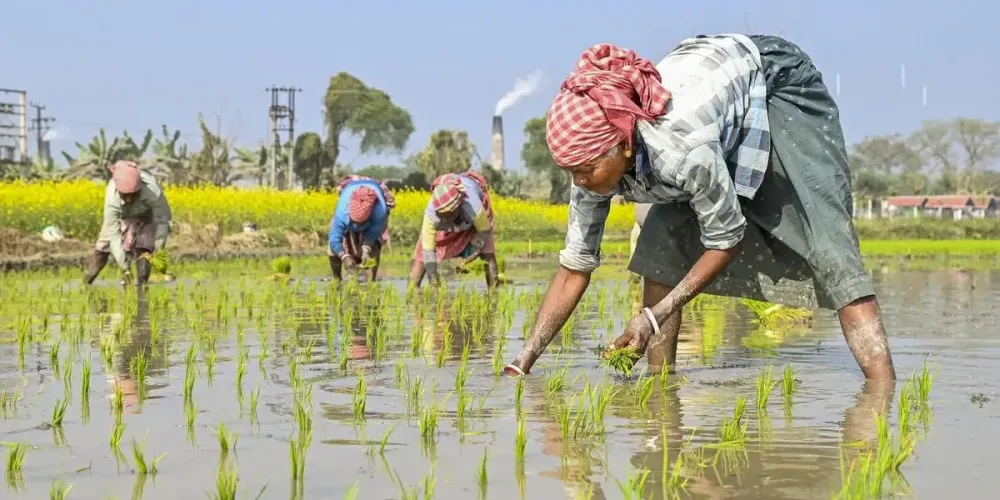
The Indian Institute of Rice Research, part of the ICAR system, has reported strong results from a direct-seeded rice initiative in Telangana. BusinessLine says the project delivered yield gains of 8-13% compared with conventional transplanted rice cultivation. Farmers involved in the programme also reduced water use by 25-35%, a significant outcome in a crop long associated with high irrigation demand.
The report notes that field management was supported by Internet of Things sensors, helping farmers monitor water use more precisely. That matters because direct-seeded rice, or DSR, changes the production system fundamentally. Instead of raising nursery seedlings and transplanting them manually, growers sow seed directly in the main field, which can reduce labour pressure, alter input costs and simplify timing in the production cycle.
The economic response was immediate. Within a year, the area under DSR in project villages expanded by 5,947 acres, generating an estimated additional benefit of about 77.3 million rupees for farmers. IIRR said this rapid spread reflected rising farmer confidence in climate-resilient and water-saving rice technologies, especially when the benefits can be measured in both output and operating costs.
The initiative was implemented during 2024-26 in the undivided Nalgonda and Khammam districts of Telangana with financial support from SBI Foundation. It initially covered 1,000 farmers across 20 selected villages. According to the report, the programme combined scientific research, precision-agriculture tools, mechanisation and intensive farmer outreach, allowing the model to move beyond demonstration plots into wider on-farm adoption.
The wider context is important. India grows rice on nearly 47 million hectares and produces around 140 million tonnes annually, while Telangana alone has more than 4.6 million hectares under rice and output of 17 million tonnes. Against a backdrop of rising input costs, labour shortages and pressure on water resources, DSR offers a practical alternative. The method uses fewer seeds, reduces labour and water demand, and can allow harvest roughly 10 days earlier, helping farmers turn fields around faster for the next crop.
Not yet comments. Be the first!
Comments · 0