
Climate stress is raising the risk of simultaneous failures across global breadbaskets
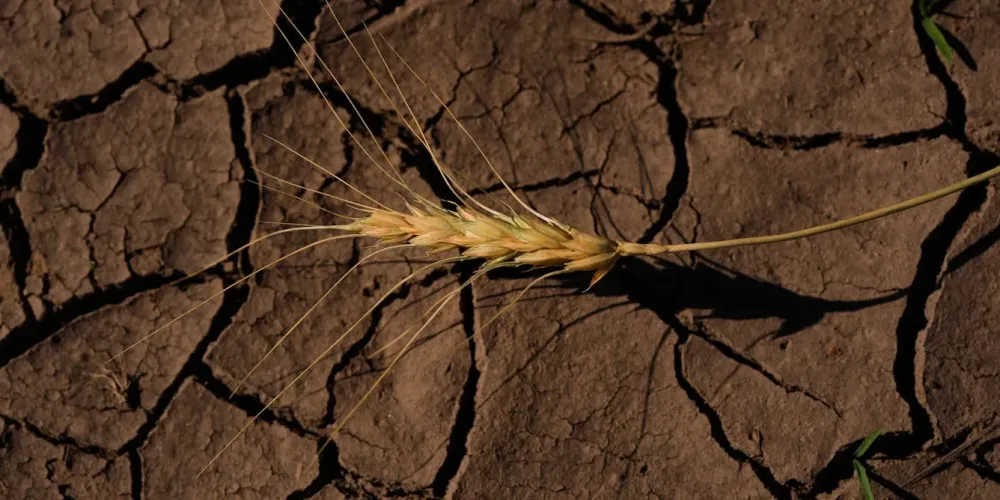
A June 7 analysis in The Conversation argues that the global food system is becoming more exposed not simply because droughts are intensifying, but because several major producing regions may increasingly come under pressure at the same time. That matters for agriculture because the modern trading system was built on the expectation that crop failures would usually be local and that another breadbasket would still be able to compensate.
The article identifies the North American Prairies, the Ukrainian Steppe and northern India as examples of the regions on which the wider system depends. For decades, the geographic spread of production acted as a buffer. If one region had a poor season, supply from somewhere else could soften the blow. The warning now is that climate stress is thinning that buffer and making simultaneous disruption more plausible.
The piece cites a recent study on global breadbasket droughts showing that the probability of simultaneous droughts across maize-producing regions this century ranges from 52% to 60%, depending on greenhouse-gas emissions. The researchers say the risk is being driven especially by long-term drying in Brazil, Europe and the United States. One of the article’s important points is that a global shock does not require every region to suffer an extreme event. Several moderately severe events at once may be enough.
The analysis goes beyond weather and yield to describe how shocks spread through a highly connected agricultural system. When harvests fail in one place, governments may restrict exports and importers may move into precautionary buying. That means the trade links that usually make grain move efficiently can quickly become channels for scarcity and price transmission. Import-dependent countries can therefore face food stress even if domestic production conditions remain normal.
The article also highlights concentration in input markets. It says the top four firms control roughly 50% to 60% of the commercial seed market and around 70% of the global pesticide market. In ordinary times that scale can look efficient, but under synchronized shocks it reduces flexibility because more of the system depends on fewer suppliers, fewer routes and fewer decisions.
For agribusiness and policymakers, the underlying message is that food security cannot be reduced to what happens on farms alone. Seeds, feed, fertilizer, crop protection, storage, transport, processing and retail all sit inside the same risk chain. Once climate stress begins to hit several breadbaskets at once, the problem is no longer just lower output in one location. It becomes a system-wide economic and supply-chain issue, with consequences for trade, prices and access to food well beyond the drought zones themselves.
Not yet comments. Be the first!
Comments · 0