
Canadian farmers test fertilizer that mimics lightning
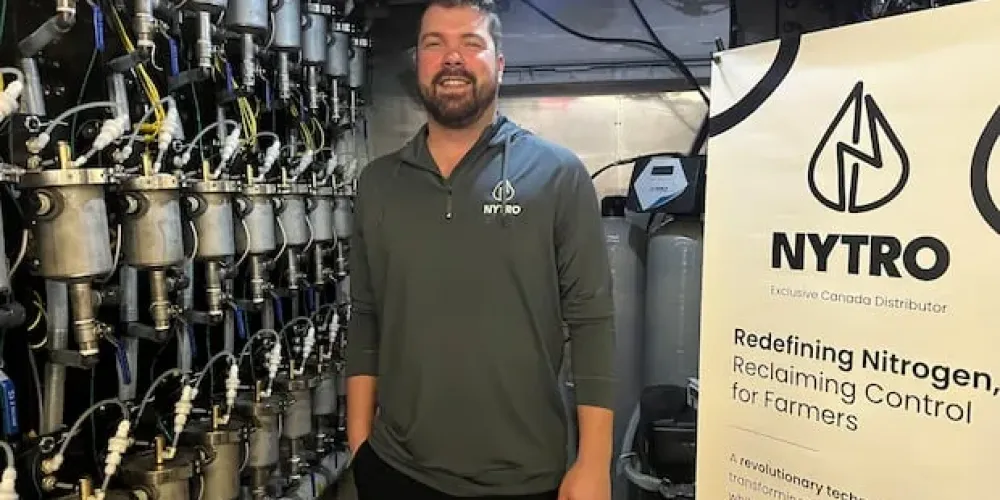
A fertilizer technology designed to mimic the chemistry of lightning is gaining attention in Canada as growers look for ways to manage both supply disruption and rising input costs. CBC reported that the cold-plasma approach is still at an early research stage and has not yet been peer-reviewed, but it is being explored as a possible way to make nitrogen fertilizer on farm rather than relying entirely on conventional industrial supply chains.
The immediate driver is the fertilizer market shock linked to Middle East conflict. About one-third of global fertilizer shipments move through the Strait of Hormuz, where traffic has been severely restricted since early March. Iran is also a major producer of fertilizer and nitrogen, and its industry has been damaged by airstrikes. Jeff Harrison, chair of Grain Farmers of Ontario, said those disruptions have sharply increased fertilizer prices. Harrison, who grows corn and soybeans in the Quinte area roughly 100 kilometres from Kingston, said farm expenses are now outrunning revenues.
The science behind the system is based on the natural role of lightning in fixing nitrogen. Stephan Reuter, a plasma physics professor at Polytechnique Montreal, said lightning converts atmospheric nitrogen into a form plants can absorb. Rain then carries that chemistry to the soil as nitric acid. Cold-plasma machines attempt to reproduce that process at farm level. A reactor generates plasma, breaks apart nitrogen molecules and then infuses the resulting compound into water, creating a liquid fertilizer that can be used on site without depending on long-distance imports.
The best-known systems in Canada are Green Lightning units sold through Nytro Ag Corp. by Saskatchewan farmer Chris Nykolaishen, who grows wheat and canola near Kamsack. He said about 200 machines have been sold to 82 farms since 2024. The standard Thunder 365 system costs C$66,500. If operated continuously, it can produce 36,500 gallons, roughly 140,000 litres, of fertilizer a year. According to Nykolaishen, that is enough to fertilize 1,000 acres, about 400 hectares, of wheat and canola with no other fertilizer, or to support a larger farm in combination with other products.
Even proponents of the method stress that it is not yet a proven replacement for standard fertilizer programs. Nykolaishen recommends that growers begin with small trials, while researchers note that agricultural testing moves slowly because farms effectively get one full research cycle per season. Reuter said his team has support from the Natural Sciences and Engineering Research Council of Canada and is currently the only group in the country systematically testing plasma fertilizer. For now, the technology is better understood as a promising option under evaluation than as a fully validated commercial substitute.
Not yet comments. Be the first!
Comments · 0