
Australian farmers weigh lower synthetic fertiliser use as import risk grows
Australian farmers and researchers are looking for ways to reduce dependence on imported nitrogen fertiliser as tighter supply chains and higher prices reshape planting and input decisions.
Australian farmers and agronomists are reassessing how dependent their production systems are on synthetic fertiliser as new trade shocks ripple through input markets. ABC News reports that fertiliser supply chains have tightened and prices have surged while the Strait of Hormuz remains effectively closed. That matters sharply in Australia because the country produces only a fraction of the fertiliser it uses and imports nearly all of its nitrogen product.
The issue is not only about input inflation. The report frames fertiliser availability as a factor that can change planting decisions, cropping economics and, ultimately, what reaches supermarket shelves. Crops still need phosphorus, potassium and nitrogen to maintain strong yields, so the debate is not a simple split between conventional and organic farming. It is a question of how much risk growers can absorb when a key imported input becomes more volatile.
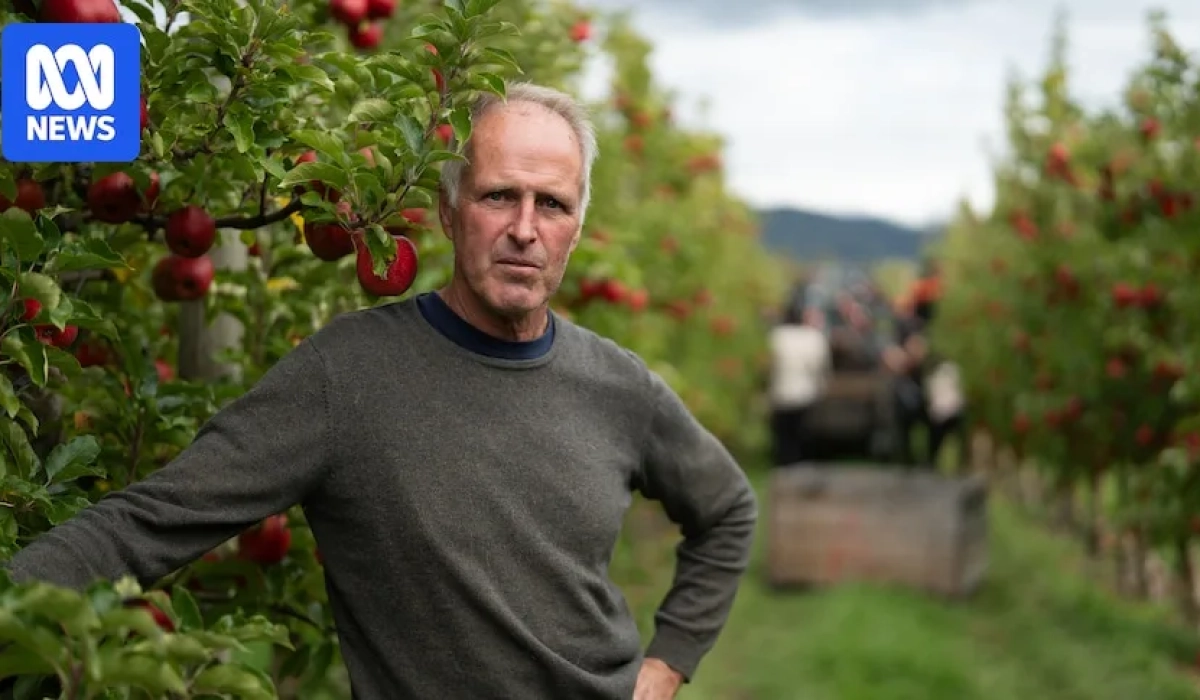
Some farms are already trying to reduce synthetic use. One producer working without synthetic fertiliser for more than a decade described nitrogen as a kind of dependency the system has to move away from gradually. At Spreyton, apple and wine-grape grower Marcus Burns said his farm still uses synthetic fertiliser, but in smaller quantities and alongside more natural supplements, including an Australian silicon product made from crushed glass that helps make soil elements more available to plants.
Researchers at the University of Tasmania are testing how far nitrogen rates can be cut in dairy systems without sacrificing pasture growth and milk output. Zac Beechey-Gradwell of the Tasmania Institute of Agriculture said their work shows nitrogen use can be halved from 300 kilograms to 150 kilograms, provided there is enough white clover in the pasture. He said white clover is central because it fixes nitrogen itself, offering a biological route to lower dependency.
The article also makes clear that there is no universal replacement strategy. Independent agronomist Chris Cheek said some crops would fall below break-even yield levels without synthetic fertiliser, making a full shift commercially unrealistic. He added that alternatives such as chicken manure, feedlot waste and poppy waste can work, but they are harder to balance, finite in supply and often expensive.
The practical takeaway is that many growers are not planning an immediate exit from mineral fertiliser but are searching for more resilient systems around it. Rising soil-testing demand and greater interest in partial substitution show farmers are trying to improve efficiency and buy resilience. Even so, the ABC report suggests synthetic fertiliser remains a core production tool for a large share of Australian cropping and dairy farming, not an input that can be removed quickly without output risk.