
Australian-backed dairy recovery helps West Java farms rebuild after FMD
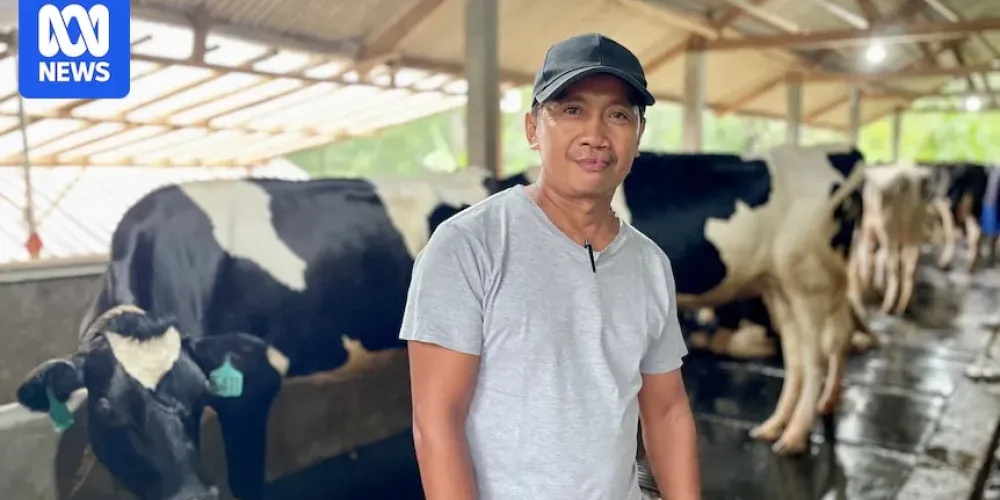
An Australian-supported dairy programme is helping farms in West Java rebuild after the 2022 foot-and-mouth disease outbreak that devastated parts of Indonesia’s cattle sector. On farms about 60 kilometres south of Jakarta, the project is working with local producers to lift productivity and reduce Indonesia’s heavy dependence on imported dairy products.
According to the ABC report, Indonesia still imports nearly 80 per cent of its dairy products. That means the programme is not only about replacing animals lost to disease, but also about improving milk quality and making smallholder dairy businesses more resilient. Professor Sahara, who is involved in the project, said the focus is on improving milk quality among small farmers and raising their incomes.
One practical pillar of the work is the use of village researchers. Five university-trained researchers were embedded in dairy communities to run discussion groups, train farmers and monitor milk, feed quality and cow health. The programme has also put a strong emphasis on women, who are often directly involved in milking and day-to-day herd care on family farms. Separate training groups have helped women discuss udder hygiene, mastitis prevention and routine animal management more comfortably.
The impact is visible in individual farm stories. Muhamad Yunus said his family lost all 17 of its dairy cows during the FMD outbreak and could afford only one replacement animal with government compensation. After taking part in an Indo Dairy feed trial, his milk production almost doubled from 8 litres a day to 14 litres a day, and his artificial insemination results improved as well. He now has two milking cows, two heifers and one bull.
The broader economic toll was severe. The outbreak cost Indonesia about IDR 9.9 trillion, equivalent to roughly US$6.6 billion, and also put Australian authorities on high alert because of the disease risk. Rebuilding the dairy sector therefore has implications beyond one region: it matters for farm incomes, domestic food supply and biosecurity cooperation between neighbouring countries.
The programme suggests that dairy recovery requires much more than simply restocking animals. It depends on better feed, stronger herd health, improved milk handling and continuous farmer education. On a farm in Tajurhalang, Ma'Mur Komara already has 12 milking cows, and local researchers say they have seen both herd sizes and milk output increase since 2018. For Indonesia, that points to a gradual but more structured recovery from FMD in one of its key smallholder dairy regions.
Not yet comments. Be the first!
Comments · 0