
Zea mosaic virus
Zeavirus zeae
Description
Symptoms
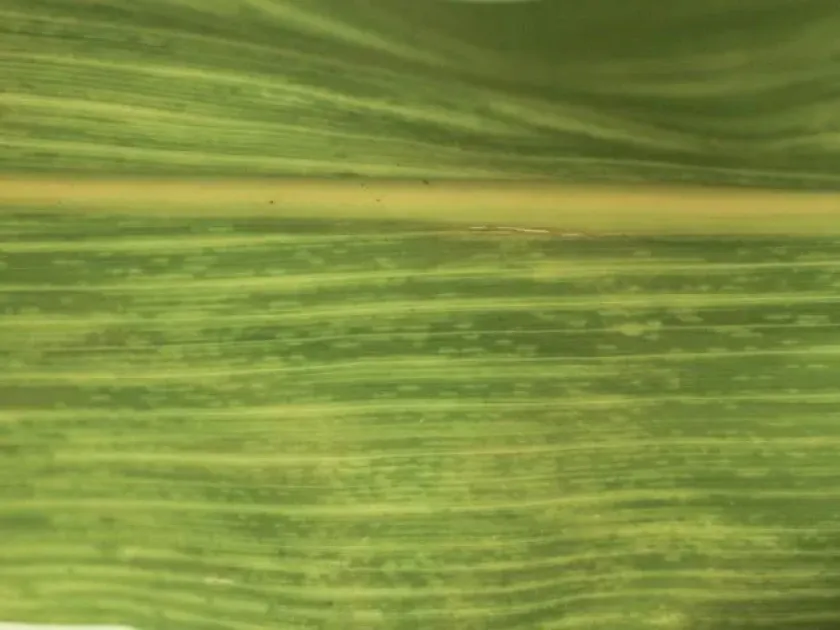
The first and most noticeable sign of infection is the appearance of characteristic mottling or a mosaic pattern on young leaves. Light green, yellowish, or chlorotic stripes and spots contrast with the healthy dark green tissue.
As the disease progresses, significant stunting of the plant is observed. Internodes become shortened, causing the stem to appear squat, and the total height of the corn may be significantly lower than that of healthy specimens in the field.
Leaf blades often deform and may curl at the edges or take on a wavy shape. In cases of severe infection, mosaic spots can coalesce to form large necrotic zones, leading to premature tissue death.
In early seedling stages, symptoms may be mild or masked by micronutrient deficiencies. However, as the activity of insect vectors increases, the area of infection expands rapidly, affecting new leaves.
Particular attention should be paid to the apical leaves, as these display the most vivid signs of systemic infection, indicating deep-seated damage to the plant's vascular system.
Pathogen
The causative agent of the disease is the Zea mosaic virus (ZeMV), which belongs to the genus Potyvirus. This plant pathogenic virus contains single-stranded RNA and causes systemic infection within the host plant's tissues.
The virus is transmitted primarily in a semi-persistent manner by insect vectors, most notably various species of aphids. Transmission can also occur mechanically, for example, through leaf damage during field management or direct contact between infected and healthy plants.
Unlike fungal diseases, Zea mosaic virus does not persist in seeds or crop debris in the soil. The primary reservoirs for the virus during the off-season are perennial grass weeds and wild plants, where the virus survives.
The biology of the pathogen is closely tied to the life cycle of its insect vectors. The virus lacks high resistance to environmental factors outside of plant tissues, so its survival depends entirely on the continuity of the plant-to-vector cycle.
The disease is classified as a viral mosaic, characterized by the disruption of chlorophyll synthesis and metabolic processes within the leaf parenchyma cells.
Conditions for development
The development of epidemics depends directly on the aphid population density in the agroecosystem. Warm and dry weather promotes rapid reproduction of insect vectors, which drastically increases the risk of large-scale virus spread.
The presence of significant weed reservoirs around fields creates a favorable base for virus accumulation. In such conditions, vectors migrate from weeds to young corn crops immediately after emergence.
A temperature range of 20–28°C is optimal for viral replication and vector activity. At extremely high temperatures, insect activity may decrease, temporarily curbing the spread of the infection.
Agricultural practices also play a role: delayed planting dates may coincide with the peak migration of aphids, making young and vulnerable plants the primary targets for the virus.
Soil moisture affects the plant's overall immune status. Corn under stress due to drought or nutrient deficiency becomes more susceptible to infection and displays more severe symptoms.
Why it matters
The primary damage lies in a significant reduction in plant productivity. The virus suppresses photosynthesis, leading to poor cob development, reduced grain count, and shriveled seeds.
Infected plants yield significantly less grain, which directly impacts the overall harvest quantity. In severe cases, losses can reach 20–40% of the potential output.
Beyond direct yield loss, grain quality deteriorates. Density is reduced, which negatively affects seed quality if the grain is intended for future sowing.
Viral infection weakens the overall health of the corn, making it more vulnerable to other pathogens, such as fungal diseases or secondary bacterial infections that target weakened tissues.
Economic losses also increase due to the need for additional insecticide applications to control vectors, which raises the cost of agricultural production.
Protection
The main method of control is the destruction of weed reservoirs both within the field and along its perimeter. This removes the virus's food source during the off-season and reduces the number of vectors.
Controlling aphid populations through timely insecticide applications helps break the chain of infection transmission. Treatments should be applied during the period of peak insect migration, based on monitoring data.
The use of resistant or tolerant corn hybrids is the most effective long-term protection strategy. Breeding programs aim to develop varieties capable of limiting viral spread within plant tissues.
Adhering to optimal planting dates helps avoid the overlap of the crop's critical growth stages with the peak of pest population. Spatial isolation of corn fields from older crops or perennial grass areas is also crucial.
- Regular monitoring of crop health and aphid population levels.
- Rogueing and destroying severely infected plants at early stages.
- Application of balanced nutrition to support high crop resistance.
Discussion
No discussions yet — be the first.