
Heracleum latent virus
Vitivirus latensheraclei
Description
Symptoms
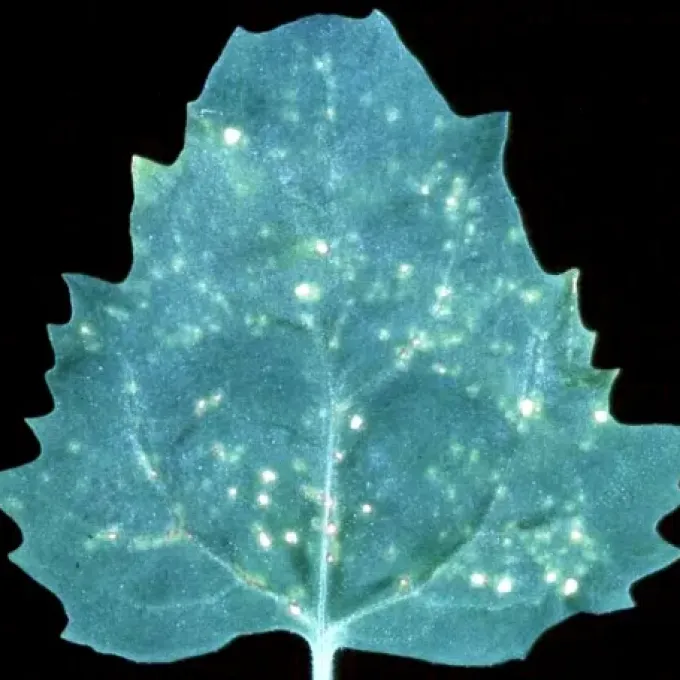
The hallmark of this disease is the complete or near-complete absence of observable symptoms. Plants generally appear healthy and exhibit normal growth patterns throughout their life cycle.
In rare instances, under significant environmental stress or nutrient deficiency, the plant may show faint mosaic patterns or slight chlorosis on the leaves, though these signs are often attributed to other factors.
Because the disease does not cause dramatic physical damage such as necrosis, wilting, or severe deformation, identifying infected plants visually in the field is nearly impossible.
Advanced diagnostic tools, such as ELISA or RT-PCR, are required to detect the presence of the viral genome within the leaf or root tissues of the host plant.
Despite the lack of symptoms, the virus causes subtle disruptions in the cellular metabolism, particularly affecting the photosynthetic efficiency and the translocation of nutrients within the plant.
Pathogen
The causative agent of the disease is the Heracleum latent virus (HLV), which belongs to the genus Vitivirus in the family Betaflexiviridae. It is an RNA-based virus known for its latent infection cycle.
The virus particles are filamentous, a morphology common to this family, and are well-adapted to persist in the tissues of plants within the Apiaceae family without triggering immediate host mortality.
As a latent pathogen, it maintains a low-profile existence within the host, which allows it to remain undetected during standard visual inspections of the plant population.
Transmission occurs primarily through biological vectors such as aphids, which acquire and distribute the virus while feeding on the phloem sap of infected Heracleum plants.
Furthermore, seed transmission is a critical factor in the survival of the virus, ensuring that the pathogen is carried over to the next generation of weeds, making eradication efforts challenging.
Conditions for development
The development and spread of HLV are intrinsically linked to the life cycle of its host species and the population dynamics of insect vectors like aphids that peak during the warmer months.
Optimal conditions for infection include the period of active vegetative growth, during which insect activity is high and the plants exhibit high rates of sap flow, facilitating viral transmission.
The virus thrives in environments where Heracleum species grow in large, dense colonies, as this density promotes the rapid and efficient transfer of the virus between neighboring plants.
Environmental factors, such as high humidity and temperate climates, support both the health of the host and the survival of the vectors, indirectly favoring the prevalence of the virus.
Human activities, including mowing, mechanical weed control, and the movement of equipment, can facilitate the mechanical spread of the virus through accidental injury to plant tissues.
Why it matters
The primary concern regarding this virus is its role as a reservoir for infection, as it provides a constant source of viral load that can spill over into commercially important Apiaceae crops.
Crops such as carrots, celery, parsnips, and parsley are susceptible to infection. Once infected, these crops may suffer from stunted growth, reduced root quality, and significant yield losses.
Beyond direct crop damage, the presence of the virus in wild populations of Heracleum creates a persistent phytosanitary challenge, requiring constant monitoring and containment.
The latent nature of the infection makes it difficult to predict the timing of potential outbreaks in nearby agricultural fields, as the reservoir host shows no outward sign of disease.
Overall, the virus represents a hidden but significant risk to the agricultural sector, undermining the health of soil-grown vegetable crops and increasing the complexity of pest management programs.
Protection
Effective control relies heavily on the systematic removal of Heracleum species from areas adjacent to agricultural lands to eliminate the primary source of the virus.
Integrated pest management (IPM) strategies, which focus on controlling aphid populations on and around fields, are essential to reduce the rate of virus transmission to susceptible crops.
Strict quarantine measures should be enforced regarding the movement of plant materials to prevent the introduction of infected seeds or vegetative parts into clean areas.
Regular sanitation of agricultural tools and machinery is critical, as it prevents the mechanical transmission of the virus from infected wild plants to healthy crops.
Employing modern molecular diagnostic screening for seeds and planting materials can ensure that commercial crops start their growth cycle free from latent viral infections.
Discussion
No discussions yet — be the first.