
Rice yellow mottle virus
Sobemovirus rgmov
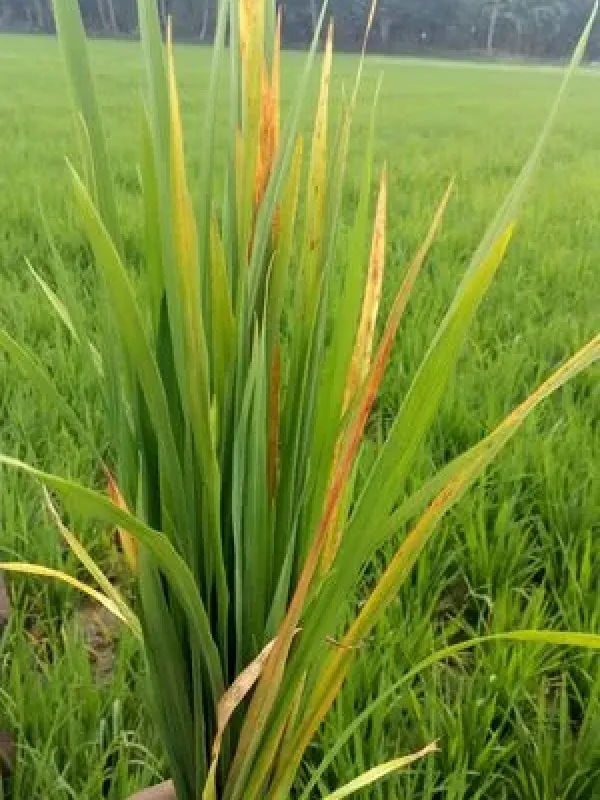
Description
Symptoms
Initial symptoms are characterized by yellowing or chlorotic streaks on leaves, which rapidly progress into a distinct mosaic-like pattern.
Stunted growth is a hallmark of the infection, often accompanied by reduced tillering and overall poor development of the rice plants.
The leaves may show curling, deformation, and premature necrosis, which significantly limits the plant's photosynthetic capacity.
In the reproductive phase, panicles often fail to develop properly, leading to sterility or the formation of shriveled, malformed grains.
Advanced stages of the disease manifest as severe wilting and yellowing of the entire plant, which eventually leads to death and yield failure.
Pathogen
The causal agent of the disease is the Rice yellow mottle virus (RYMV), classified within the Sobemovirus genus. It is a small, icosahedral virus containing a single-stranded RNA genome.
This pathogen is highly specialized and primarily infects species within the Poaceae family, with rice (Oryza sativa) being its most economically significant host.
The virus is known for its high genetic diversity, resulting in various strains that exhibit different levels of virulence and geographic adaptability.
It can persist in soil and crop debris for short periods, but its main survival strategy relies on continuous reservoirs in living host plants.
Transmission occurs primarily through mechanical contact between infected and healthy plants, often facilitated by agricultural activities or insect vectors.
Conditions for development
Insects, particularly beetles (Chrysomelidae) and grasshoppers, act as primary vectors for the dissemination of the virus across rice fields.
Warm and humid weather conditions favor the population growth of these insect vectors, thereby increasing the rate of viral spread within the crop.
The presence of wild grass species near irrigation canals or fields serves as a year-round reservoir for the virus, promoting new infections.
Mechanical operations such as weeding, transplanting, and fertilizing provide high-risk scenarios for the spread of the virus via contaminated tools.
High planting densities in rice fields facilitate plant-to-plant contact, creating an ideal environment for rapid viral transmission across the field.
Why it matters
Rice yellow mottle virus is considered a devastating threat to global rice production, capable of causing yield losses ranging from 50% to total failure.
Early infection during the seedling stage is particularly damaging, as it inhibits plant establishment and severely reduces grain quality.
The economic impact is profound, as farmers face not only harvest losses but also increased costs related to disease management and control.
The physiological stress caused by the virus makes the crop more susceptible to secondary infections and environmental stressors like drought.
The threat of this virus necessitates strict agricultural management practices, which can increase the overall cost of production for farmers.
Protection
The most effective strategy for managing RYMV is the use of resistant or tolerant rice varieties, which prevent the establishment of the virus.
Sanitation is critical; this involves the removal and destruction of infected plants and the elimination of wild grass weeds that act as hosts.
Effective management of insect vectors through integrated pest management (IPM) practices, including targeted insecticide use, helps slow the spread.
- Implementing crop rotation to break the virus infection cycle.
- Ensuring proper sterilization of farming tools between different field segments.
- Maintaining distance between rice paddies to limit the movement of vectors.
Early detection and immediate removal of symptomatic plants can help contain local outbreaks and protect the remainder of the crop from infection.
Discussion
No discussions yet — be the first.