
Rhopalantha mosaic virus
Potyvirus rhopalanthi
Description
Symptoms
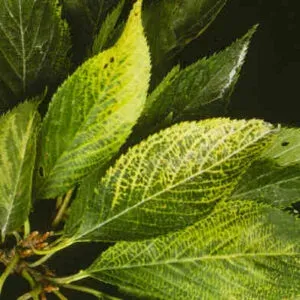
The primary symptom of infection by this virus is a characteristic mosaic pattern on the leaf blades. Leaves show alternating light green, yellow, and dark green areas, creating a mottled appearance.
Leaf deformation is common, manifesting as curling or distortion of the leaf margins. In many cases, there is general stunting of the plant and noticeable growth retardation compared to healthy specimens.
As the infection progresses, affected plant parts may prematurely yellow and wither. In the early stages, the pathology may be asymptomatic, though latent carriage of the virus significantly weakens the plant's immune system.
The intensity of external symptoms strongly depends on the plant variety and prevailing weather conditions. Some crops exhibit vein clearing, which gradually transitions into general chlorotic spotting.
During the flowering period, developmental anomalies in buds or changes in the natural coloration of petals may be recorded. These signs significantly reduce the ornamental or commercial value of the produced crops.
Pathogen
The causative agent of the disease is a virus of the Potyvirus genus, which belongs to the group of phytopathogens with filamentous particles. This type of virus is characterized by a high ability to infect a wide range of agricultural and ornamental crops.
Viral particles are transmitted primarily by insect vectors, particularly various species of aphids. The transmission mechanism is classified as non-persistent, allowing the insect to infect a healthy plant almost immediately after feeding on an infected one.
In addition to insects, the virus can spread mechanically during agricultural work. Infection often occurs through garden tools that have not undergone necessary disinfection after contact with diseased material.
The pathogen is capable of surviving for long periods in overwintering perennial plants and weeds. This makes them natural reservoirs of the infection in field conditions, ensuring the virus's survival during the off-season.
The genetic material of the virus is single-stranded RNA, which ensures a high rate of replication in host cells. This leads to the rapid accumulation of viral particles and systemic infection of all plant organs.
Conditions for development
The active development and spread of the virus depend directly on the population density of insect vectors during the growing season. High humidity and moderately warm weather contribute to the rapid reproduction of aphids.
Mass emergence of winged vectors in early summer creates critical conditions for epiphytotics. The more active the migration of insects, the higher the risk of primary infection of healthy crops in the area.
Inadequate management of the agroecosystem, including the presence of numerous weeds, significantly worsens the situation. Weeds act as intermediate hosts where the virus accumulates before spreading to cultivated crops.
Failure to maintain proper irrigation and fertilization regimes weakens the plant's defense mechanisms, making them more susceptible to viral attack. Environmental stress conditions facilitate a more aggressive course of the disease.
Overcrowded plantings and lack of air circulation within the canopy contribute to a microclimate favorable for pest activity. This triggers local infection hotspots that expand rapidly.
Why it matters
The harmfulness of the virus manifests in a significant reduction in agricultural crop yields. The disruption of photosynthetic processes leads to lower biomass and reduced quality of commercial products.
Plants infected with the virus become less resistant to adverse environmental factors. This leads to mass dieback of young plantings during periods of drought or frost.
Economic losses consist of direct crop yield reductions and the need for additional protective measures. Costs for combating vectors significantly increase the production cost of the final product.
In ornamental plants, the virus causes a loss of marketability, making them unsuitable for commercial sale. This entails serious financial losses for nurseries and greenhouse enterprises.
Viral infection is often systemic, so it is almost impossible to cure an already infected plant. The only way to prevent spread remains the removal and destruction of infected specimens.
Protection
The foundation of protection is the use of certified healthy planting material free from viral infections. This is the most effective method for preventing the introduction of the disease to clean areas.
Systematic control of aphids and other sucking pests that act as virus vectors is necessary. The application of insecticides should be aimed at early reduction of the vector population density.
An important preventive step is regular weeding, as weeds can serve as natural infection reservoirs. It is also recommended to maintain spatial isolation between new and old plantings.
Disinfecting garden tools after working with each plant prevents mechanical transmission of the virus. Alcohol-based solutions or special chlorine-containing preparations are suitable for treatment.
- Timely rogueing and destruction of infected plants showing signs of mosaic.
- Creating buffer zones of virus-resistant crops around the perimeter of the field.
- Use of varieties with genetic resistance to Potyvirus group viruses.
Discussion
No discussions yet — be the first.