
Henbane mosaic virus
Potyvirus henbanis
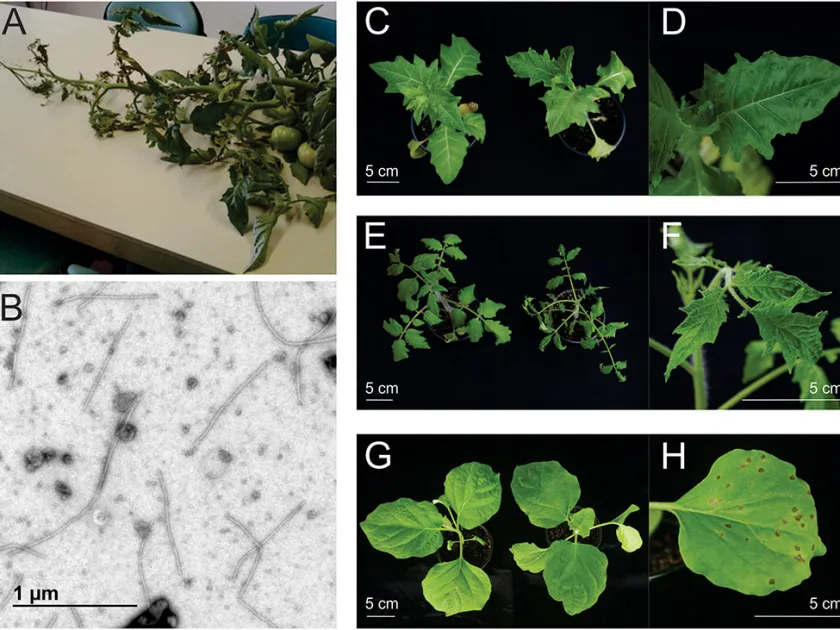
Description
Symptoms
The primary symptom of infection is the development of a mosaic pattern on leaves. This manifests as an irregular intermingling of light green and dark green tissue across the leaf surface.
Infected plants often exhibit significant leaf distortion, including curling, crinkling, or puckering. This structural change is frequently accompanied by a general stunting of the plant's overall growth.
During the early stages of infection, vein clearing is a common diagnostic sign. The veins lose their color, appearing lighter than the surrounding leaf tissue before the full mosaic symptoms emerge.
In severe cases, necrotic lesions may appear on leaves, stems, or even fruits. This leads to premature senescence and leaf drop, which severely hampers the plant's photosynthetic capacity.
Symptoms are usually most pronounced on young, actively developing leaves. The severity of the manifestation often correlates with the age of the plant when the initial infection occurred and prevailing environmental conditions.
Pathogen
The Henbane mosaic virus (HMV) is a plant pathogenic virus belonging to the Potyvirus genus. It contains a single-stranded RNA genome and consists of long, flexible, filamentous particles typical for this viral family.
The virus has a wide host range, primarily affecting plants in the Solanaceae family. Key crops susceptible to this infection include tobacco, potatoes, tomatoes, peppers, and eggplants.
Beyond cultivated crops, the virus resides in wild perennial weeds. Plants such as black henbane (Hyoscyamus niger) and datura act as primary reservoirs, ensuring the virus persists in the environment during the off-season.
In the field, the virus is primarily transmitted by insect vectors, most notably various species of aphids. These insects acquire the virus by feeding on infected plants and transmit it to healthy tissues during subsequent feeding events.
Mechanical transmission also plays a significant role in the spread of the virus. Handling infected plants followed by contact with healthy specimens, or using contaminated agricultural tools, can easily transfer the virus within a crop.
Why it matters
The economic impact of Henbane mosaic virus is substantial, as it leads to significantly reduced yields. The metabolic disruption caused by the virus hinders plant development and fruit setting.
The quality of harvested produce is often compromised, with fruits becoming smaller, misshapen, or having reduced nutritional value. This limits marketability and reduces the shelf life of the crops.
Infected crops show decreased vigor and increased susceptibility to secondary infections and abiotic stresses. This often necessitates additional input costs for fungicides or fertilizers to compensate for plant weakness.
For tobacco growers, the virus is particularly damaging as it degrades the quality of the foliage. Leaf disfigurement and chlorosis directly result in poor grade yields for industrial processing.
The potential for rapid spread throughout an entire plantation means that a minor localized infection can escalate into a major crop failure if left unmanaged by the farm operator.
Protection
Effective management begins with controlling the aphid population, which acts as the main vector for the virus. The use of systemic insecticides during critical growth phases helps reduce the rate of virus transmission.
Sanitation is paramount, focusing on the removal of wild solanaceous weeds around fields. Eliminating these host reservoirs is a necessary step to break the cycle of infection before the growing season.
Using certified, virus-free seeds and transplants is the most reliable way to prevent the introduction of HMV into a new field. Rigorous screening of planting material is essential for disease prevention.
Hygiene protocols for equipment, including thorough disinfection of knives and pruning tools between uses, significantly limit mechanical transmission. Applying proper sanitizers prevents accidental cross-contamination.
Crop rotation and maintaining spatial isolation between different Solanaceae plantings can reduce the overall disease pressure. Furthermore, selecting and planting virus-resistant varieties remains a long-term solution for sustainable crop protection.
Discussion
No discussions yet — be the first.