
Sunflower potyvirus
Potyvirus heliannulabis
Description
Symptoms
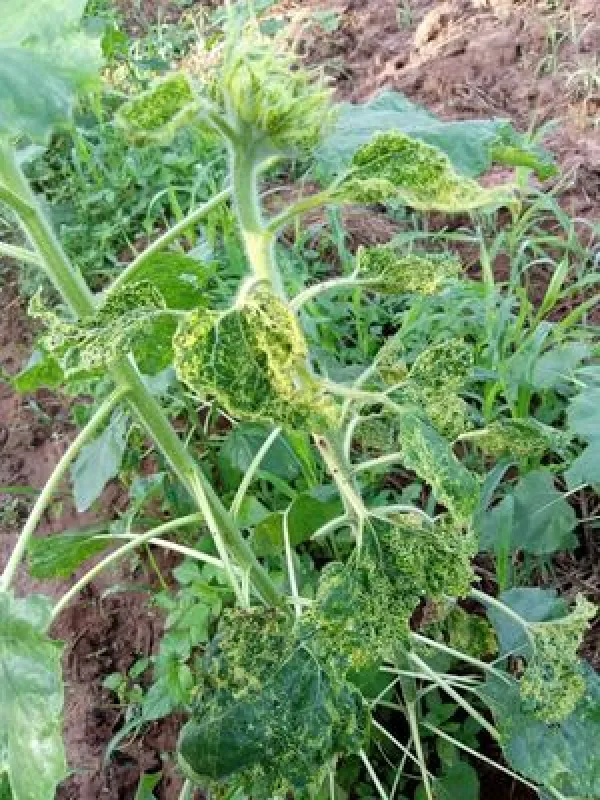
Initial symptoms are characterized by mosaic patterns on the foliage. The leaves display light green and dark green patches, which is a classic indicator of viral infection in sunflowers.
Deformation of the leaf blades is commonly observed, leading to curling, wrinkling, or a stunted appearance of the leaves. These visual cues are most prominent in the younger, rapidly growing leaves.
Infected plants show clear signs of growth retardation. Internode shortening results in a dwarfed phenotype, making the infected sunflowers significantly shorter compared to healthy plants in the same field.
The development of flower heads is often compromised, resulting in reduced size or malformed heads. Seed production is poor, with many seeds failing to develop correctly or remaining empty.
In severe cases, necrotic spots may appear on the leaves. As the disease progresses, these areas may expand, causing premature senescence and drying out of the entire foliage before the crop reaches maturity.
Pathogen
The causative agent of the disease is Potyvirus heliannulabis, a member of the Potyvirus genus within the Potyviridae family. It is a plant virus with a positive-sense single-stranded RNA genome and characteristic filamentous virions.
This virus acts as an obligate parasite, hijacking the host plant's cellular machinery to replicate. By disrupting protein synthesis and resource allocation, the virus severely affects the overall physiology of the sunflower plant.
In field conditions, the virus is primarily transmitted by insect vectors in a non-persistent or semi-persistent manner. Aphids are the main transmitters, carrying the virus between plants during their feeding process.
Mechanical transmission is another significant pathway, occurring through physical contact between infected and healthy plant parts. This often happens during agricultural practices like pruning, cultivation, or even contact via farm equipment.
The virus persists between growing seasons in perennial weed species, which serve as reservoirs. While the virus is generally unstable outside the host, it survives in these plants, ensuring the source of infection for the next crop cycle.
Why it matters
The economic impact of the sunflower potyvirus is driven by a significant reduction in overall yield. Fewer seeds and lower seed weight per head translate into lower productivity per hectare.
The oil quality and total oil content of the seeds are negatively affected by the metabolic strain placed on the plant. This decreases the commercial value of the harvested seed for oil processing industries.
Infected sunflowers suffer from weakened defense mechanisms, making them more prone to secondary infections, such as fungal pathogens, which colonize the already stressed plant tissues.
Increased susceptibility to environmental stressors, such as drought or heat waves, further exacerbates yield losses. The root systems of infected plants are often insufficient to support the plant's needs.
The presence of the virus causes uneven ripening across the field, complicating the harvesting process. These factors combined can lead to substantial financial losses for farmers during the growing season.
Protection
Effective management begins with strict sanitation practices, including the eradication of weeds that harbor the virus. Keeping field margins clear reduces the potential reservoir for the virus.
Selecting and planting genetically resistant sunflower hybrids is the most efficient and sustainable strategy to prevent the disease. Seed catalog information should be consulted to identify virus-resistant varieties.
Monitoring and controlling aphid populations is essential. Using systemic insecticides during the early stages of crop development can help prevent the spread of the virus by killing the primary insect vectors.
Cultural practices like crop rotation and maintaining adequate spatial isolation from previous year's sunflower fields are vital. These strategies limit the migration of insect vectors and reduce initial infection rates.
Ensuring the use of high-quality, certified, and virus-free seed is the foundation of a healthy crop. Avoiding the use of farm-saved seeds without prior testing significantly lowers the risk of introducing the virus to the field.
Discussion
No discussions yet — be the first.