
Cypripedium mosaic virus
Potyvirus cypripedii
Description
Symptoms
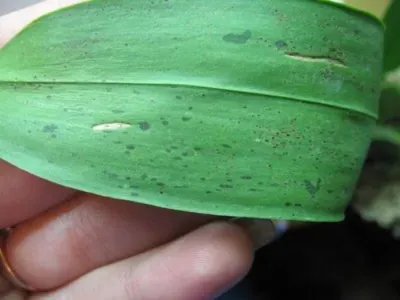
The initial symptom of infection is a mosaic pattern on the leaves of the Cypripedium orchids. Leaves display characteristic chlorotic patches alternating between light green, yellow, and dark green zones.
Deformation of the leaf structure is a common secondary symptom. Leaves may become wavy, curled, or abnormally narrow due to erratic cell division and growth inhibition caused by the virus.
As the disease progresses, necrotic areas may develop on the foliage, eventually causing premature leaf death and overall weakening of the plant's immune system.
Floral symptoms include the loss of uniform color, often referred to as "color breaking," where flowers show atypical streaks or spots, significantly reducing their ornamental value.
- Chlorotic mosaic patterns on leaves.
- Leaf deformation and curling.
- Necrotic spots and tissue death.
- Reduced vigor and flowering capacity.
Pathogen
The causal agent of this disease is the Cypripedium mosaic virus (CyMV), belonging to the Potyvirus genus. It is a plant pathogenic virus containing single-stranded RNA that relies on the host's cellular machinery to replicate.
The disease is classified as a viral mosaic. Upon entering the plant, the virus spreads through the vascular system, leading to a systemic infection that impacts all plant organs, including roots, leaves, and flowers.
This pathogen is highly specialized, primarily affecting members of the Orchidaceae family. It is an obligate parasite that thrives by disrupting the metabolic balance of the host plant.
The virus can persist for long periods in the tissues of infected rhizomes and vegetative parts, making complete eradication from a collection extremely difficult.
The biological impact involves the suppression of chlorophyll synthesis, which significantly hampers photosynthesis and leads to the gradual decline of the plant's overall vitality.
Conditions for development
The virus spreads within greenhouse environments primarily through mechanical injury during routine care. Contaminated cutting tools, such as knives or shears, are the main vectors of transmission.
High humidity and crowding of plants facilitate the spread of the virus via direct contact between infected and healthy plants during repotting or pruning operations.
The virus spreads more efficiently during periods of active growth when the internal flow of plant sap is at its peak, allowing the virions to travel rapidly to healthy tissues.
Temperature does not strictly limit viral survival; however, high ambient temperatures can exacerbate the visibility of mosaic symptoms on the leaves.
The use of non-sterile potting media or the reuse of pots from infected plants without proper sanitation is a critical factor in the dissemination of the virus.
Why it matters
Cypripedium mosaic virus poses a significant threat to orchid enthusiasts and professional growers because there are no known curative treatments for established viral infections.
An infected orchid acts as a reservoir of the virus, endangering the entire collection. Since symptoms can remain latent for long periods, early detection is notoriously difficult.
Chronic viral infection leads to the exhaustion of the plant's resources, making it highly susceptible to secondary pathogens, including fungal and bacterial rots.
The economic and aesthetic harm involves the loss of floral quality, the cessation of bloom, and the ultimate decline and death of the specimen.
The risk extends to the loss of rare genetic material and valuable hybrids, making it a critical concern for botanical conservatories and specialty orchid collections.
Protection
Strict phytosanitary practices are the primary means of defense. Infected specimens should be immediately isolated and, in most cases, destroyed by burning to prevent further spread.
Routine sterilization of all gardening tools is mandatory. Using 70% ethanol, sodium hypochlorite solutions, or heat treatment for tools after every contact with a plant is essential.
Pest management is crucial; although mechanical transmission is dominant, sucking insects like aphids or thrips can act as vectors that move the virus between plants.
New acquisitions must undergo a strict quarantine period of at least 3-6 months in a separate area to monitor for any hidden symptoms of the disease.
Preventive measures also include using high-quality, sterile potting substrates and avoiding the use of shared water trays to prevent potential water-borne transmission between pots.
Discussion
No discussions yet — be the first.