

Disease · viral
Zucchini yellow mosaic virus
Potyvirus cucurbitaflavitesselati
Description
Symptoms
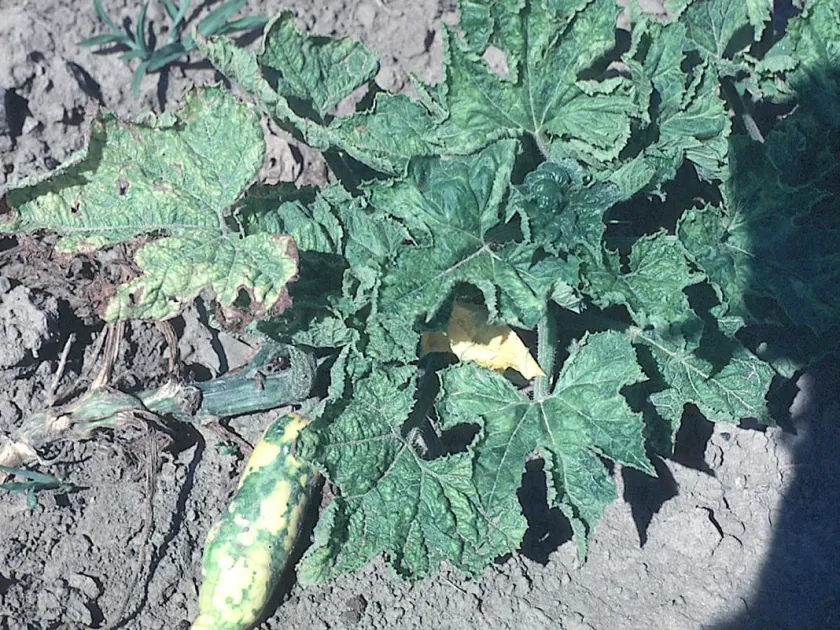
The hallmark symptom of Zucchini yellow mosaic virus infection is the development of striking chlorotic spots, which create a distinct mosaic pattern on leaf blades. These yellow areas contrast sharply with the normal green tissues, leading to a mottled appearance throughout the foliage.
As the disease progresses, the leaves exhibit significant malformation. They often become distorted, wrinkled, and curly, losing their normal shape and symmetry. This morphological change significantly reduces the photosynthetic efficiency of the plant, resulting in stunted growth.
Infected fruits display clear signs of the virus, typically manifesting as yellow spots, mosaic-like patterns, and pronounced protrusions or bumps on the skin. The marketability of the produce is severely compromised, rendering it unsuitable for fresh produce supply chains.
In severe cases, internodes on the stems become shortened, giving the plant a stunted, rosette-like appearance. This physiological impairment leads to a dramatic decline in vigor, eventually causing premature leaf senescence and overall wilting of the affected plant.
Early diagnosis is crucial, as the symptoms are most prominent on younger leaves and growing points. Field monitoring must be coupled with laboratory-based testing, such as ELISA or PCR, to confirm the presence of viral particles in suspect samples.
Pathogen
The causative agent of this disease is the Zucchini yellow mosaic virus (ZYMV), a member of the Potyvirus genus within the Potyviridae family. It is a single-stranded RNA virus known for its high pathogenicity and wide host range among the Cucurbitaceae family.
Transmission occurs primarily through various aphid species, including the melon aphid and the green peach aphid, in a non-persistent, non-circulative manner. The aphid acquires the virus from infected plant sap during brief probing and inoculates healthy plants almost immediately.
Transmission can also occur via mechanical means, such as through handling, agricultural machinery, or pruning tools. Even minor contact between an infected plant and a healthy one during cultivation can effectively spread the virus across the field.
Alternative hosts, specifically wild cucurbits and various perennial weeds, act as critical reservoirs for the virus during the off-season. These plants serve as the source of primary inoculum when the growing season begins and vectors migrate to commercial fields.
The virus consists of flexible, filamentous particles typical of the Potyvirus group. Despite its relatively unstable nature outside a host, its ability to move rapidly through aphid populations makes it a highly destructive pathogen in intensive vegetable production systems.
Conditions for development
Disease outbreaks are strongly correlated with warm, humid conditions that favor the rapid reproduction and migration of winged aphid vectors. When these environmental factors align, the rate of viral spread within a cucurbit field increases exponentially.
High weed density in and around production sites provides ideal habitats for aphid populations to survive throughout the year. The presence of these reservoirs ensures a steady supply of virus-carrying vectors, which pose a constant threat to newly planted crops.
Lack of proper crop rotation practices, where cucurbits are repeatedly planted in the same plots, leads to an increased buildup of the virus in the environment. This persistent presence of the pathogen ensures that subsequent crops are exposed to infection from the very beginning.
Environmental stress, such as water deficit or excessive nitrogen fertilization, can weaken the plant's natural defense mechanisms. While these factors do not cause the virus, they predispose plants to infection and facilitate more severe symptom expression.
The timing of planting significantly influences disease dynamics, as early-season crops may be exposed to different insect pressures compared to late-season crops. Agronomic planning must account for historical data on vector peaks to avoid vulnerable stages of plant development.
Why it matters
The primary economic impact of the virus is the total loss of marketable fruit due to severe deformation and quality degradation. On heavily infested fields, yield reductions can approach 100%, leading to catastrophic financial losses for farmers.
By compromising the plant's overall health and vegetative growth, the virus limits the supply of photosynthates to developing fruits. This results in fewer, smaller, and lower-quality fruits, significantly reducing the return on investment per hectare.
The burden of managing the disease often includes the cost of field destruction, quarantine measures, and the search for resistant alternatives. Once established in a region, the presence of the virus can discourage growers from including profitable cucurbits in their portfolios.
Fruits infected by ZYMV lack the flavor and shelf-life expected by consumers and retailers. This rejection at the market level makes the entire harvest economically unviable, emphasizing the necessity of proactive management and phytosanitary control.
Persistent infestations pose a threat to the sustainability of local agricultural systems. Without effective vector management and phytosanitary practices, the virus limits the viability of open-field vegetable cultivation and necessitates a transition to more intensive, expensive protection systems.
Protection
Managing aphid populations is the primary defense strategy. This involves the timely application of systemic insecticides to disrupt the transmission cycle and prevent the colonization of fields by viruliferous aphids, especially during the early growth stages.
Cultural practices, such as rigorous weed management, are essential to eliminate virus reservoirs near crop areas. Maintaining isolation distances from older or abandoned cucurbit plantings helps to mitigate the risk of primary viral introduction to new crops.
The utilization of virus-resistant hybrids remains the most effective prophylactic approach. Ongoing breeding programs continuously introduce new resistance traits to ensure that commercial cultivars can withstand and thrive despite the presence of the virus.
Strict sanitation protocols must be enforced, including the thorough disinfection of tools and equipment after each use. Farm workers should handle healthy plots before moving to potentially infected areas to prevent the mechanical transmission of the virus.
Infected plants should be identified and removed from the field immediately, including their root systems, and subsequently destroyed or buried. This rapid response is critical to limiting the spread of the virus within the field and protecting the remainder of the crop.
Content graph
Connections · Zucchini yellow mosaic virus
Most often together:
Marketplace
Products · 1
Community
Discussion
No discussions yet — be the first.