
Alstroemeria mosaic virus
Potyvirus alstromeriae
Description
Symptoms
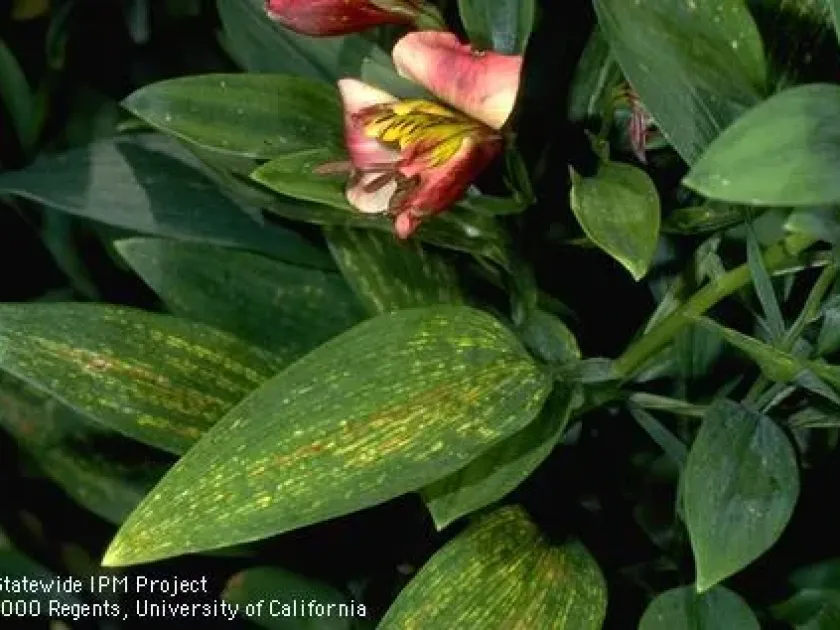
The primary symptom of infection is the appearance of a characteristic mosaic pattern on the leaves, consisting of alternating light and dark green areas.
Chlorotic spotting is often observed, which can progress into necrotic lesions as the plant tissue deteriorates over time.
The virus significantly impacts bud morphology, causing petals to deform, lose color intensity, or develop atypical streaks and stripes.
The overall appearance of the plant changes, showing stunted growth, shortened internodes, and a general lack of vigor in infected specimens.
Flower stalks affected by the mosaic virus become short and brittle, rendering them unsuitable for commercial flower market standards.
Pathogen
The causative agent of this disease is the Alstroemeria mosaic virus (Alstroemeria mosaic virus), which belongs to the genus Potyvirus.
Viral particles are characterized as elongated, filamentous structures containing single-stranded RNA, typical for this taxonomic group.
The infection is systemic, spreading throughout all plant tissues, including the root system, making it impossible to cure infected plants once established.
Identification in laboratory settings is typically performed using serological methods such as ELISA or molecular techniques like PCR analysis.
The virus can persist for long periods in vegetative organs, which poses a high risk of transmission when using infected plant material for propagation.
Conditions for development
The primary mode of natural spread in fields and greenhouses is through insect vectors, particularly various species of aphids.
Transmission occurs in a non-persistent manner, where the insect picks up the virus while feeding on a diseased plant and transfers it to a healthy one within minutes.
Artificial spread often occurs via cutting tools if they are not properly sanitized after pruning or harvesting infected plants.
High planting density is a favorable condition for rapid viral spread as it facilitates the movement of insect vectors within the floral crop.
Greenhouse temperature regimes that promote rapid aphid reproduction indirectly contribute to a significant increase in the number of infected Alstroemeria plants.
Why it matters
The virus causes direct economic losses for growers by reducing the quality of marketable products and diminishing the ornamental value of the plants.
Decreased photosynthetic activity leads to plant exhaustion, making the crop more susceptible to secondary fungal and bacterial infections.
Productivity declines significantly, as viral infection negatively affects both the quantity and quality of flower stems produced throughout the growing season.
Infected plants serve as a persistent reservoir for the virus, threatening healthy parts of the collection or adjacent crop plots in the nursery.
The long-term persistence of the virus in rhizomes prevents the use of infected plants for any further commercial vegetative propagation.
Protection
The most effective strategy is the use of virus-free planting material derived from meristem culture techniques in certified laboratories.
Regular monitoring of plantings is necessary to identify and rogue out infected plants immediately to prevent further transmission.
Controlling aphid populations and other sucking pests with insecticides is a critical step in interrupting the viral transmission chain.
Strict hygiene protocols must be followed, including disinfecting pruning shears and knives with alcohol or suitable sanitizing agents after every plant.
Placing newly acquired plant batches in quarantine areas prevents the introduction of the virus into the main production facility.
Discussion
No discussions yet — be the first.