
Echinochloa dwarf virus
Oryzavirus echinochloae
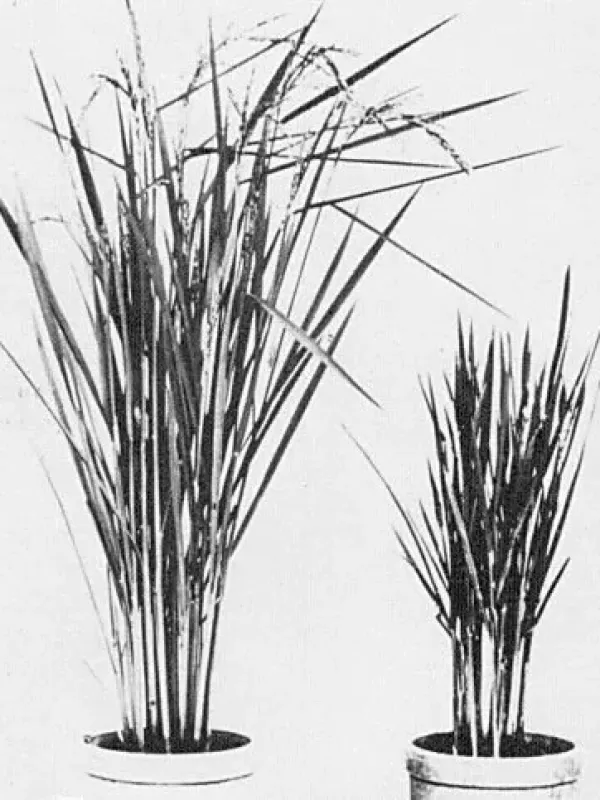
Description
Symptoms
The most prominent symptom is severe stunting, where affected plants show a significantly reduced stature compared to their healthy counterparts in the same field.
Leaves often exhibit chlorosis or yellowing, and in some cases, distinct striping patterns may appear, indicating a breakdown of photosynthetic function.
A characteristic symptom is pathological tillering, which results in a bushy appearance, although the resulting stems are weak and generally fail to produce a viable head.
The root system is usually underdeveloped, limiting the plant's ability to absorb water and nutrients, which further exacerbates the stunting effect.
- Severe stunted growth;
- Chlorotic leaf discoloration;
- Abnormal and excessive tillering;
- Sterility of the grain heads.
Pathogen
The causative agent of this disease is Oryzavirus echinochloae, a phytopathogenic virus that specifically targets monocotyledonous plants, including barnyard grass and related cereals.
This virus is a biological agent that exploits the host plant's internal cellular machinery for replication, causing a systemic infection that compromises plant development.
Transmission occurs primarily through insect vectors, such as leafhoppers, which acquire the virus while feeding on infected plant tissues and subsequently transmit it to healthy hosts.
The pathogen is highly resilient and persists in the rhizomes of perennial weed hosts during the off-season, ensuring a continuous supply of inoculum.
Its complex genomic structure allows the virus to adapt efficiently to host defenses, making it a persistent challenge in agricultural environments.
Conditions for development
The spread of the virus is heavily dependent on the population density of insect vectors, which tends to increase under warm and humid climatic conditions.
High moisture levels during the spring and summer months promote the growth of host weeds and the breeding cycle of leafhoppers, leading to increased transmission rates.
Poorly managed field margins with dense barnyard grass act as primary reservoirs, from which the virus spreads into the main commercial crop during the growing season.
Environmental stress factors, such as drought or nutritional imbalances, can suppress the plant's natural defense mechanisms, making them more susceptible to infection.
Inadequate sanitation in agricultural practice, such as failing to eliminate weeds during the fallow period, supports the survival and proliferation of the virus.
Why it matters
The economic impact of the virus is primarily due to drastic yield losses, as infected plants become unproductive and do not contribute to the overall harvest.
Infection leads to physiological disturbances that lower the quality of the harvested grain, potentially rendering it unfit for industrial or feed purposes.
Systemic viral infection suppresses the plant's immune system, which frequently leads to opportunistic colonization by secondary fungal and bacterial pathogens.
Large-scale outbreaks result in uneven crop stands, which complicates harvest procedures and decreases the overall efficiency of the agricultural operation.
The necessity for ongoing vector control programs increases production costs, further eroding the profit margins of the affected farms.
Protection
The most effective strategy involves the rigorous removal of weed hosts, particularly barnyard grass, from around fields to eliminate the primary sources of infection.
Systematic application of insecticides is necessary to manage vector populations and prevent the rapid spread of the virus throughout the field.
Implementing a diverse crop rotation cycle can break the virus's transmission cycle and reduce the build-up of specialized insect populations.
Continuous monitoring of the fields for early symptoms allows for the quick identification and removal of infected plants, effectively slowing down the disease progression.
Balanced fertilization and good soil management practices enhance the vigor and natural resilience of the crop, providing better protection against viral challenges.
Discussion
No discussions yet — be the first.