
Bacterial leaf spot of millet
Millet red
Description
Symptoms
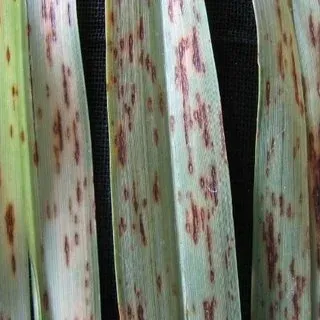
Initial symptoms appear as small, water-soaked spots on the leaves. As the infection progresses, these spots typically transition into a reddish-brown or dark brown color, characteristic of the disease.
Often, these necrotic lesions are surrounded by a pale yellow or whitish halo, which helps distinguish the infection from other types of leaf spots. In high humidity, a thin, bacterial ooze or film may appear on the surface of the lesions.
When environmental conditions are favorable for the pathogen, these spots can coalesce, covering large areas of the leaf surface, which leads to premature leaf senescence and overall plant decline.
Besides leaves, the infection can spread to leaf sheaths and stalks. In severe cases, the bacteria may affect the panicle, resulting in grain shriveling or complete sterility of the flower head.
Field diagnosis can be challenging as the visual symptoms might resemble fungal diseases or abiotic stress factors, making laboratory confirmation a standard practice for accurate identification.
Pathogen
The causal agent of bacterial leaf spot in millet is the bacterium Pseudomonas panici. These are motile, rod-shaped bacteria that actively colonize host plant tissues throughout the vegetative growth period.
This pathogen is highly specialized, primarily affecting common millet (Panicum miliaceum). The bacteria enter the plant through natural openings like stomata or via mechanical injuries caused by insects or field operations.
Once inside, the pathogen multiplies rapidly and secretes toxic compounds that degrade cell walls, leading to localized tissue necrosis. This disruption interferes with the host plant's physiological functions and photosynthesis.
The pathogen overwintering occurs primarily on crop debris left in the field after harvest and within infected seeds. It can survive in the soil for several months, remaining dormant until favorable conditions trigger activity.
The transmission of the bacterium within a field is predominantly facilitated by rain splashes, wind, and insect vectors that transfer bacterial cells from diseased plants to healthy ones.
Conditions for development
The development of bacterial leaf spot is heavily dependent on frequent rainfall, high relative humidity, and warm temperatures, generally between 20°C and 25°C, which are optimal for bacterial proliferation.
Persistent moisture on the foliage, often caused by dew or heavy rainfall, provides the necessary pathway for the bacteria to enter plant tissues. Wind-driven rain is a primary driver of disease outbreaks.
High-density planting, which reduces air circulation within the canopy, creates a microclimate with stagnant, humid air, significantly increasing the risk of rapid pathogen spread and disease severity.
Plants that are nutritionally stressed or already damaged by herbivores are significantly more susceptible to infection. Maintaining overall crop health is crucial to providing natural resistance against bacterial ingress.
The use of untreated, contaminated seeds is a major factor in the disease cycle, as it introduces the inoculum directly into the field at the start of the growing season.
Why it matters
The primary economic impact of bacterial leaf spot is a significant reduction in grain yield. Infected plants often show stunted growth and reduced vegetative mass, which directly affects the grain-filling potential.
Damage to the photosynthetic apparatus of the leaves means the plant cannot produce enough carbohydrates, leading to underdeveloped, light, or shriveled grains, which decreases the total harvest weight.
The quality of the harvested grain is also compromised, showing poor germination rates and lower nutritional value, which makes it unsuitable for high-quality seed selection for the following season.
In cases of severe epidemics, crop yield losses can range from 10% to 30%. These losses translate into substantial financial deficits, especially in regions that rely heavily on millet production.
Harvesting can also be complicated by the disease, as uneven ripening and premature lodging of severely infected plants can hinder machine operations and increase processing costs.
Protection
A well-planned crop rotation is the foundation of management, requiring a break of 3–4 years between millet crops to allow the soil bacterial population to decline naturally.
The most sustainable strategy is to plant resistant or tolerant millet varieties. Breeding efforts focusing on host plant resistance provide long-term protection without the need for intensive chemical applications.
Seed treatment using effective bactericides is essential to eliminate seed-borne inoculum and protect the crop during the vulnerable seedling emergence stage.
- Deep plowing to bury crop debris and promote microbial decomposition.
- Effective weed control to eliminate alternative hosts for the bacteria.
- Optimizing seeding rates to ensure adequate spacing and airflow.
- Balanced fertilization to boost plant vigor and systemic resistance.
While chemical options are limited, the application of copper-based fungicides or biocontrol agents during the early stages of infection may help suppress the rate of spread in high-value millet crops.
Discussion
No discussions yet — be the first.