
Barley yellow dwarf
Luteovirus sgvhordei
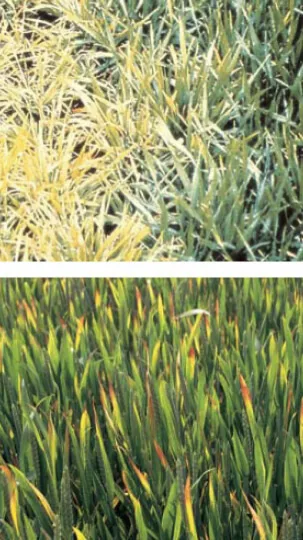
Description
Symptoms
The most characteristic symptom is the yellowing or reddening of leaf tips, which often spreads downward along the leaf blade toward the base.
Plants infected early in their development exhibit significant stunting and reduced height, leading to the condition known as barley yellow dwarf.
Stunted plants may show an increase in tillering, but these tillers are usually underdeveloped and fail to produce viable, productive heads.
Root system development is severely impaired, making the affected plants much more sensitive to water stress and nutrient deficiencies in the soil.
Symptoms typically appear in localized patches in the field, representing the initial sites of aphid infestation and primary virus spread.
Pathogen
The causal agent of this disease is the Barley yellow dwarf virus (BYDV), which belongs to the Luteoviridae family. This virus is strictly phloem-limited and does not spread through mechanical contact or seed transmission.
The primary transmission mechanism in agricultural fields is through various species of cereal aphids, most notably the bird cherry-oat aphid and the grain aphid.
Upon feeding on an infected plant, the aphid ingests the virus, which then circulates through its body and is transmitted to healthy plants during subsequent feeding sessions.
The virus replicates within the phloem tissues, causing systemic infection that restricts the movement of sugars from the leaves to the roots and developing grains.
Different strains of the virus exist, showing varying levels of virulence and host preference among wheat, barley, oats, and various forage grass species.
Conditions for development
Disease prevalence is heavily dependent on aphid population density and their migration patterns during the susceptible growth stages of the cereal crop.
Mild and extended autumn weather provides an ideal environment for aphid reproduction and prolonged migration, which facilitates early-season infection of winter crops.
Early planting of winter cereals increases the risk of infection as it coincides with the peak migration period of aphid vectors from summer hosts.
The presence of wild grasses and volunteer cereals around field margins acts as a green bridge, allowing the virus and aphids to persist throughout the year.
Environmental conditions that favor rapid plant growth can sometimes mask symptoms, whereas cool, stressful weather often makes the yellowing more pronounced.
Why it matters
Barley yellow dwarf can cause severe yield losses, often ranging from 20% to 50%, depending on how early the plants were infected during the season.
Grain filling is significantly reduced, resulting in smaller, shriveled kernels and a decrease in overall grain quality and test weight.
Infected winter cereal crops show reduced cold hardiness, leading to increased rates of winterkill even in relatively mild winters.
Economic losses are further compounded by the reduced market value of the harvested grain and the increased costs of secondary pest and disease management.
The disease weakens the host plant's immune system, making it more susceptible to secondary fungal infections like root rot and leaf spots.
Protection
Management focuses primarily on controlling the aphid vectors using timely insecticide applications when population thresholds are exceeded.
Adjusting planting dates is a key strategy to ensure that the most vulnerable growth stages do not coincide with the main aphid migration events.
Field sanitation is essential, including the control of weeds and volunteer plants that serve as reservoirs for the virus and aphid colonies.
The use of host-plant resistance, where available, provides the most durable and sustainable method for managing barley yellow dwarf.
- Monitor aphid populations using yellow sticky cards.
- Apply systemic insecticidal seed treatments to protect young seedlings.
- Maintain spatial isolation between different cereal crops to break the disease cycle.
Discussion
No discussions yet — be the first.