
Barley yellow dwarf
Luteovirus pavhordei
Description
Symptoms
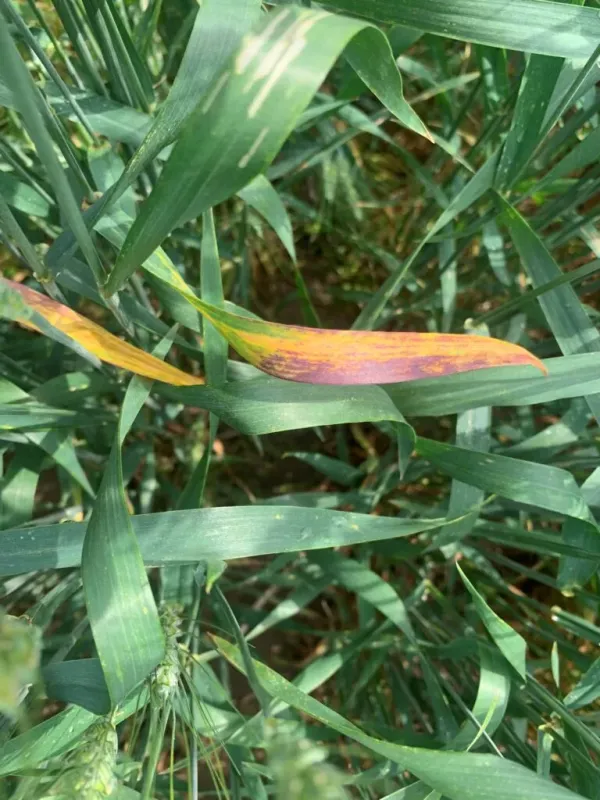
Visible symptoms typically begin with yellowing (in barley) or reddening (in oats and wheat) of the leaf tips. This discoloration gradually spreads downward along the leaf blade.
The most iconic symptom is severe stunting or "dwarfism." Infected plants exhibit shortened internodes, giving them a stiff, bunched, or rosette appearance in the field.
Roots of infected plants are often poorly developed, leading to inefficient water and nutrient uptake. This further exacerbates the stunting effect and makes plants vulnerable to drought.
Early-stage infection often results in delayed or failed heading. If heads do develop, they are frequently small, sterile, or partially trapped within the leaf sheaths.
Grain produced by infected plants is generally shriveled, light, and of low quality, significantly reducing the overall yield and marketability of the harvested cereal crop.
Pathogen
Barley yellow dwarf virus (BYDV) is the causal agent of one of the most widespread viral diseases affecting cereal crops worldwide. It belongs to the Luteoviridae family and is characterized by its phloem-limited nature.
The virus is exclusively transmitted by aphid vectors, such as the bird cherry-oat aphid and the grain aphid. The virus is acquired when aphids feed on infected plants and remains in their system for the remainder of their lifespan.
BYDV is not transmitted through seed, soil, or mechanical contact between plants. Successful spread of the virus requires the continuous movement of infected aphids between hosts.
Once inside the plant, the virus moves through the phloem, interfering with the translocation of photosynthetic products from leaves to the rest of the plant, causing systemic physiological stress.
There are several distinct strains of the virus, which vary in their aggressiveness and host preference. This diversity makes the development of broad-spectrum resistant crop varieties extremely challenging.
Conditions for development
Disease prevalence is heavily influenced by aphid population dynamics. Mild autumns and warm winters provide optimal conditions for aphids to survive and multiply, leading to high infection pressure.
Early sowing of winter cereals often coincides with the peak migration of aphids moving from senescing summer weeds or volunteer cereals, facilitating widespread early infection.
Presence of "green bridges"—weeds or volunteer crops in or near fields—serves as a critical reservoir for the virus, allowing aphids to survive and transmit the pathogen to new crops.
Temperature plays a crucial role in disease development; moderate temperatures favor both aphid reproduction and efficient viral replication within the host plant tissue.
High humidity and optimal growth conditions for cereals can sometimes mask symptoms initially, leading to a false sense of security until significant yield damage has already occurred.
Why it matters
Barley yellow dwarf is considered one of the most economically damaging diseases in cereal production, capable of causing substantial losses in both quality and total output.
The primary impact of the virus is a drastic reduction in grain yield, which can exceed 50% in severe outbreaks, particularly if the crop is infected at the seedling stage.
Infected crops show uneven maturation and stunted growth, which complicates harvesting processes and can lead to increased losses during the combine operation.
The disease reduces the plant's natural tolerance to environmental stresses, such as winter frost or dry spring conditions, often resulting in patchy stands and thin crop cover.
Reduced grain filling and lower nutritional content make the produce less desirable for milling or malting, negatively impacting the profitability of the agricultural operation.
Protection
Effective management requires an integrated approach focusing on breaking the virus cycle and controlling the aphid vectors during critical stages of crop development.
- Adjusting sowing dates to avoid the peak aphid flight periods, thereby reducing early-season infection risks.
- Eliminating volunteer cereals and grassy weeds that harbor the virus and provide a host for aphids during the off-season.
- Applying systemic or contact insecticides when aphid populations reach economic thresholds to limit disease spread within the field.
- Using seed treatments containing insecticides to provide protection against early-season aphid feeding and colonization.
- Selecting and planting cultivars with known genetic resistance or tolerance to BYDV to mitigate potential damage.
Discussion
No discussions yet — be the first.