
Fijivirus
Fijivirus
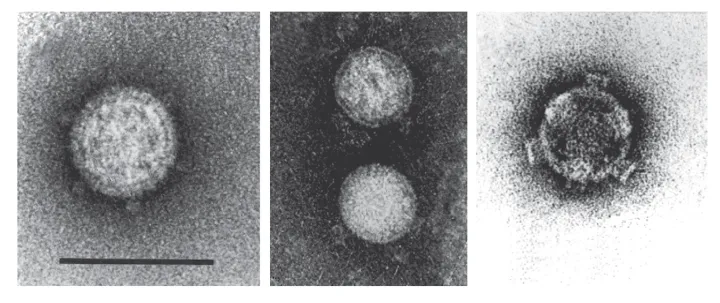
Description
Symptoms
The most characteristic symptom of Fijivirus infection is severe stunting. Plants exhibit drastically shortened internodes, giving them a bushy or rosetted appearance.
Enations, which are small gall-like growths or tissue swellings, frequently appear on the undersides of leaves or along the veins of the stems due to hyperplastic cell division.
Leaves often show symptoms of chlorosis, twisting, and deformation. The plant’s overall vigor is compromised, leading to poor root development and leaf discoloration.
Infected plants often fail to produce flowers or seed-bearing structures. If cobs or panicles are produced, they are usually sterile, malformed, or underdeveloped.
Early-stage infections are particularly lethal, often leading to the complete failure of the plant to reach maturity and significant yield losses at harvest time.
Pathogen
Fijivirus is a genus of plant viruses within the Reoviridae family. Their genome is composed of ten segments of double-stranded RNA, which contributes to their high biological complexity.
These viruses are responsible for systemic diseases in monocotyledonous plants, particularly members of the Poaceae family, such as maize, rice, and sugarcane, by disrupting phloem function.
The transmission of Fijiviruses is entirely dependent on insect vectors, specifically planthoppers (delphacids). The virus replicates within the insect, ensuring lifelong transmission capability.
A notable aspect of these viruses is their transovarial transmission, meaning the virus is passed from adult planthoppers to their offspring, maintaining infection cycles in nature.
As these viruses are strictly dependent on their insect hosts, the ecology of the vector population is the primary factor determining the epidemiology of the disease.
Conditions for development
The prevalence of Fijivirus is intrinsically linked to the population density and migration patterns of planthoppers, which serve as the essential biological bridge for the virus.
Warm and temperate climatic conditions favor both the reproduction of planthopper vectors and the systemic movement of the virus within the host plant tissues.
The presence of alternative host plants, including perennial grasses and weed species, creates a reservoir of infection that bridges the gap between cropping seasons.
Agricultural practices that promote high weed density or fail to manage insect vectors create environments conducive to rapid viral spread across large areas.
Late sowing of sensitive varieties during periods of high vector activity increases the risk of early-age infection, which typically leads to the most severe damage.
Why it matters
Fijiviruses pose a significant threat to global food security, causing substantial yield reductions in staple crops such as rice and maize, often resulting in total crop failure.
Economic damage is compounded by the fact that infected plants act as sources of inoculum, facilitating further spread to healthy plants within the same field.
Harvested products from infected areas are typically of low quality, showing reduced starch content and physical deformities, rendering them unsuitable for market requirements.
Management is extremely difficult once the plants are infected, leaving producers with few options other than containment and secondary damage prevention.
The cumulative impact on regional agriculture includes loss of revenue, increased costs for pesticide control of vectors, and the necessity to replace susceptible crop varieties.
Protection
Effective management of Fijivirus relies on a preventive approach, as there are no chemical treatments available to cure plants once they are systemically infected.
The core of control strategy is to minimize the vector population by using targeted insecticides during the critical growth stages of the crop.
Implementing strict sanitation practices, such as removing weeds and infected crop debris, is vital to eliminate environmental reservoirs of the virus.
The utilization of resistant or tolerant crop cultivars is the most sustainable and efficient method for managing these viral threats in endemic regions.
- Crop rotation to break the cycle of vector-virus presence.
- Strategic adjustment of planting dates to minimize vector contact.
- Use of virus-indexed, high-quality planting material.
Discussion
No discussions yet — be the first.