
Soybean mosaic virus
Comovirus glycinis
Description
Symptoms
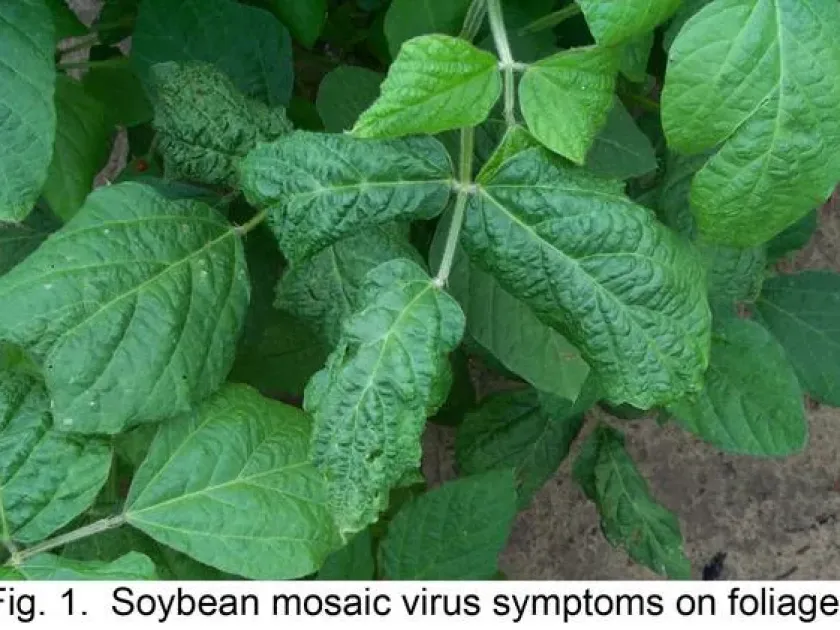
The most characteristic symptom of SMV is a distinct mosaic pattern on leaves, manifesting as alternating patches of light and dark green tissues. Leaves often exhibit puckering, crinkling, and significant distortion.
Infected plants typically show stunted growth and shortened internodes, resulting in a bushy, dwarfed appearance. The severity of these symptoms is often influenced by the age of the plant at the time of infection and ambient temperature.
During later stages, plants may exhibit downward curling of leaf edges, leaf yellowing, and occasionally necrotic spots. In severe cases, premature senescence and leaf drop can occur before the crop reaches maturity.
Pod development is also impaired; plants produce fewer pods, and those present are often deformed. Seeds within the pods may show reduced size and developmental abnormalities.
A key diagnostic feature in some soybean varieties is the mottled appearance of the seed coat, often referred to as seed mottling or marble-like discoloration, which significantly degrades the commercial value of the grain.
Pathogen
Soybean mosaic virus (SMV) is a plant pathogenic virus belonging to the genus Potyvirus within the Potyviridae family. It is one of the most common and widespread viruses affecting soybean crops worldwide.
The virus particle is a flexible, filamentous structure measuring approximately 700–750 nm in length. Its genome consists of a single-stranded RNA molecule encased in a protective protein coat.
Transmission occurs primarily through infected seeds, making this the most significant pathway for the long-distance spread of the disease. The rate of seed transmission varies depending on the soybean cultivar and the timing of initial infection.
In addition to seeds, SMV is transmitted by several species of aphids in a non-persistent, stylet-borne manner. Aphids acquire the virus by probing infected plants and transmit it to healthy plants within seconds or minutes.
The virus also possesses a wide host range among leguminous weeds, which serve as natural reservoirs, allowing the pathogen to persist in the field environment throughout the growing season.
Why it matters
Soybean mosaic virus causes significant economic losses by reducing both the quantity and quality of soybean yields. Depending on the level of susceptibility, yield reductions can range from 30% to over 80%.
The reduction in yield is caused by the physiological disruption of the plant's metabolic processes, primarily photosynthesis. This leads to lighter, shriveled seeds and a lower number of viable pods per plant.
Beyond yield volume, the quality of the soybean harvest is compromised. SMV infection frequently leads to a decrease in seed oil and protein content, making the produce less suitable for processing industries.
Infected crops demonstrate increased susceptibility to secondary infections and environmental stressors, such as drought or heat stress, further exacerbating the damage to the overall plant health.
Because the virus is seed-borne, the harvest from infected fields often cannot be used as seed for future planting, forcing farmers to bear additional costs for procuring disease-free certified seeds.
Protection
The primary control measure is the use of healthy, virus-free certified seed. Rigorous seed testing and phytosanitary certification programs are essential to preventing the introduction of SMV into new fields.
Cultural practices, such as the systematic removal of leguminous weeds around field borders, help to eliminate the natural reservoirs of the virus and the aphid vectors.
The development and deployment of resistant soybean cultivars are the most effective long-term strategies for managing SMV. Breeding programs focus on incorporating natural resistance genes to minimize viral impact.
Insecticide applications can be used to manage aphid populations during their peak migration periods. However, because transmission is non-persistent and occurs very quickly, chemical control is often only partially effective.
Maintaining appropriate crop spacing and avoiding overly dense plantings can reduce the rate of physical contact between plants, potentially slowing the secondary spread of the virus within the field.
Discussion
No discussions yet — be the first.