
Raspberry leaf mottle
Closterovirus macularubi
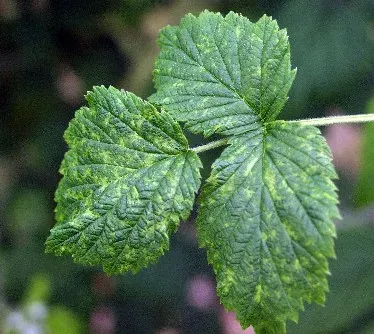
Description
Symptoms
The primary symptom of raspberry leaf mottle is the appearance of characteristic chlorotic spots on the foliage, often displaying a mottled pattern.
These spots frequently develop along the leaf veins or appear as diffuse yellowish patches, significantly altering the healthy green color of the leaves.
Visible symptoms are typically more pronounced during cool weather conditions, especially in the spring when the virus activity within the host tissue is high.
Severe infections may lead to leaf distortion, yellowing, and premature senescence, which drastically reduces the photosynthetic area of the plant.
Because these symptoms can mimic mineral deficiencies, laboratory confirmation is often necessary to distinguish this virus from abiotic stress factors.
Pathogen
The disease is caused by a virus belonging to the Closterovirus genus, which systematically infects the vascular system of the raspberry plant.
The pathogen is systemic, meaning once a plant is infected, the virus spreads through all tissues, including the stems and roots, making it permanent.
It predominantly attacks commercial and wild Rubus idaeus species, causing long-term physiological changes in the development of the host.
The virus is non-persistently transmitted by aphid vectors, which move the pathogen from infected plants to healthy ones during feeding.
Due to its systemic nature, there is no chemical cure for an infected plant; thus, management focuses on preventing new infections and eradicating reservoirs.
Conditions for development
The primary driver of disease spread is the activity of aphid populations that colonize raspberry fields during the growing season.
Environmental conditions such as mild temperatures and high humidity favor both the development of the host plant and the proliferation of insect vectors.
The proximity of wild brambles or abandoned raspberry patches acts as a persistent reservoir for the virus, allowing it to migrate into clean plantations.
Improper canopy management, such as failure to thin out shoots, creates a humid microclimate that supports vector movement and survival.
Introducing infected nursery stock is the most frequent cause of localized outbreaks, as the virus is often latent in young plants before symptoms appear.
Why it matters
The main impact of raspberry leaf mottle is a significant reduction in overall fruit yield, as the plant directs energy away from production to fight the virus.
Fruit quality is also severely compromised, with berries often becoming smaller, deformed, and lacking the sugar content required for commercial sale.
The long-term vigor of the planting declines, as the virus restricts the growth of replacement canes, leading to an unproductive, sparse field.
Infected plants exhibit reduced resistance to environmental stress, including frost and drought, which often leads to the death of the raspberry stool.
The presence of the disease creates a cumulative economic burden, forcing growers to remove entire sections of the planting to stop the spread.
Protection
The cornerstone of control is the exclusive use of certified, virus-free planting stock sourced from reputable nurseries.
Strict monitoring and management of aphid populations using targeted insecticide applications are crucial to break the transmission cycle.
Aggressive roguing—the systematic removal and destruction of symptomatic plants—is essential to limit the spread within an existing field.
Maintaining a clean cultivation zone by removing weeds and wild brambles helps eliminate potential pathogen reservoirs surrounding the plantation.
- Regular sanitization of pruning tools.
- Implementation of physical barriers where possible.
- Selection of resistant or tolerant cultivars.
- Maintaining optimal spacing to improve airflow and reduce vector habitats.
Discussion
No discussions yet — be the first.