
Helleborus carlavirus
Carlavirus hellebori
Description
Symptoms
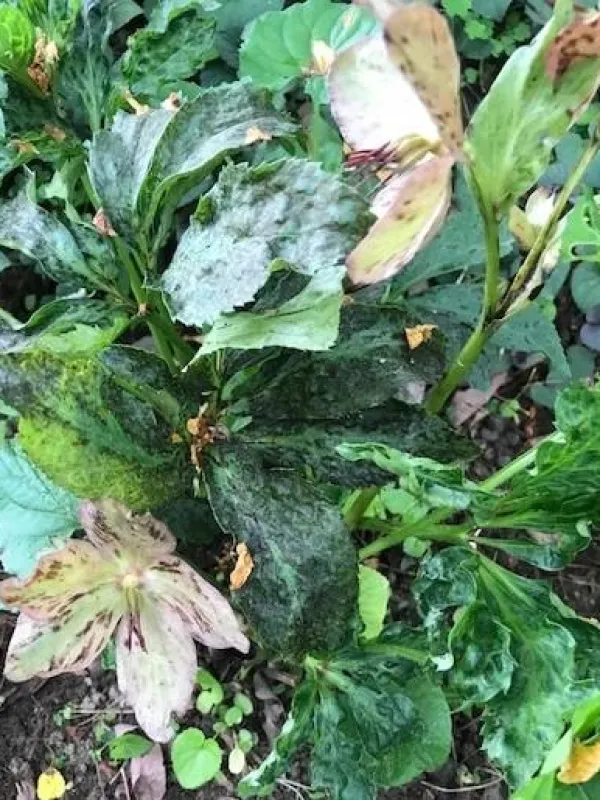
The most distinctive sign of this viral infection is the appearance of a net-like necrosis on the leaf blades, often called "net necrosis".
Infected leaves frequently show chlorotic mosaic patterns, including light-green spots or streaks that typically follow the venation of the leaf.
The plant often exhibits signs of stunted growth, resulting in smaller overall size and reduced leaf production compared to healthy hellebores.
Deformation of the leaf tissue is common as the infection progresses, which significantly reduces the ornamental appeal of the plant.
In severe cases, the plant may fail to bloom entirely or produce deformed, weak flowers, signaling a deep physiological stress caused by the virus.
Pathogen
The causal agent of this disease is the Helleborus net necrosis virus (HeNNV), which belongs to the Carlavirus genus. It is a filamentous, RNA-containing virus that specifically infects members of the Ranunculaceae family.
The viral particles function by hijacking the host cell's metabolic machinery to replicate, causing systemic infection throughout the entire plant structure.
Like all carlaviruses, it cannot penetrate the plant cuticle independently, which makes it dependent on specific biological or mechanical transmission vectors.
Aphids are the primary insect vectors that transmit the virus from an infected source to a healthy plant while feeding on the phloem sap.
Mechanical transmission is also common, occurring during pruning, cutting, or dividing infected roots if the gardener fails to disinfect tools between individual plants.
Conditions for development
The spread of Helleborus carlavirus is strongly correlated with the population dynamics of its insect vectors, mainly aphids, which are active during the growing season.
Warm and humid environments accelerate the development of aphid populations, thereby significantly increasing the risk of virus transmission across the garden.
The presence of wild reservoirs or nearby infected plants provides a constant source of the virus, allowing it to move easily into healthy planting areas.
Poor horticultural hygiene, such as using unsterilized knives for dividing rhizomes, is a primary driver for spreading the virus within a private or commercial collection.
High plant density encourages the movement of insect vectors between host plants, making it easier for the virus to establish itself throughout a patch of hellebores.
Why it matters
The primary concern regarding this virus is its irreversible nature, as there are no curative treatments available to eliminate the virus once a plant is infected.
As the infection persists, it depletes the plant's metabolic reserves, leading to a long-term decline in vigor and a loss of the plant's characteristic ornamental features.
Infected specimens serve as a perpetual threat to neighboring plants, potentially necessitating the removal of an entire collection if the infection is not managed early.
The virus compromises the plant's natural immune response, making it highly susceptible to opportunistic secondary infections, such as bacterial soft rot.
Commercial growers face financial losses due to the inability to market infected stock, as even minor mosaic symptoms reduce the grade and value of the hellebore.
Protection
Prevention is the most effective management strategy, focusing on sourcing plant material from certified, virus-free nursery suppliers.
Implementing a rigorous insect control program, specifically targeting aphids with systemic insecticides, is crucial to prevent the primary transmission pathway.
Sterilizing all gardening tools with a 70% ethanol solution or a bleach-based cleaner between every individual plant is essential to prevent cross-contamination.
If an infection is identified, the affected plant should be immediately uprooted and destroyed to eliminate the source of the inoculum in the garden.
- Regular inspection of the foliage for mosaic and necrotic symptoms.
- Quarantine of all new plants before introducing them to established beds.
- Control of weeds that may host both aphids and the virus.
Discussion
No discussions yet — be the first.