
Strawberry latent ringspot virus
Carlavirus fragariae
Description
Symptoms
As the name suggests, the virus often remains latent, showing no visible symptoms for extended periods, even while the plants are actively acting as virus reservoirs.
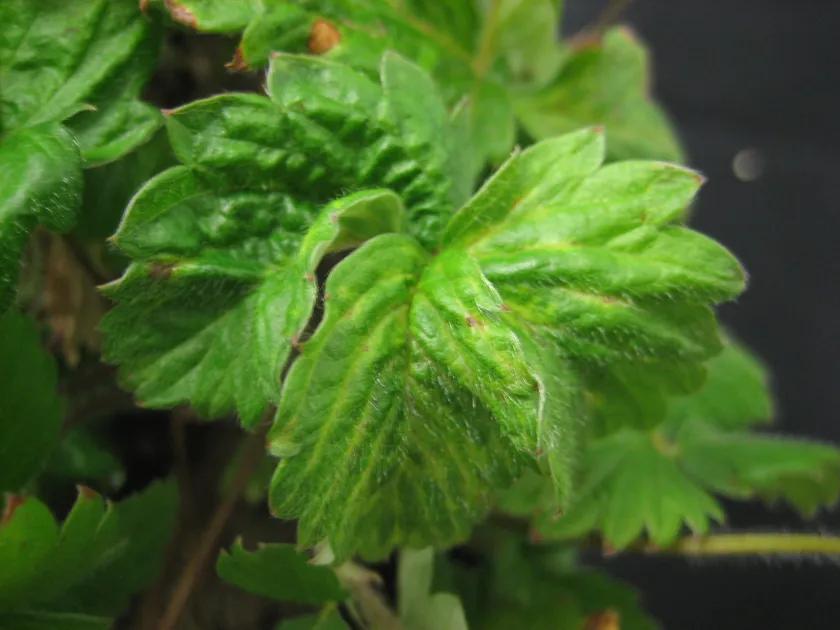
When symptoms do occur, they typically manifest as chlorotic spots, mosaic patterns, or distinct ringspots on the foliage, often accompanied by leaf crinkling or distortion.
Plants infected with SLRSV frequently exhibit severe stunting, appearing significantly smaller and less vigorous compared to healthy plants in the same growing environment.
The virus negatively impacts the reproductive capacity of the strawberry plant, often resulting in shortened flower stalks and a reduced number of fruits.
Fruit quality is also significantly diminished, with berries often appearing malformed, small, and lacking the flavor and sugar content expected from healthy crops.
Pathogen
Strawberry latent ringspot virus (SLRSV) is a plant virus belonging to the Nepovirus genus. It is a highly significant pathogen known for its ability to persist in the soil and infect a wide range of host plants.
The virus particles are systemic, meaning they move throughout the plant's vascular system, causing chronic infection in strawberries that cannot be cured once established.
Transmission occurs primarily through soil-dwelling ectoparasitic nematodes, specifically those in the genus Xiphinema, which acquire the virus while feeding on infected roots.
Once acquired, the nematodes can retain the virus for long periods and transmit it to healthy plants during subsequent feeding sessions, facilitating rapid spread across a field.
In addition to nematode transmission, the virus is easily disseminated through vegetative propagation, as runners taken from infected mother plants will carry the systemic infection.
Conditions for development
The spread of SLRSV is highly dependent on the activity of its nematode vectors, which thrive in moist, well-structured soils where they can move freely between roots.
Sandy or light-textured soils are particularly conducive to the movement of Xiphinema nematodes, leading to faster infection rates compared to heavier clay soils.
Environmental temperatures between 15°C and 25°C are optimal for nematode activity, which directly correlates with periods of high risk for viral transmission in strawberry fields.
Poor agricultural practices, such as failing to remove plant debris from previous crops, create environments where both the virus and its vectors can overwinter.
Introducing the virus into new areas through infested soil attached to farm equipment or tools is a common scenario in the development of new infection sites.
Why it matters
The economic impact of SLRSV is severe, as it causes a gradual decline in the productivity of strawberry beds, leading to substantial yield losses over time.
Infected strawberry beds often require early destruction because the plants become too weak to produce commercial-grade fruit or survive harsh winter conditions.
Because the disease is systemic, the fruit produced by infected plants is often of poor quality, affecting the overall marketability and profitability of the harvest.
The necessity for expensive soil fumigation or the need to leave land fallow for long periods after an outbreak adds significant costs to the grower's operation.
Beyond individual farms, the virus poses a risk to the nursery industry, where it can contaminate large stocks of propagation material if strict testing protocols are not followed.
Protection
The most effective strategy for managing SLRSV is the use of virus-indexed, certified nursery stock obtained through tissue culture (in vitro) propagation.
Pre-planting soil testing for nematode populations is essential; if high populations of Xiphinema are found, soil fumigation or solarization may be required.
Implementation of long-term crop rotation cycles, avoiding host plants that sustain the nematode vectors, helps reduce the viral pressure on the land.
Strict sanitation measures must be enforced, including the immediate roguing (removal and destruction) of any plants suspected of viral infection to limit localized spread.
Controlling weeds that may harbor the virus or provide a food source for nematodes is a critical, yet often overlooked, component of integrated disease management.
Discussion
No discussions yet — be the first.