
Iris mosaic virus
Betacarmovirus iridis
Description
Symptoms
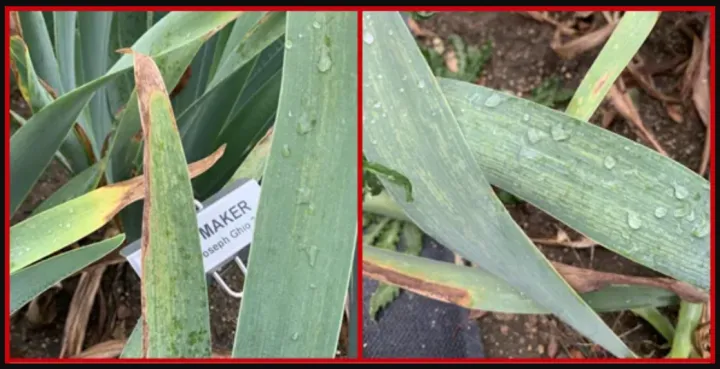
The primary symptom of this infection is the appearance of a mosaic pattern on the leaves. This manifests as light green, yellow, or pale patches and streaks, often running parallel to the leaf veins.
Another major sign is the deformation of the foliage. Leaves may become crinkled, twisted, or distorted, which disrupts the plant's ability to perform photosynthesis efficiently.
When the infection reaches the flower stalks, it causes color breaking in the petals. This results in mottled or streaked flowers that often appear smaller and malformed compared to healthy specimens.
In the early stages, symptoms may be subtle or almost invisible, especially in young plants. However, the virus gradually spreads throughout the plant, affecting its overall structure and vitality.
Visual symptoms often become more pronounced under stress, such as extreme heat or poor soil conditions, highlighting the severe impact of the pathogen on the plant's physiology.
Pathogen
The causative agent is Betacarmovirus iridis, a plant-pathogenic virus that specifically targets members of the Iridaceae family, causing systemic infection.
The virus acts as a biological parasite, entering plant cells and hijacking their genetic machinery to replicate its own viral particles, eventually damaging the host's cellular integrity.
In nature, the primary vectors are sap-sucking insects, particularly various aphid species. These insects transmit the virus while feeding, rapidly spreading it from infected to healthy plants.
Mechanical transmission is another critical pathway. Garden tools such as shears and knives can carry the virus if they are not sterilized after being used on an infected plant.
The virus persists in the rhizomes of the iris plants. This is particularly dangerous for propagation, as the infection is easily transferred to new generations through division.
Conditions for development
The spread of the virus is closely tied to the environmental conditions that favor aphid population growth, such as warm and dry spring weather.
Overcrowded plantings increase the risk of transmission. Poor airflow and high plant density allow insects to move more easily between plants, accelerating the spread of the disease.
Poor agricultural practices, such as excessive nitrogen application, produce soft and succulent growth that is highly attractive to vectors, facilitating faster infection rates.
Environmental stress, including drought or significant temperature fluctuations, weakens the plant's immune response, making it easier for the virus to establish and proliferate in the tissues.
The most critical time for transmission is the active growth phase in early spring, when young foliage is most vulnerable and insect activity begins to rise.
Why it matters
The main impact of the virus is the significant loss of ornamental value. Infected irises look stunted and sickly, rendering them useless for professional landscaping and retail markets.
The virus suppresses plant growth, leading to dwarfed specimens with reduced root mass and overall vitality, which eventually results in the slow decline of the entire garden bed.
Blooming is severely affected. The quantity of flower buds decreases, and those that do form are often deformed or exhibit poor color development, reducing the horticultural quality of the crop.
Infected rhizomes serve as permanent sources of infection. Once established, the virus can destroy an entire collection, as there is currently no cure to eliminate the virus from the plant tissues.
Economic damage is substantial for growers, as entire batches of plants must be discarded once testing confirms the presence of the virus, leading to significant financial losses.
Protection
The most effective strategy is the immediate removal and destruction of symptomatic plants. Infected irises should be dug up and burned to prevent the pathogen from spreading further.
Rigorous vector control is essential. Regularly monitor and treat the garden for aphids and other sap-sucking insects using appropriate insecticides to break the cycle of viral transmission.
Maintain strict garden hygiene. Always disinfect cutting tools with a strong alcohol solution or bleach after each plant is pruned to prevent mechanical transfer of the virus.
Use only certified, virus-free planting material. Sourcing your irises from reputable nurseries significantly reduces the risk of introducing the virus to your garden.
Maintain optimal plant health through proper fertilization, adequate watering, and consistent weed management, as weeds can act as hidden reservoirs for both the virus and its insect vectors.
Discussion
No discussions yet — be the first.