
Solanum leaf curl virus
Begomovirus solanumseverugosi
Description
Symptoms
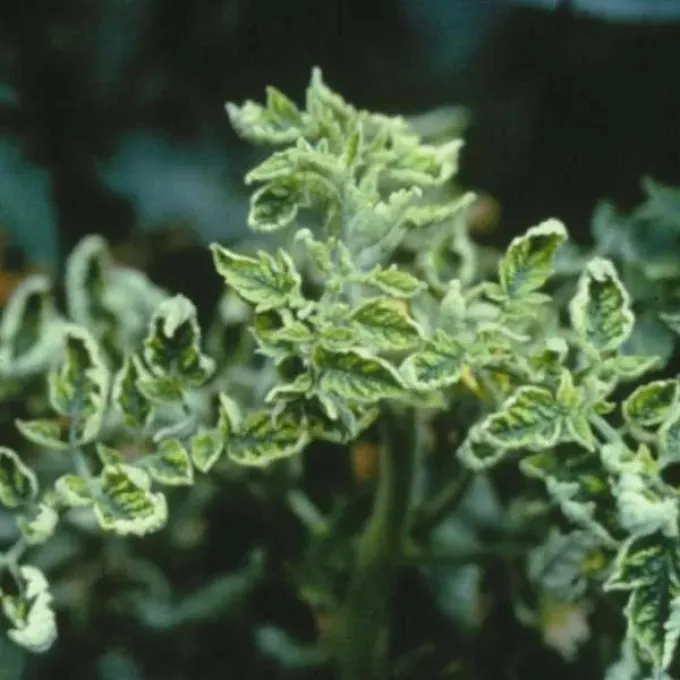
The most diagnostic symptom is the upward curling and rolling of leaf margins. Leaves typically become leathery, brittle, and exhibit a distinct chlorotic or yellowish appearance.
Stunted growth is a hallmark of the infection. Plants show shortened internodes, resulting in a compact, bushy appearance rather than normal vertical development.
Fruit set is severely impaired. Existing fruits may become malformed, smaller in size, and display uneven coloration, making them unsuitable for commercial market distribution.
Flowering may be significantly reduced or aborted entirely. When flowers do persist, they often fail to develop into mature, healthy fruits due to the lack of metabolic support from the plant.
Overall, the plant vigor declines rapidly. The vascular system stress manifests as general yellowing (chlorosis) and eventual senescence of older leaves, leading to premature plant decline.
Pathogen
The causative agent of this disease is Begomovirus solanumseverugosi, a member of the Begomovirus genus within the Geminiviridae family. These viruses are characterized by their small, circular, single-stranded DNA genome wrapped in twinned protein capsids.
It is a systemic plant disease that disrupts the vascular system. The virus colonizes the phloem, leading to physiological changes that affect nutrient transport throughout the entire plant.
The virus is exclusively transmitted by the whitefly (Bemisia tabaci) in a persistent, circulative manner. Once the insect ingests the virus, it remains a carrier for the rest of its life.
The virus does not multiply within the host insect, but it must pass through the insect's hemolymph to its salivary glands before it can be transmitted to a healthy plant.
Solanaceous weeds often serve as persistent reservoirs, allowing the virus to overwinter and re-emerge in the spring when whitefly populations increase.
Conditions for development
Environmental conditions that favor high whitefly activity are the primary drivers of viral transmission. Warm, dry weather is optimal for the rapid life cycle and reproduction of the vector.
Greenhouse environments offer a perfect sanctuary for both the vector and the virus. Lack of proper ventilation and pest management can lead to a 100% infection rate within a single growing cycle.
High planting density contributes to the rapid spread of the virus. When crops are closely spaced, whiteflies move easily from infected to healthy plants, accelerating the epidemic.
Inadequate field hygiene, particularly leaving crop debris and weeds after harvest, creates a bridge for the virus to survive and infect subsequent plantings.
Regional climate variability affects the timing of whitefly migrations. Outbreaks are most common during peak summer months or in periods of prolonged drought.
Why it matters
The economic impact is profound due to the irreversible nature of the disease. Once a plant is infected, it cannot be cured, and its productivity drops to near zero.
Quality reduction is a major issue; even if fruits are produced, they rarely meet quality standards for texture, size, or appearance, leading to massive financial losses for producers.
The cost of intensive insect management increases production overheads. Frequent application of pesticides often creates resistance issues in the vector population, complicating control.
Widespread outbreaks can devastate local tomato and potato production, forcing farmers to abandon fields or switch to less profitable, virus-resistant or non-susceptible crops.
Secondary infections occur because the weakened plants are less capable of defending themselves against opportunistic bacteria and fungi, compounding the damage caused by the virus.
Protection
Integrated Pest Management (IPM) is essential for controlling the vector. This includes the strategic use of insecticides, biological controls, and cultural practices to limit whitefly numbers.
- Utilize virus-free certified seedlings.
- Install fine-mesh screens on greenhouse vents to physically exclude whiteflies.
- Implement strict weed control in and around production areas.
- Use yellow sticky traps to monitor and reduce adult whitefly populations.
Rogueing—the immediate removal and destruction of infected plants—is critical during the early stages of an outbreak to reduce the primary inoculum source.
Biological control agents, such as parasitoid wasps (e.g., Encarsia formosa), can be effective tools in closed greenhouse environments to keep the vector population below the damage threshold.
Discussion
No discussions yet — be the first.