
Tomato leaf curl virus
Begomovirus solanumjapanense
Description
Symptoms
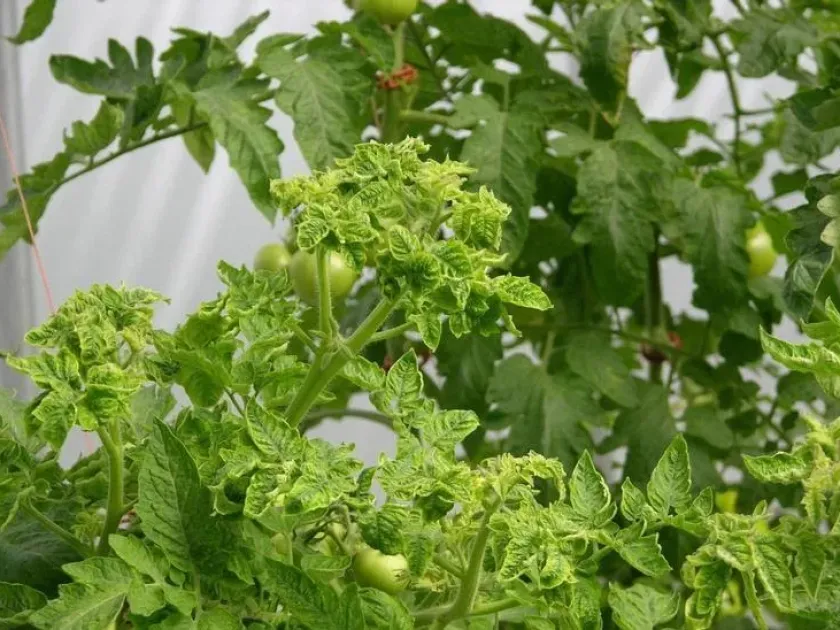
The most prominent symptom is the curling of leaves, which often roll upwards or inwards, accompanied by significant stunting of the plant.
Chlorosis and interveinal mosaic patterns are frequently observed on the leaves, leading to a loss of photosynthetic capacity and reduced vigor.
Plants affected at an early stage show severe growth reduction, characterized by shortened internodes and a bushy, stunted appearance of the terminal foliage.
Flower abortion is a common consequence of infection, which prevents fruit set and directly leads to yield loss.
Fruits that do manage to develop are usually undersized, misshapen, and may display discoloration, making them commercially worthless.
Pathogen
The causal agent of this disease is Begomovirus solanumjapanense, which belongs to the Geminiviridae family. It is characterized by a circular single-stranded DNA genome wrapped in geminate particles.
Transmission occurs exclusively through the silverleaf whitefly Bemisia tabaci in a circulative, non-propagative manner. The insect acquires the virus by feeding on infected phloem tissues and remains infectious throughout its lifespan.
Upon entering the plant, the virus replicates within the phloem cells, severely interfering with the plant's nutrient transport system and altering its physiological processes.
The virus has a broad host range among Solanaceous plants, allowing it to survive on alternative hosts such as various weeds and wild nightshades when primary crops are not present.
Due to its rapid replication cycle, the virus can quickly achieve high titers in the plant vascular system, leading to systemic infection shortly after the initial transmission by the vector.
Conditions for development
The spread of the virus is strictly dependent on the population dynamics of the whitefly vector, which thrives in warm and humid climates.
Greenhouse environments provide optimal conditions for the buildup of whitefly populations, especially when temperature and humidity are poorly regulated.
Weed management is critical, as wild Solanaceous species act as environmental reservoirs for both the virus and its insect vector during the off-season.
The movement of contaminated plant material across regions often serves as the primary mechanism for introducing the virus into new, previously unaffected areas.
High nitrogen fertilization rates can encourage excessive vegetative growth, which in turn provides more shelter and food for whitefly populations, increasing viral spread.
Why it matters
This virus is considered one of the most destructive pathogens for Solanaceous crops, capable of causing nearly total loss in unprotected fields.
Economic losses arise from both the reduction in marketable yield and the increased costs associated with vector control and disease management programs.
The physiological stress caused by the virus makes crops highly susceptible to opportunistic secondary infections by soil-borne pathogens or opportunistic bacteria.
Consistent damage to the leaf structure reduces the plant's ability to produce sugars, leading to low-quality fruits that lack proper sugar content and size.
In heavily infested areas, the virus can render traditional cultivation methods unviable, forcing farmers to switch to more resistant varieties or different crops.
Protection
Management strategies rely heavily on managing whitefly vector populations through the strategic use of systemic insecticides.
Cultural practices, such as maintaining a weed-free environment and utilizing high-quality, virus-free transplants, are essential for successful disease prevention.
The deployment of resistant or tolerant cultivars is the most effective long-term method for mitigating the impact of the disease.
- Deploying yellow sticky traps to monitor and reduce adult whitefly populations in greenhouses.
- Installing fine-mesh screens on greenhouse vents to prevent the migration of insects.
- Rogueing and prompt destruction of symptomatic plants to reduce the local inoculum source.
Integrated Pest Management (IPM) protocols should be implemented to balance chemical control with biological and mechanical tools, ensuring sustainable agricultural production.
Discussion
No discussions yet — be the first.