
Tomato yellow leaf curl
Begomovirus solanumflavusindonesiaense
Description
Symptoms
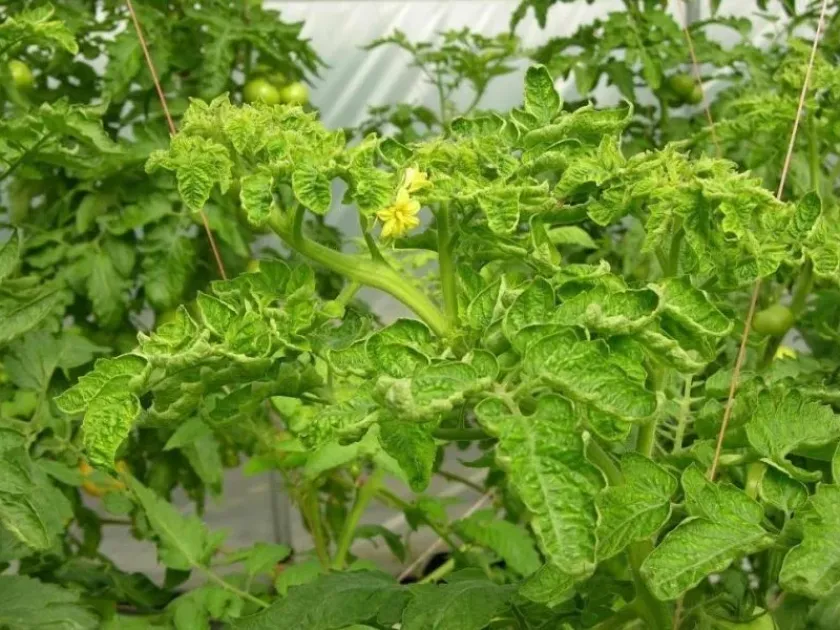
Early symptoms typically appear on the youngest leaves at the top of the plant, which begin to show signs of chlorosis and yellowing along the margins.
Leaves exhibit characteristic upward curling and cupping, while the overall foliage size becomes significantly reduced compared to healthy plants.
Infected plants show severe stunting and a bushy, rosette-like appearance due to shortened internodes, preventing normal vertical growth.
Flower development is often disrupted, resulting in blossom drop and a drastic reduction in fruit setting, or the production of misshapen, unmarketable fruits.
In severe cases of early infection, the entire plant may turn yellow and cease all vegetative and reproductive processes, leading to complete crop failure.
Pathogen
The causative agent of the disease is the Tomato yellow leaf curl virus (TYLCV), which is a member of the Begomovirus genus within the Geminiviridae family.
It is a monopartite virus with a single-stranded circular DNA genome that primarily infects solanaceous crops, causing significant agricultural losses globally.
The primary vector for the transmission of the virus is the silverleaf whitefly (Bemisia tabaci), which acquires the virus through feeding on plant phloem.
Once inside the whitefly, the virus enters a latent period before being transmitted to healthy plants, with the insect remaining infectious for its entire lifespan.
This virus is not transmitted by seed or through simple mechanical contact between plants, making insect control the most vital component of disease prevention.
Conditions for development
The development and spread of the virus are heavily dependent on the population density and activity levels of the whitefly vector.
Warm, dry weather conditions significantly accelerate the life cycle of the whitefly, leading to exponential population growth and increased virus transmission rates.
Greenhouse environments, if poorly protected, provide ideal conditions for the virus, as they maintain the stable temperatures that whiteflies thrive in.
The presence of weeds or alternative host plants surrounding the cultivation area provides a reservoir for both the virus and the insect vector throughout the season.
Frequent movement of plant material and lack of sanitation in nurseries can easily introduce the virus to new, previously disease-free growing regions.
Why it matters
TYLCV is considered one of the most destructive viral diseases for tomato production, capable of causing yield losses ranging from moderate to total destruction.
The economic impact is twofold: direct losses due to poor fruit quality and yield, and high management costs associated with continuous pest suppression.
Because there is no cure for an infected plant, the only management option often involves removing and destroying the plant to prevent further viral spread.
The presence of the virus necessitates strict quarantine measures, which can limit the export potential of agricultural products from affected regions.
Infection weakens the plant's overall physiology, making it more susceptible to secondary fungal or bacterial pathogens, further complicating crop maintenance.
Protection
The most effective strategy for managing the disease is the use of resistant or tolerant tomato varieties, which are bred to include viral resistance genes.
Physical exclusion methods, such as installing insect-proof screens on greenhouse vents, are highly effective in keeping the whitefly population out.
Integrated Pest Management (IPM) programs should be employed, focusing on regular monitoring using yellow sticky cards and the targeted application of insecticides.
Sanitation practices, including the removal of weeds and debris in and around the greenhouse, significantly reduce the number of viral reservoirs.
Regional coordination and crop rotation strategies help reduce the overall infectious pressure in areas where the virus is known to be endemic.
Discussion
No discussions yet — be the first.