
Solanum leaf curl virus
Begomovirus solanumdepravationis
Description
Symptoms
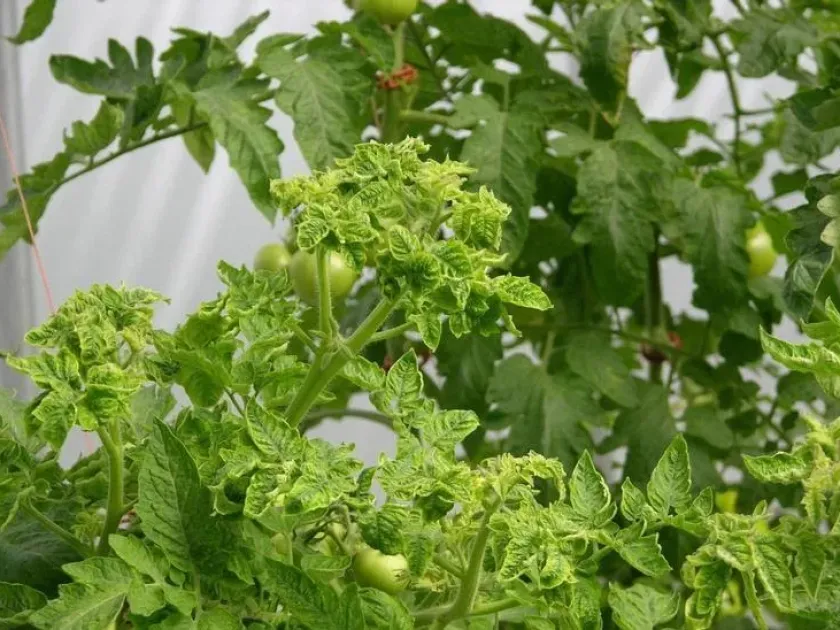
The most distinctive symptom is the upward curling of the leaf margins, often accompanied by leaf thickening and chlorosis, which creates a characteristic stunted appearance.
Infected plants display reduced internode length, leading to a bushy, stunted growth habit that is easily recognizable compared to healthy neighboring plants.
Leaves may show mosaic patterns or yellowing between the veins, and in advanced stages, the foliage may become brittle, crumpled, and deformed.
Fruit production is severely affected; flowers often fail to set fruit, and any resulting fruits are typically stunted, deformed, and of poor quality.
- Upward leaf curling.
- Stunted plant growth.
- Yellowing of leaf tissue.
- Severe reduction in fruit set.
Pathogen
The causal agent of this disease is a virus belonging to the genus Begomovirus. These viruses are characterized by a single-stranded DNA genome and are typically transmitted by whiteflies.
This virus primarily infects crops in the Solanaceae family, including tomatoes, potatoes, peppers, and eggplants, significantly impacting agricultural productivity.
The virus is obligate, meaning it relies entirely on the host cell machinery for replication and on its vector for dispersal between different plants.
Once introduced into the plant tissue, the virus moves through the phloem, systemically infecting the host and causing the characteristic morphological symptoms observed in the field.
Given the high mutation rate of begomoviruses, new strains can emerge, complicating traditional breeding efforts for disease resistance in crops.
Conditions for development
Disease outbreaks are strongly correlated with high populations of the whitefly vector (Bemisia tabaci). Environmental conditions that favor the insect's life cycle directly accelerate the spread of the virus.
Warm and dry weather conditions are ideal for whitefly reproduction, which increases the pressure of the virus in both field and greenhouse environments.
Greenhouse settings are particularly vulnerable as the lack of natural predators and the controlled environment allow the virus to spread across the entire crop cycle.
The virus persists in reservoir weed hosts (nightshades) during the off-season, which provides a constant inoculum source for the next planting season.
High nitrogen fertilization can sometimes make plants more attractive to vectors, indirectly increasing the incidence of viral infection.
Why it matters
The primary impact of the disease is a drastic reduction in total yield. In many cases, infected plants provide no commercial yield whatsoever, leading to total field loss.
Economic damage is exacerbated by the reduction in market quality; deformed fruits are rejected by markets, and the overall plant vigor is permanently compromised.
Viral infection renders the plant highly susceptible to secondary opportunistic fungal and bacterial pathogens, further complicating crop health management.
The cost of intensive insecticidal programs required to keep vector populations in check significantly increases production expenses without guaranteeing complete eradication.
Because there is no cure for the virus once a plant is infected, the entire investment in the crop can be lost if containment measures are not strictly followed.
Protection
Integrated Pest Management (IPM) is the most effective approach. This includes strict control of whitefly populations using systemic insecticides and biological control agents.
Rigorous sanitation practices, such as removing and destroying symptomatic plants, are essential to stop the spread of the virus within the field.
Weed management, particularly focusing on the removal of wild solanaceous species, is critical to eliminate the reservoirs that harbor the virus and the vectors.
Using physical barriers like fine-mesh insect-proof netting in greenhouses is a highly effective way to prevent the entry of whiteflies and the subsequent introduction of the virus.
Selecting and planting resistant or tolerant cultivars is the most sustainable long-term strategy for minimizing the economic impact of this viral disease.
Discussion
No discussions yet — be the first.