
Solanum leaf curl virus
Begomovirus solanumcontorsionis
Description
Symptoms
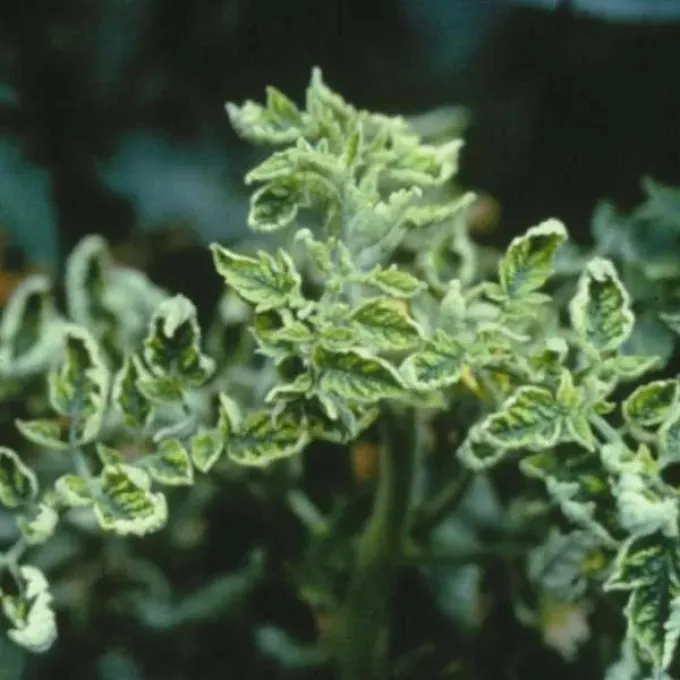
Initial symptoms include chlorotic spotting and yellowing along the margins of leaves. A characteristic sign is the upward curling of leaves, which often results in a spoon-like or distorted shape.
Infected plants exhibit severe stunting and reduced size of leaf blades. Internodes become shortened, and the overall plant growth habit changes, often appearing bushy or abnormally compact.
Flowering is significantly reduced, or in severe cases, completely suppressed. Any fruit that develops is typically small, deformed, and often displays uneven ripening patterns.
The root system of affected plants is usually underdeveloped, which increases the plant's susceptibility to water stress and nutrient deficiencies in the soil.
- Severe upward leaf curling.
- Interveinal chlorosis and yellowing.
- Stunted growth and shortened internodes.
- Deformed fruits and reduced yields.
Pathogen
The causative agent of the disease is the Begomovirus solanumcontorsionis, a member of the Geminiviridae family. It is a virus characterized by a single-stranded circular DNA genome that specifically infects solanaceous plants.
This is a systemic viral disease that affects the entire host plant, leading to significant physiological disruptions and long-term metabolic dysfunction within plant cells.
The virus is not mechanically transmitted through sap contact during agricultural practices, which distinguishes it from many other plant viruses that spread via pruning tools.
The primary vector for this virus is the whitefly Bemisia tabaci. The insect acquires the virus by feeding on infected plants and remains capable of transmitting the pathogen for the duration of its life.
The virus exploits the cellular machinery of the host plant for replication, eventually causing resource depletion and disrupting the transport of essential nutrients throughout the plant.
Conditions for development
The development of the virus is closely linked to the activity of its primary vector, the whitefly. Hot and dry weather conditions are ideal for the proliferation of the pest.
In greenhouse settings, the disease spreads more rapidly due to the stable climate, which provides an optimal environment for the migration of whiteflies between host plants.
Extended drought periods often force whitefly populations to congregate on irrigated crop fields, leading to sudden and intense outbreaks of the viral disease.
The presence of weeds in and around fields acts as a persistent reservoir for both the virus and the whitefly, facilitating a continuous cycle of infection throughout the season.
Temperatures ranging from 25 to 30 degrees Celsius are optimal for viral replication within host tissues, making mid-summer the peak time for infection and disease progression.
Why it matters
The primary economic impact of this disease is a catastrophic reduction in yield, which can reach up to 100% in cases of early-season infection of young plants.
Viral infection induces systemic degradation of physiological processes, stopping biomass accumulation and reducing the concentration of sugars and vitamins in the developing fruits.
Fruits harvested from infected plants often fail to meet market standards due to deformity and discoloration, resulting in significant post-harvest and commercial losses.
Management costs are high, as they involve intensive insecticide applications to control whitefly populations and rigorous efforts to manage host reservoirs.
The disease can lead to total crop failure, necessitating replanting and causing significant delays in the seasonal production schedule for farmers.
Protection
The primary strategy for control focuses on the strict management of whitefly populations using systemic insecticides to break the transmission cycle of the virus.
Agrotechnical practices are essential, including the systematic removal of weeds that serve as alternative hosts and the implementation of proper spatial isolation between fields.
In greenhouse operations, the use of fine-mesh exclusion screens is highly recommended to physically prevent whiteflies from entering and colonizing the crop environment.
The use of resistant or tolerant cultivars and hybrids is the most effective long-term solution to mitigate losses, especially in areas where the virus is endemic.
Crop rotation and the thorough destruction of plant residues immediately after harvest are critical to reducing the inoculum pressure and preventing the carry-over of the virus to the next season.
Discussion
No discussions yet — be the first.