
Bean golden mosaic virus
Begomovirus phaseolimexicoense
Description
Symptoms
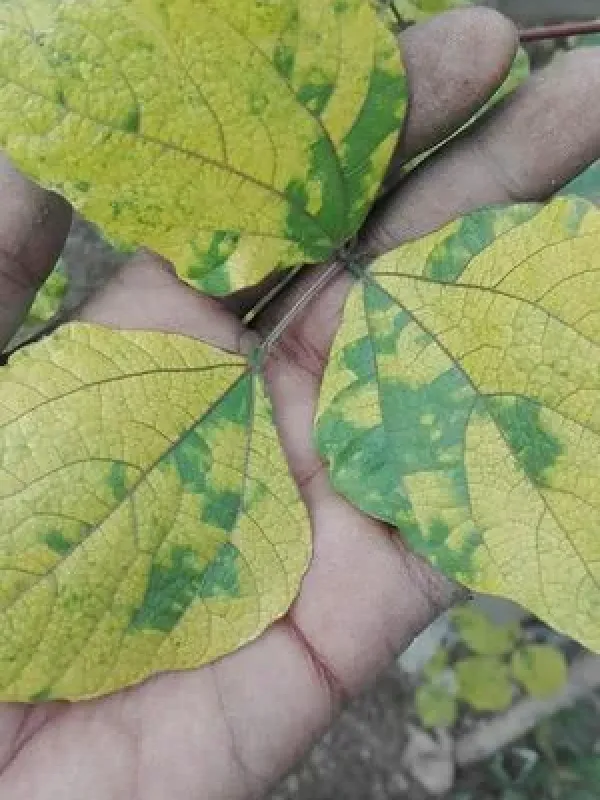
The most distinctive symptom of BGMV infection is the development of a brilliant golden or yellow mosaic pattern on the leaves. This chlorosis often covers the entire leaf surface, starting from the younger tissues and expanding rapidly.
Infected leaves exhibit significant malformation, including crinkling, puckering, and inward curling of the margins. The overall size of the leaves is drastically reduced, severely inhibiting the plant's capacity for photosynthesis.
Plants infected early in their growth cycle show pronounced stunting. The internodes are shortened, resulting in a bushy, deformed appearance that makes the entire plant stand out from healthy individuals in the field.
The reproductive development is severely compromised. Infected bean plants often suffer from flower and bud abortion, leading to a complete failure in pod formation. Any pods that do develop are typically small, misshapen, and commercially worthless.
In field environments, the disease manifests in clusters. Because whiteflies tend to move from plant to plant in short distances, the spread of the virus appears as patches of infected plants surrounded by seemingly healthy sections of the field.
Pathogen
Bean golden mosaic virus (BGMV) is a significant plant pathogen belonging to the genus Begomovirus within the family Geminiviridae. It contains a single-stranded circular DNA genome and is a major constraint to bean production in tropical and subtropical regions of the Americas.
As an obligate parasite, the virus relies entirely on the host plant's cellular machinery for replication and the vector for transmission. Its genome is highly optimized for survival within both the plant host and the insect vector, allowing for rapid disease development.
The primary vector for BGMV is the tobacco whitefly (Bemisia tabaci). Transmission occurs in a circulative, persistent manner, meaning the whitefly acquires the virus by feeding on infected plants and retains the ability to transmit it for the remainder of its lifespan.
BGMV is not mechanically transmissible in the field through sap contact or pruning, and it is rarely transmitted through seeds. The absence of seed transmission simplifies sanitary measures, focusing control efforts primarily on insect vector management.
The pathogen's geographic range is expanding due to international trade and shifting climatic patterns, which have facilitated the migration of whitefly populations into previously unaffected regions, posing a global threat to bean cultivation.
Conditions for development
The prevalence of BGMV is inextricably linked to the population dynamics of the tobacco whitefly. Warm, dry weather conditions provide an ideal environment for rapid whitefly multiplication and frequent feeding, facilitating the spread of the virus.
Temperatures ranging from 25 to 30 degrees Celsius are optimal for both the replication of the virus within the host and the metabolic activity of the whitefly vector. This leads to shorter incubation periods and faster manifestation of symptoms.
Weed hosts, particularly those in the Fabaceae and Solanaceae families, serve as crucial reservoirs for the virus during the off-season. These plants sustain both the whitefly population and the viral inoculum, ensuring a ready source of infection for new bean crops.
Agricultural practices such as overlapping planting schedules and failing to implement crop rotation can lead to a build-up of the disease. A continuous presence of host plants in the field allows the virus and its vector to thrive throughout the year.
Sowing times are critical in managing the infection risk. By adjusting the planting date to avoid the periods of peak whitefly migration, farmers can protect young, vulnerable seedlings and significantly reduce the overall impact of the mosaic virus.
Why it matters
BGMV is one of the most destructive bean diseases, capable of causing yield losses ranging from 50 to 100 percent in susceptible varieties. For smallholder farmers, this often translates into total crop failure and severe economic distress.
The systemic nature of the infection forces the plant to divert its energy from pod production to mitigating the viral attack. This physiological stress renders the plant unable to complete its growth cycle, resulting in significant biomass reduction.
The quality of any produce that survives infection is extremely poor. Seed lots from affected plants are characterized by small, wrinkled grains with low germination rates, rendering them unsuitable for both consumption and future planting.
Beyond the direct loss of the harvest, farmers face increased costs associated with repeated insecticide applications. The frequent need to suppress whitefly populations adds significant overhead to production, often with diminishing returns.
Effective management requires costly phytosanitary measures, such as the early removal and destruction of symptomatic plants. This intensive field management increases labor requirements and impacts the overall profitability of the crop.
Protection
The most effective strategy for managing BGMV is the cultivation of resistant or tolerant bean varieties. Breeding programs focused on BGMV resistance have been highly successful and remain the cornerstone of sustainable disease management.
Integrated Pest Management (IPM) is essential for controlling whitefly vectors. This includes the judicious use of insecticides, rotating different classes of chemicals to prevent the development of resistance in whitefly populations.
Strategic agronomic practices, such as clearing weed hosts and maintaining adequate spatial distance between new and old bean fields, help reduce the immediate threat of viral transmission from local reservoirs.
Monitoring the whitefly population using yellow sticky traps allows for timely intervention. By detecting the arrival of whitefly colonies early, farmers can take preventative measures before the virus spreads throughout the entire plot.
- Utilize certified virus-free seeds to ensure a healthy start.
- Practice crop rotation to break the cycle of whitefly-host relationships.
- Use reflective mulches to deter whitefly landing on young bean plants.
- Conduct regular field inspections to identify and remove infected plants immediately.
- Encourage natural predators of whiteflies to maintain ecological balance in the field.
Discussion
No discussions yet — be the first.