
African cassava mosaic
Begomovirus manihotiskenyaense
Description
Symptoms
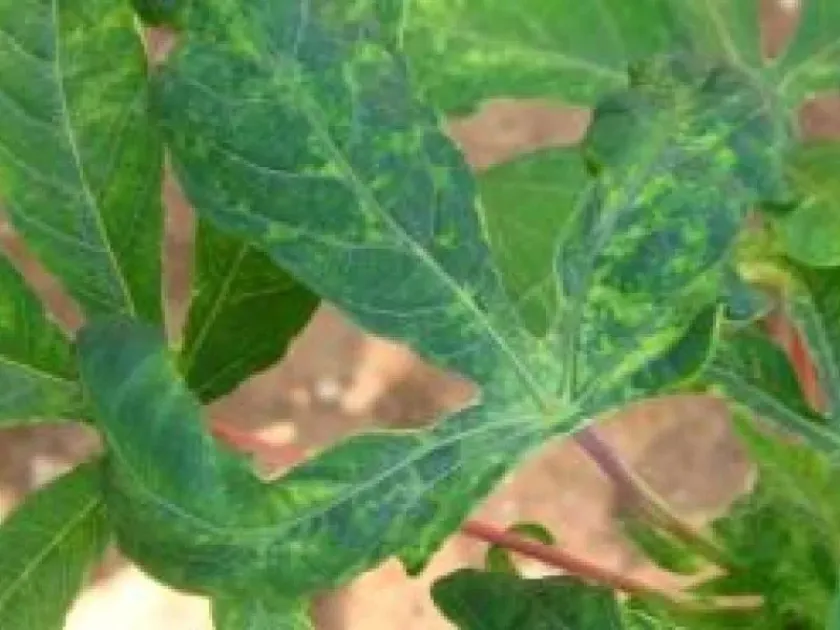
The most characteristic symptom is a chlorotic mosaic pattern on the leaves, appearing as yellow or pale green patches and mottling.
Infected leaves often exhibit curling, twisting, and a reduction in size, which hampers the plant's photosynthetic capacity.
Plants affected by the virus often show stunted growth, characterized by shortened internodes and a thinner, weaker stem structure.
At the plantation level, infected fields appear uneven, with stunted plants standing out against the healthier, taller vegetation.
The severity of symptoms can vary widely depending on the susceptibility of the cassava variety and the plant's age at the time of infection.
Pathogen
The disease is caused by the African cassava mosaic virus (ACMV), a member of the Begomovirus genus within the Geminiviridae family.
This pathogen specifically infects cassava (Manihot esculenta), a critical staple food crop in many parts of sub-Saharan Africa.
The virus is primarily transmitted by the whitefly (Bemisia tabaci), which acquires the pathogen while feeding on infected plant sap.
Besides insect transmission, the virus is spread through infected stem cuttings used by farmers for vegetative propagation.
The virus possesses a modular genome that undergoes frequent recombination, making the development of durable resistant varieties a significant challenge for scientists.
Conditions for development
The spread of the disease is highly correlated with the population dynamics of the whitefly vector, which thrives in hot and dry climates.
Outbreaks often follow periods of drought, as subsequent rains create optimal conditions for the explosive growth of whitefly populations.
Large, uniform cassava plantations provide an ideal habitat for whiteflies, facilitating the rapid movement of the virus throughout the field.
Using infected planting material is a major factor in the widespread distribution of the virus across new agricultural areas.
The presence of wild host plants surrounding the cassava fields can serve as an additional reservoir for both the virus and its insect vector.
Why it matters
The primary economic impact of African cassava mosaic is the substantial reduction in root tuber yields, affecting food security for millions.
Yield losses can range from 20% to over 90% in severe cases, depending on the cultivar's resistance and the timing of the infection.
The virus interferes with the starch accumulation process in the tubers, reducing the overall quality and nutritional value of the harvest.
Infected plants produce poor-quality cuttings, which perpetuate the cycle of the disease when used in the next planting season.
The cumulative effect of chronic infection is the gradual degeneration of local landraces, forcing farmers to abandon their traditional varieties.
Protection
The most effective strategy for managing the disease is the use of disease-free planting material, typically generated through tissue culture techniques.
Breeding and distributing resistant or tolerant cassava varieties remain the most sustainable and long-term solution for farmers.
Sanitation practices, such as roguing out diseased plants as soon as symptoms appear, help to reduce the primary inoculum load in the field.
Implementing a proper spatial distance between new healthy plantations and old, infected fields is crucial to minimize whitefly migration.
- Integrated pest management (IPM) to control whitefly populations.
- Monitoring fields for early signs of virus transmission.
- Crop rotation to reduce potential vector habitats.
Discussion
No discussions yet — be the first.