
Datura distortion virus
Begomovirus daturadistortionis
Description
Symptoms
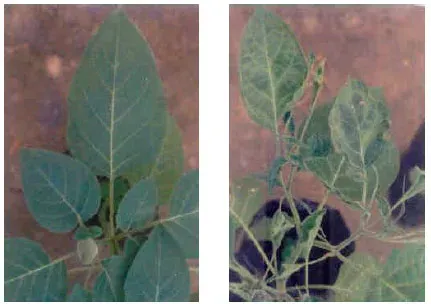
Typical symptoms include severe leaf distortion, curling, and crinkling, which are the most prominent markers for identifying this viral infection.
Plants often exhibit characteristic yellow mosaic patterns on the foliage, signifying a severe disruption of the chlorophyll production process.
Stunting is a common occurrence, as infected plants show significantly reduced height and weak, underdeveloped stems compared to healthy specimens.
Reproductive organs such as flowers often fail to develop normally, frequently leading to malformed or aborted fruits that drastically reduce crop yield.
Nodes may become shortened, resulting in a bushy or rosette-like appearance of the plant's apical sections, which is a classic symptom of begomovirus damage.
Pathogen
The causal agent is a virus belonging to the genus Begomovirus, within the Geminiviridae family, characterized by a single-stranded circular DNA genome.
These viruses are well-known for their unique twinned particles, which are highly specialized for transmission by insect vectors within agricultural ecosystems.
The transmission is primarily persistent, meaning the virus is acquired by the tobacco whitefly (Bemisia tabaci) and circulates within its hemolymph.
Once infected, the whitefly becomes a carrier for the remainder of its life, effectively spreading the pathogen throughout a crop field during feeding activities.
The molecular mechanism of the virus involves hijacking the host plant's replication machinery, leading to massive viral protein production and host cellular stress.
Conditions for development
The proliferation of the virus is inextricably linked to the population dynamics of the tobacco whitefly, which thrives in warm and humid conditions.
High temperatures accelerate the life cycle of the vector, leading to rapid population explosions and subsequent waves of virus transmission across fields.
Wild solanaceous weeds act as vital reservoir hosts, providing a sanctuary for both the virus and its vector during the off-season or between crop cycles.
Inadequate sanitation practices, such as allowing debris or weeds to remain near cultivation sites, facilitate the ongoing cycle of viral spread.
Agricultural environments with dense planting patterns often increase the efficiency of whitefly migration, thereby worsening the spread of the virus.
Why it matters
Datura distortion virus causes significant economic impact by reducing both the quality and quantity of marketable produce for Solanaceae growers.
Deformed and discolored fruits are typically rejected by consumers and buyers, resulting in a direct financial loss for the farm enterprise.
Early-stage infection of seedlings often results in total crop failure, necessitating expensive replanting and interrupting the production schedule.
Chronic infection weakens the overall vitality of the plant, making it more susceptible to opportunistic fungal and bacterial pathogens.
The persistent nature of the virus in local weed populations makes long-term management a recurring challenge for producers in affected regions.
Protection
The primary strategy for controlling the disease focuses on the rigorous management of the whitefly population using a combination of chemical and biological controls.
Strict weed management, particularly focusing on the elimination of solanaceous plants, is essential to remove the virus's primary environmental reservoirs.
Physical barriers like fine-mesh screens in greenhouses are highly effective in excluding the insect vectors from reaching susceptible crop stages.
Planting resistant varieties is the most sustainable approach to minimize the impact of the virus in areas where the vector is endemic.
- Regular monitoring of fields using sticky traps to detect early whitefly outbreaks.
- Rouging infected plants immediately upon symptom observation to prevent secondary spread.
- Implementing appropriate crop rotation schedules to break the cycle of the pathogen and the vector.
Discussion
No discussions yet — be the first.