
Cucumber leaf curl virus
Begomovirus cucumismusivi
Description
Symptoms
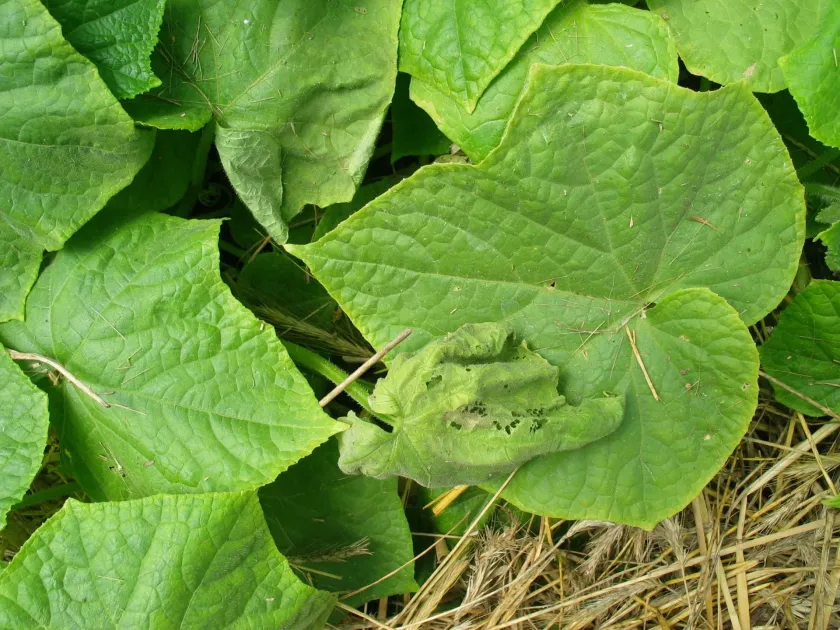
The hallmark symptom of Cucumber leaf curl virus is the upward curling and twisting of leaf margins, which causes the leaves to take on a crinkled or cup-like appearance.
Affected plants exhibit significant growth stunting, characterized by shortened internodes. This gives the plant a compressed, bushy appearance, as the normal vertical growth is severely impaired.
Flower development is often disrupted, with a reduction in the number of female flowers. Any fruit that manages to set is typically small, misshapen, and commercially unmarketable.
Leaves may show mosaic patterns or yellowing of the veins (veinal chlorosis). As the disease progresses, the leaf tissue can become brittle, and premature abscission of flowers and small fruits may occur.
It is important to note that these symptoms can easily be confused with abiotic stresses or mite infestations. However, unlike nutrient deficiencies, these viral symptoms do not respond to fertilization or chemical treatments.
Pathogen
The Cucumber leaf curl virus is caused by a virus belonging to the genus Begomovirus. These viruses are characterized by a circular single-stranded DNA genome and are part of the Geminiviridae family, known for their reliance on specific insect vectors for transmission.
The primary vector for this virus is the whitefly (Bemisia tabaci). The insect acquires the virus while feeding on the phloem of infected plants and transmits it to healthy plants during subsequent feeding sessions.
Upon infection, the virus localizes in the plant's phloem tissues, causing a systemic infection that disrupts the transport of nutrients and metabolic resources throughout the plant.
The biology of begomoviruses involves the hijacking of host cell machinery for replication. This process results in the inhibition of plant growth and the disruption of vital developmental pathways, leading to characteristic morphological changes.
In addition to cucumbers, this virus infects a variety of plants within the Cucurbitaceae family, as well as several weed species that act as reservoirs, sustaining the virus when the main crops are not in the field.
Conditions for development
The spread of the virus is inextricably linked to the population dynamics of the whitefly vector. High temperatures, typically ranging from 25 to 30 degrees Celsius, accelerate the reproductive rate of whiteflies.
Greenhouse environments provide an ideal setting for the rapid spread of the disease. Controlled temperatures and lack of natural predators allow whitefly populations to build up quickly throughout the year.
The presence of nearby weed hosts is a major risk factor. Weeds that are closely related to cucumbers can harbor the virus through the winter months, providing a source of inoculum for the spring crop.
Using infected seedlings is a primary cause of outbreaks. If seedlings are already carrying the virus or are infested with viruliferous whiteflies, the entire field can become infected within a short period after transplanting.
High nitrogen levels stimulate lush foliage growth, which attracts whiteflies. This increased attractiveness leads to more frequent feeding and more efficient transmission of the virus between plants.
Why it matters
Cucumber leaf curl virus is a highly destructive pathogen that can cause severe economic losses, sometimes reaching total crop failure in heavily infected greenhouses or fields.
The inability to cure infected plants means that once a plant is infected, it remains a source of inoculum until it is removed. This systemic nature requires aggressive sanitation measures to prevent spread.
Marketable yield is drastically reduced due to both the decrease in the number of fruits and the poor quality of the cucumbers produced. Deformed fruits are generally rejected by retailers and consumers.
The virus creates a burden on farmers by increasing the necessity for repeated insecticide applications, which can lead to whitefly resistance and increased production costs.
In addition to direct viral damage, affected plants show decreased resistance to secondary pathogens, making them more susceptible to fungal and bacterial diseases that exploit the stressed plant tissues.
Protection
The most effective strategy is the integrated management of the whitefly vector. This includes the use of systemic insecticides, biological control agents (such as parasitic wasps like Encarsia formosa), and insect growth regulators.
Strict sanitation practices are crucial. This includes removing and destroying all weeds in and around the growing area that could serve as alternative hosts for the virus or the vector.
The use of virus-resistant or tolerant cultivars is a cornerstone of effective disease management. Growers should prioritize seeds or transplants from reputable sources that guarantee health standards.
Monitoring the greenhouse using yellow sticky traps is essential for detecting the arrival of whiteflies early. Quick action when the first pests are caught can significantly delay the onset of a viral outbreak.
- Regular monitoring and early identification of diseased plants.
- Rogueing (removing and burning) all infected plants promptly.
- Installing fine-mesh insect screens on all greenhouse vents.
- Implementing strict crop rotation and spatial isolation from other susceptible vegetable crops.
Discussion
No discussions yet — be the first.