
Cacao vein banding virus
Badnavirus venatheobromae
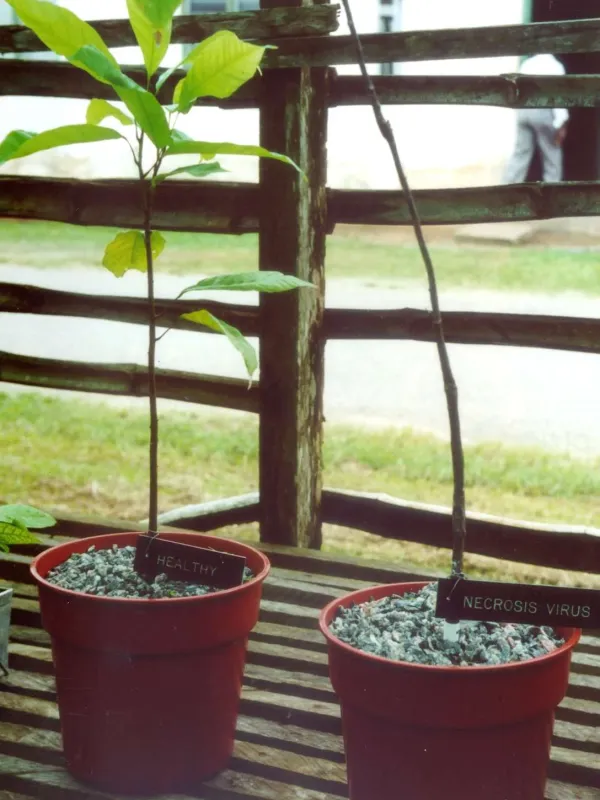
Description
Symptoms
The most distinct symptom of this disease is the characteristic banding pattern along the veins of the leaves. This often manifests as yellow or pale green streaks that contrast sharply with the dark green healthy leaf tissue.
Young leaves developing on infected branches may exhibit chlorosis, curling, or distortion. These symptoms become more evident during periods of active vegetative flushing, making it easier to identify infected trees.
In advanced stages of infection, the leaves may show a mottled mosaic appearance. The symptomatic foliage is often prone to premature senescence and abscission, leading to sparse canopy density.
Tree growth is generally stunted, with reduced internode length and weaker branching. The severity of these visual symptoms can fluctuate depending on the specific cocoa cultivar and local environmental conditions.
Careful examination of the underside of leaves under natural sunlight is often required to distinguish between mild vein banding and other nutrient-related deficiencies or viral disorders affecting cocoa.
Pathogen
The causal agent of this disease is Badnavirus venatheobromae, a virus belonging to the genus Badnavirus within the Caulimoviridae family. It contains circular double-stranded DNA and features bacilliform viral particles.
This pathogen specifically targets plants of the Theobroma genus. Once a tree is infected, the virus establishes a persistent infection, remaining in the plant tissues throughout its lifespan.
The virus colonizes the phloem tissues, which interferes with the plant's nutrient transport system. This systemic infection severely disrupts the metabolic balance and photosynthetic efficiency of the cocoa tree.
Transmission occurs primarily through insect vectors that feed on the sap of infected trees. Additionally, human activities, such as vegetative propagation or grafting using infected material, are significant pathways for long-distance spread.
Research confirms that Badnavirus venatheobromae is a complex pathogen whose presence requires stringent biosecurity measures within tropical cocoa-growing regions to prevent widespread outbreaks.
Why it matters
The primary economic impact is a drastic reduction in the quality and quantity of cocoa bean production. Infected trees produce fewer pods, and those produced are often deformed or underdeveloped.
The composition of the beans is negatively affected, with reduced cocoa butter content and poor fermentation characteristics, which directly impacts their market value in the global supply chain.
Systemic viral infection weakens the tree's natural defense mechanisms, making it increasingly susceptible to secondary attacks by pests, fungi, and other environmental stressors common in plantations.
In severe cases, the cumulative effect of the virus leads to the gradual decline and eventual death of the tree, necessitating costly replanting efforts and significant labor investments.
Plantations that harbor this virus serve as reservoirs for future spread, creating a continuous risk for neighboring healthy farms and threatening the overall economic stability of regional cocoa production.
Protection
The cornerstone of control is the use of healthy, pathogen-free planting material sourced from certified nurseries. Strict adherence to quarantine regulations is essential to prevent the entry of infected cuttings.
Producers must implement rigorous disinfection protocols for all pruning and grafting tools. Since the virus can be transmitted mechanically through sap, keeping tools sterile is a vital management practice.
Managing the populations of insect vectors, such as mealybugs, is crucial for limiting the spread of the virus within a plantation. Integrated pest management (IPM) strategies are highly recommended.
Regular monitoring and scouting of plantations allow for the early detection of symptomatic trees. Once identified, these trees should be removed and destroyed to minimize the inoculum reservoir.
Ongoing research into breeding and cultivating resistant or tolerant cocoa varieties offers the most sustainable long-term solution for managing this destructive plant virus.
Discussion
No discussions yet — be the first.