
Rice transitory leaf yellowing
Alphanucleorhabdovirus oryzae
Description
Symptoms
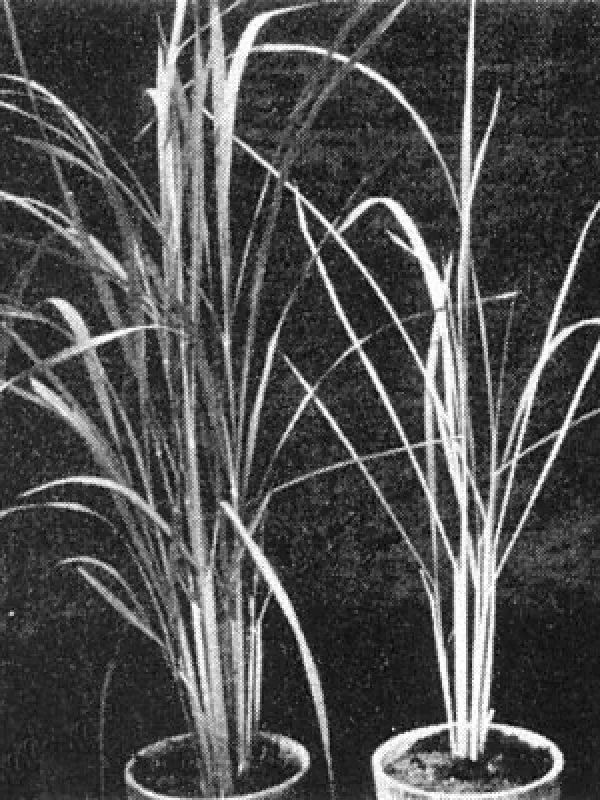
Stunting is the most prominent symptom of this disease. Infected plants exhibit significantly reduced height compared to healthy specimens, leading to uneven crop stands.
Leaves display characteristic chlorosis, often manifesting as pale yellow or light green longitudinal stripes along the veins, which eventually cover the entire leaf blade.
Excessive tillering is frequently observed in infected plants, giving them a bushy or rosetted appearance. These numerous small tillers rarely reach maturity or produce viable grain.
Reproductive development is severely hampered, with panicles failing to emerge fully from the leaf sheaths. Often, the panicles are distorted, sterile, or show reduced spikelet density.
The root system of infected plants is poorly developed and lacks vigor, which often leaves the plants susceptible to lodging and nutrient deficiencies under field conditions.
Pathogen
The disease is caused by the rice transitory leaf yellowing virus, which is classified within the Alphanucleorhabdovirus genus. This virus targets the phloem tissue, leading to a systemic infection.
The virus is an obligate parasite, requiring a living host plant or a specific insect vector to complete its lifecycle and ensure its survival and transmission.
Once inside the plant cells, the virus replicates using the host's machinery, causing severe physiological disturbances that inhibit the normal maturation and development of the rice plant.
Transmission occurs exclusively via insect vectors. The green leafhopper, Nephotettix nigropictus, acts as the primary agent responsible for spreading the pathogen across rice fields.
The virus exhibits persistent transmission, meaning once the leafhopper acquires the virus through feeding, it remains infectious for the rest of its lifespan, becoming a continuous threat.
Conditions for development
The spread of the virus is highly dependent on the population dynamics of the leafhopper vector. Warm and humid conditions favor the reproduction and activity of these insects.
Outbreaks are most severe when leafhoppers migrate into young rice fields. Early-season infestation is particularly dangerous as it results in the most significant yield loss.
High humidity and mild temperatures optimize the vector's feeding behavior, allowing it to move rapidly between host plants and spread the viral inoculum effectively.
Alternative hosts, such as various weed species surrounding the paddy fields, provide a sanctuary for both the virus and the vectors during the off-season, sustaining the disease cycle.
Temperature plays a crucial role in viral incubation within the vector. Temperatures between 25 and 30 degrees Celsius are considered optimal for the rapid acquisition and transmission of the virus.
Why it matters
Rice transitory leaf yellowing is economically devastating. Total yield failure can occur in heavily infested areas, as infected plants fail to produce any marketable grain.
Even in plants with partial infection, grain quality is significantly compromised. The resulting grain is often small, lightweight, and lacks the starch density required for milling.
The systemic nature of the disease weakens the plant's overall defense mechanism, making the crop prone to secondary infections by various fungal pathogens and bacterial rots.
The disease adds substantial financial burden to farming operations, as growers must invest in continuous insecticide applications and crop monitoring to prevent further spread.
Because there is no cure once the plant is infected, the economic focus must shift entirely toward preventative measures and rigorous field sanitation to save the surrounding crop.
Protection
The use of resistant or tolerant rice varieties is the most sustainable approach to managing the disease. Breeding programs prioritize traits that discourage vector feeding.
Integrated pest management (IPM) focusing on the control of the green leafhopper population is essential. Targeted insecticide sprays are used when vector thresholds are exceeded.
Cultural practices, such as clearing weeds from field bunds and irrigation channels, are vital to remove reservoirs of the virus and the breeding grounds for the insect vectors.
Adjusting planting schedules to avoid the peak activity periods of leafhoppers can significantly reduce the probability of primary infection in the early stages of the rice crop.
Maintaining optimal soil fertility and water management helps plants grow vigorously, increasing their resilience and ability to withstand the physiological stress imposed by the viral infection.
Discussion
No discussions yet — be the first.