
Strawberry crinkle virus
Alphacytorhabdovirus alphafragariae
Description
Symptoms
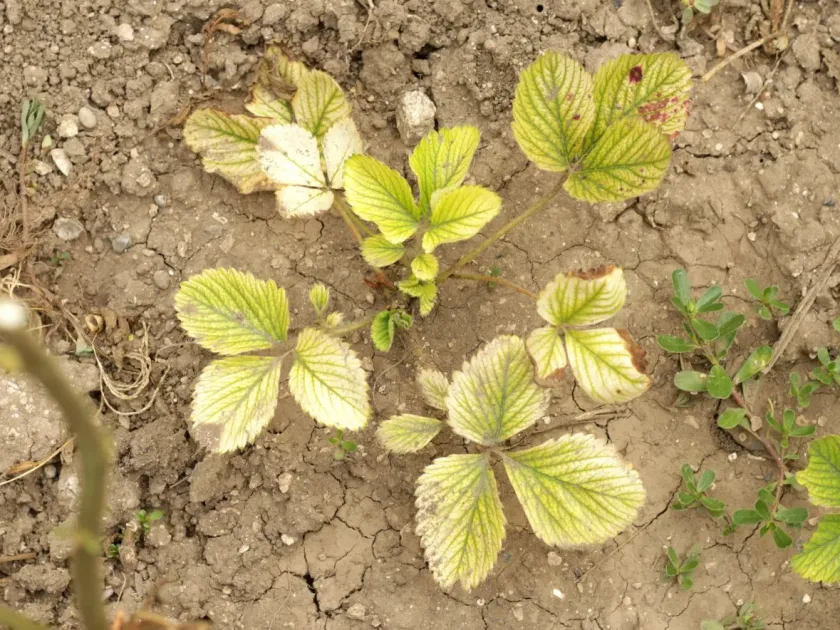
Initial symptoms include subtle chlorotic spots and speckling on young, developing leaves. As the infection progresses, the leaves become crinkled, distorted, and irregular in shape.
Leaf edges often become serrated or jagged, and the overall leaf blade displays significant asymmetry, resulting in a stunted and messy appearance of the canopy.
In severely infected plants, the internodes shorten, leading to a dwarf phenotype. The plant struggles to produce viable runners, and its overall vigor is significantly reduced.
Flowering and fruiting are severely hampered. Peduncles may appear shortened and twisted, and the resulting berries are often malformed, small, and of poor quality.
Symptoms can sometimes be latent, especially in tolerant varieties, where the plant appears healthy but serves as a reservoir for the virus, slowly declining in yield over time.
Pathogen
The causal agent of the disease is Alphacytorhabdovirus alphafragariae, formerly known as Strawberry crinkle virus. It is a bullet-shaped rhabdovirus containing single-stranded RNA.
This virus is a systemic pathogen that colonizes the vascular tissues of the strawberry plant. It does not spread through mechanical contact or pruning tools, which limits its transmission routes.
The primary vector for the virus is the strawberry aphid, Chaetosiphon fragaefolii. The virus is acquired by the aphid when feeding on infected sap and remains within the insect for life.
Transmission occurs in a persistent manner, meaning the aphid remains infectious after a latent period, allowing it to spread the disease across the field during its lifespan.
The virus is predominantly spread through vegetative propagation. Since the virus is systemic, all runners produced by an infected mother plant carry the infection to the new daughter plants.
Conditions for development
The spread of the disease is strictly correlated with the population density of its aphid vector. Higher aphid numbers lead to rapid and widespread transmission within a strawberry patch.
Favorable conditions for the vector include moderate temperatures and high humidity, which promote rapid aphid breeding and high mobility between plants.
Old, neglected strawberry plantations often serve as reservoirs for the virus. If these fields are located near new plantings, they pose a constant risk of infection.
The use of uncertified nursery stock is the most significant factor in the long-distance spread of the virus. Infected plants often show no obvious symptoms when young.
Wild strawberry species in the surrounding environment can harbor the virus, making it difficult to completely eradicate the pathogen from an area without a broad management plan.
Why it matters
Strawberry crinkle virus causes significant economic losses due to plant degeneration. Once a field is infested, it typically becomes unproductive within a very short period.
Yield reductions are severe, with affected plantations suffering from 30% to 70% lower fruit production compared to healthy, certified stands.
Fruit quality is degraded, characterized by smaller berries, poor flavor, and poor shelf life, which renders the produce commercially unviable.
The physiological stress caused by the virus weakens the plant's natural defenses, making the crop more susceptible to secondary fungal and bacterial infections.
Because there is no cure for systemic virus infections, the only management option is the complete destruction of the infected plantation to prevent further spread.
Protection
The cornerstone of control is the use of high-quality, certified virus-free planting material sourced from tissue culture programs that ensure laboratory testing for viruses.
Aggressive aphid management is essential. Regular monitoring and the application of systemic insecticides during the growing season help suppress vector populations.
Strict phytosanitary roguing must be implemented. Any plant exhibiting symptoms of crinkle or deformation should be removed immediately, including the roots, and burned.
Maintaining proper isolation distances from old or backyard strawberry patches is critical to protect new, clean plantings from aphid-borne infections.
Implementing integrated pest management (IPM) practices, including the use of beneficial insects and proper fertilization, supports plant health and helps reduce the overall impact of viral pressure.
Discussion
No discussions yet — be the first.