
Tobacco yellow mosaic virus
Albetovirus gammatabaci
Description
Symptoms
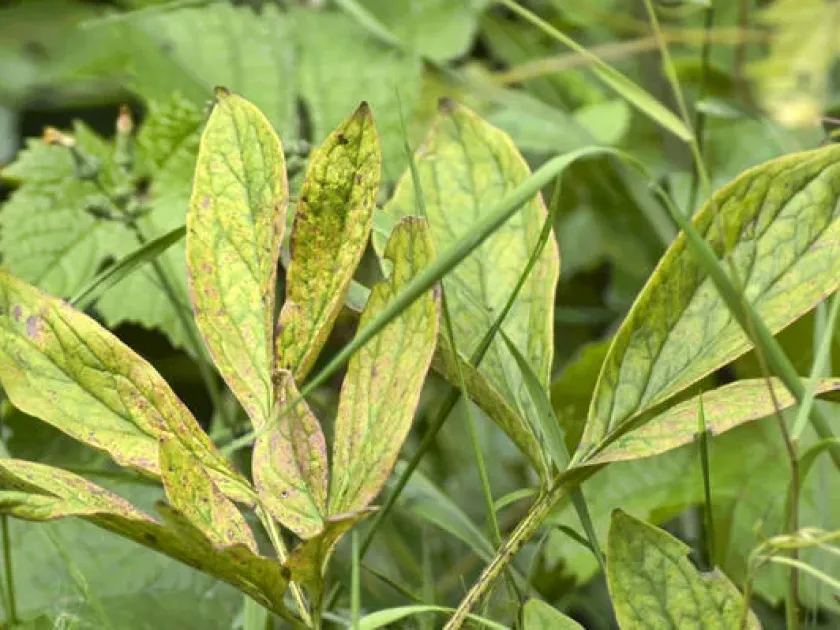
The primary symptom of the infection is the development of a distinct mosaic pattern on the leaves, characterized by alternating yellow and dark green patches.
Affected plants typically show stunted growth, shortened internodes, and a general lack of vigor compared to healthy specimens in the field.
Leaf deformation is a common sign, with leaves often becoming wrinkled, crinkled, or showing uneven growth across the leaf blade.
In advanced stages of the disease, necrotic spots may appear on the foliage, which eventually dry out and lead to premature leaf senescence and abscission.
The overall morphological changes result in a sickly, pale appearance that makes the plant unable to support normal physiological functions and biomass production.
Pathogen
The disease is caused by the Albetovirus gammatabaci, a virus belonging to the Albetovirus genus, which primarily infects species within the Solanaceae family.
The pathogen utilizes the host plant's internal machinery to replicate its genetic material, eventually disrupting normal cell signaling and metabolic pathways.
Viral particles exhibit significant environmental stability, allowing them to persist in soil, debris, and agricultural implements for extended periods.
Transmission occurs predominantly through mechanical contact during routine field operations, as well as via specialized insect vectors that feed on plant sap.
Once inside the host, the virus spreads systemically through the phloem, eventually colonizing most parts of the plant and establishing a chronic infection.
Conditions for development
Warm and humid weather conditions create an environment that favors both the reproduction of insect vectors and the rapid spread of the viral agent.
Plants subjected to environmental stress, such as drought, nutrient deficiencies, or soil compaction, are significantly more susceptible to successful viral infection.
High planting densities facilitate rapid spread, as close contact between leaves allows the virus to transfer easily between infected and healthy plants.
The lack of proper crop rotation cycles allows the virus to build up in the soil, increasing the inoculum load for subsequent planting seasons.
Poor sanitation practices, especially regarding the shared use of tools and machinery, remain a primary factor in the transmission of the virus across fields.
Why it matters
The economic impact of Tobacco yellow mosaic virus is significant, leading to substantial yield reductions and a degradation in the quality of the harvested crop.
The chemical composition of the leaves is negatively altered, which impairs the smoking quality, aroma, and overall market value of the tobacco product.
Severe infections during the early vegetative stage can lead to a total loss of commercial viability for individual plants or even entire plot sections.
By compromising the plant's immune system, the virus increases the susceptibility of the crop to secondary pathogens, including fungi and bacteria.
The inability to cure infected plants makes disease management costly, often requiring the culling of entire sections to stop the spread to unaffected areas.
Protection
The most effective strategy involves the use of certified virus-free planting material and the selection of resistant cultivars bred for high tolerance.
Implementing strict spatial isolation and maintaining a rigorous field monitoring program are essential for the early detection and containment of the pathogen.
Weed control is a critical component of disease prevention, as many common weeds serve as symptomless reservoirs for the virus throughout the season.
- Regular disinfection of pruning tools and equipment between field blocks.
- Integrated pest management to reduce the population of insect vectors.
- Immediate removal and destruction of symptomatic plants to reduce inoculum.
Adhering to a diverse crop rotation plan that excludes susceptible species for several years is vital to reduce the soil-borne viral inoculum potential.
Discussion
No discussions yet — be the first.