
Suede Bolete
Xerocomus pruinatus
Description
Symptoms
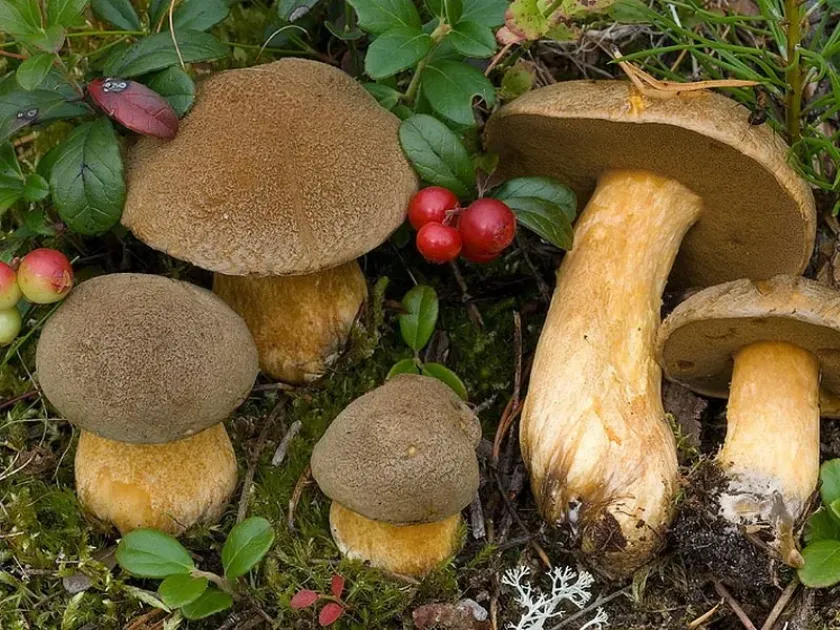
The primary identification feature is the cap, which has a matte texture that looks as if it has been dusted with powder. This unique "pruinose" appearance is the origin of its common and scientific names.
The pore surface (hymenophore) is bright yellow when young, transitioning to an olive-yellow color as the fruit body matures. The flesh often shows a slight bluish staining when cut or bruised.
The stem is typically cylindrical and firm, often covered with fine longitudinal fibrils or scales. The flesh inside the stem is yellowish and relatively dense compared to other boletes.
The scent is described as mild and pleasant, with a classic earthy mushroom aroma. These sensory traits are reliable indicators for field identification.
While similar to other related species, the combination of the matte cap and the specific color of the pores provides clear diagnostic criteria for experienced foragers.
Pathogen
The Suede Bolete (lat. Xerocomus pruinatus) belongs to the Boletaceae family. It is crucial to clarify that this fungus is not a plant disease and does not act as a pathogen for any crops, forest trees, or ornamental plants.
As a mycorrhizal fungus, it forms a symbiotic relationship with trees. This association is beneficial for the host plant, as the fungal mycelium helps the tree access minerals and water more efficiently from the forest soil.
Biologically, the organism functions as a decomposer of organic matter, breaking down leaf litter and contributing to the nutrient cycle in forest environments.
Modern mycology recognizes this species as a vital component of healthy ecosystems, rather than a threat to vegetation or human-cultivated plants.
Labeling this fungus as a plant disease is a fundamental taxonomic and biological error, as it lacks the physiological traits required to parasitize living plant tissues.
Conditions for development
The species is primarily found in deciduous and mixed woodlands, often forming symbiotic relationships with oak, beech, and hornbeam trees.
The optimal time for fruit body production is from late summer through late autumn, depending on local rainfall and temperature patterns.
It prefers well-drained, slightly acidic soils rich in humus. Locations such as forest edges, shaded paths, and clearings are typical habitats for this fungus.
High humidity and moderate temperatures ranging between 12 and 20 degrees Celsius are the primary triggers for fungal activity and the emergence of fruiting bodies.
The overall health of the forest canopy and the presence of established tree roots are essential for the long-term vitality of the underground mycelial network.
Why it matters
The Suede Bolete is entirely harmless to plant life. It does not exert any negative pressure on the flora and is never involved in agricultural damage.
There is no economic harm associated with this fungus. Its existence in a forest is a sign of ecological balance rather than a pest infestation.
Misidentifying this fungus as a disease-causing agent can lead to unnecessary waste of resources and potential environmental harm through the misuse of fungicides.
As a non-parasitic organism, it poses no threat to garden plants or commercial timber production; on the contrary, it aids in soil stabilization and nutrient uptake for its symbiotic tree hosts.
The only potential "harm" associated with the species is accidental consumption of misidentified look-alikes, which is why proper identification is always recommended for foragers.
Protection
No protection measures are necessary or recommended for the Suede Bolete. It is a natural part of the environment and requires no management.
Fungicides should never be applied to control this fungus, as it would disrupt the natural soil microbiota and damage the health of the surrounding forest trees.
Conservation of the natural forest habitat is the only action required to support this species, as it relies on undisturbed soil conditions and the presence of healthy trees.
Educational initiatives that correctly identify the fungus as a non-pathogen are the best way to handle concerns about its presence in landscape or forest areas.
If found on private land, simply enjoy the presence of this beneficial fungus, as it indicates a fertile and biologically active soil environment.
Discussion
No discussions yet — be the first.