
Rust disease
Uredinales
Description
Symptoms
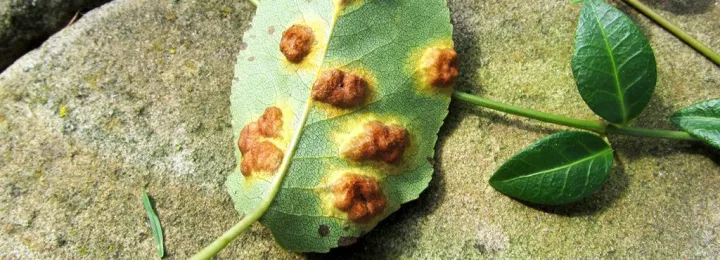
The most characteristic symptom is the appearance of small, circular or elongated pustules on the foliage, stems, or leaf sheaths.
These pustules are often filled with a mass of dusty spores that appear rusty orange, yellow, or reddish-brown in color.
As the infection progresses, the pustules may darken as the fungus transitions to the teliospore stage, which serves as a survival mechanism.
Affected plants often display chlorosis (yellowing) around the pustules, and in severe cases, the entire leaf may wilt and die prematurely.
Stunting and reduced vigor are common secondary symptoms, as the plant loses energy and water to the fungal parasite.
Pathogen
Rust diseases are caused by specialized fungi belonging to the order Uredinales, which are classified as obligate biotrophic parasites.
These fungi require living host tissue to complete their complex life cycle, which often involves multiple spore stages and sometimes two different plant hosts.
The fungi typically penetrate the host plant through the stomata, establishing a network of hyphae that extracts nutrients directly from plant cells.
Once established, the fungus produces specialized structures called uredinia, which erupt through the plant epidermis to release thousands of infectious spores.
These spores are highly mobile and can be carried by wind currents over hundreds of kilometers, facilitating the rapid spread of the disease across regions.
Conditions for development
Rust development is heavily dependent on moisture, particularly dew, light rain, or high humidity, which allow the spores to germinate on the leaf surface.
Optimal temperatures for most rust species range between 15°C and 25°C, creating a perfect environment for rapid colonization of host plants.
Dense canopies and poor air circulation often exacerbate the problem by keeping the foliage wet for longer durations after rain or irrigation.
High nitrogen availability can stimulate the production of lush, succulent growth that is more susceptible to fungal entry and establishment.
Mild winters and cool, wet springs often lead to early-season outbreaks, as the fungus can overwinter on winter cereals or perennial grasses.
Why it matters
The primary impact of rust disease is the reduction of the host's photosynthetic capacity, which directly limits grain filling and overall biomass production.
Infected plants suffer from increased transpiration rates and nutrient loss, leading to thin, shriveled kernels and reduced seed quality.
When an epidemic occurs early in the growing season, yield losses in wheat and other cereals can exceed 50 percent if left untreated.
Economic losses are not limited to yield quantity but also include qualitative degradation, such as lower protein content and reduced baking quality.
Additionally, the stress caused by the infection makes the crop more vulnerable to environmental extremes like drought or lodging.
Protection
The most sustainable method for controlling rust is the breeding and deployment of resistant crop varieties that can withstand local fungal strains.
Cultural practices, such as controlling volunteer host plants and maintaining proper field hygiene, are essential to break the infection cycle.
Balanced fertilization, particularly avoiding excessive nitrogen, helps maintain plant health and natural resistance levels.
When disease pressure is high, the strategic application of systemic fungicides is necessary to prevent significant yield losses.
- Rotation of crops to reduce the survival of fungal inoculum.
- Monitoring fields for the first signs of pustules at critical growth stages.
- Use of certified, fungicide-treated seeds.
- Application of foliar fungicides based on scouting data and weather forecasts.
Discussion
No discussions yet — be the first.