
Powdery mildew
Uncinula
Description
Symptoms
Early symptoms appear as light green or chlorotic spots on leaves, which soon become covered with the characteristic powdery white fungal growth.
Infected leaves often curl, become brittle, and may show stunted growth, significantly reducing the photosynthetic capacity of the plant.
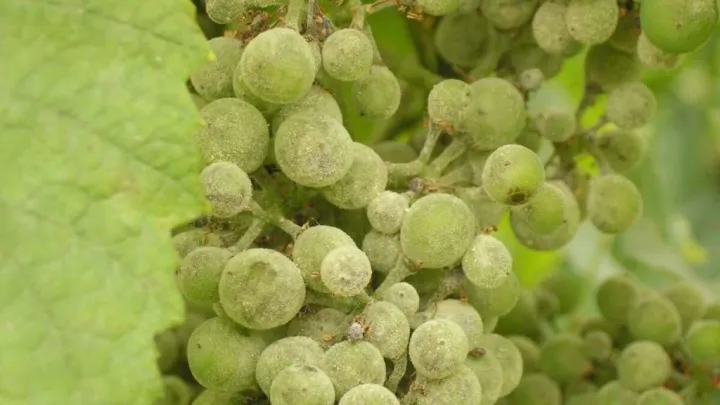
The fungus attacks flower clusters, causing them to dry up and fall off; berries may also become covered in dust-like spores and cease to grow.
As infected berries continue to enlarge, the hardened skin often cracks, exposing the seeds and making the fruit highly susceptible to secondary infections.
In severe cases, the infected vines emit a distinct, musty odor, particularly noticeable in warm and humid conditions throughout the vineyard.
Pathogen
The causative agent of powdery mildew is the ectoparasitic fungus Erysiphe necator (formerly known as Uncinula necator). It is a major fungal threat in viticulture worldwide.
The fungus grows on the surface of green plant tissues, feeding by inserting haustoria into the epidermal cells to extract nutrients from the host plant.
It forms a white, spider-web-like mycelium that eventually covers leaves, shoots, and berries with a greyish, powdery appearance caused by masses of conidia.
In winter, the fungus survives in the form of cleistothecia in bark crevices or as dormant mycelium within the buds of the grapevines.
As temperatures rise in spring, the fungus releases primary inoculum, initiating the infection cycle on developing shoots and foliage.
Conditions for development
Powdery mildew thrives in warm temperatures, with the optimal range being between 20°C and 25°C (68°F–77°F) for rapid mycelial growth and sporulation.
Unlike downy mildew, this fungus does not require free water on the leaf surface; high humidity is generally sufficient for the spores to germinate.
Poor vine canopy management, such as dense foliage and lack of airflow, creates the perfect microclimate for the disease to flourish quickly.
Fluctuating temperatures and high humidity levels during the night are particularly conducive to the rapid spread of the conidia across the vineyard.
The presence of overwintering structures in the older bark of the vine serves as a persistent source of infection if not properly managed.
Why it matters
Powdery mildew is considered one of the most destructive grape diseases, as it can ruin both the yield quantity and the sensory quality of the wine.
Infected berries are prone to cracking, which facilitates the development of other rots and drastically reduces the commercial value of the crop.
When shoots are heavily infected, they fail to mature properly, leading to poor lignification and increased susceptibility to winter damage and cold stress.
Chronically diseased vineyards suffer from reduced vigor, leading to long-term decline and potential death of the vines over several growing seasons.
The economic impact involves both the cost of intensive fungicide programs and the loss of produce that becomes unfit for human consumption.
Protection
Cultural practices are the first line of defense; maintaining an open canopy through shoot thinning and leaf removal is essential to improve airflow.
Chemical control should be implemented early, starting from the time shoots reach 10–15 cm to prevent the establishment of the fungus on the vine.
Sulfur-based fungicides have been used traditionally and remain effective, though systemic fungicides are preferred for better control during bloom and fruit set.
Resistance management is crucial, which involves rotating different classes of fungicides to prevent the fungus from developing immunity to the treatments.
- Regular canopy management and pruning for improved ventilation.
- Sanitation by removing and burning infected plant debris.
- Applying preventive sulfur sprays during early growth stages.
- Utilizing systemic fungicides as soon as initial symptoms are observed.
Discussion
No discussions yet — be the first.