
Tomato spotted wilt virus
Tomato Taino mottle ?begomovirus
Description
Symptoms
Symptoms of TSWV are notoriously variable and can easily be mistaken for other diseases or physiological disorders. The hallmark symptom is the bronzing or necrosis of young, developing leaves.
Leaf symptoms include ring spots, chlorotic mosaics, and necrotic streaking. Infected plants often show significant stunting, with the apical growing points becoming twisted or dying back.
Stems may develop elongated necrotic lesions, leading to breakage and general plant weakness. The systemic nature of the infection often leads to an uneven distribution of symptoms throughout the plant.
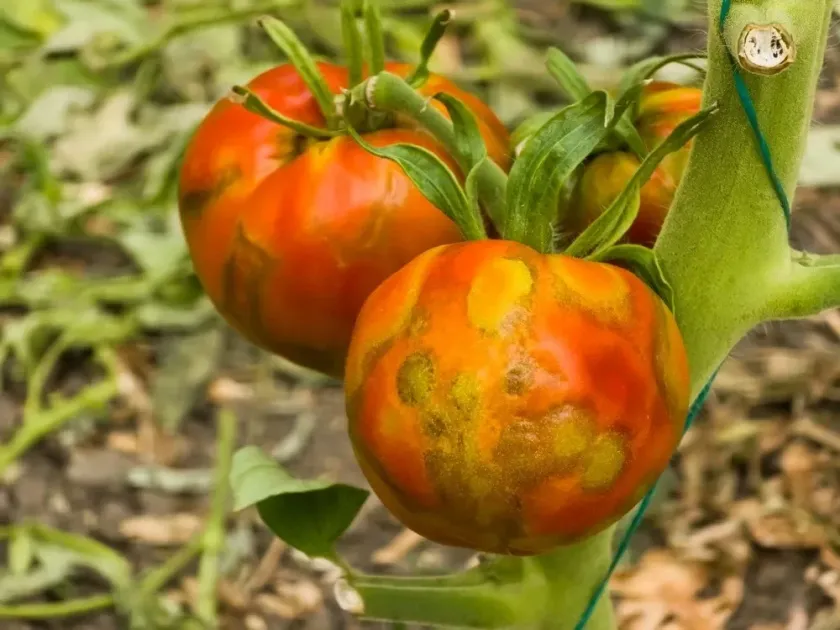
Fruits produced by infected plants are highly characteristic, showing yellow or white blotches, rings, and irregular maturation patterns that ruin the aesthetic and commercial quality of the produce.
- Bronze appearance of apical leaves.
- Ring-spot patterns on fruit.
- Stem necrosis and stunting.
- Distorted growth and yield loss.
Pathogen
The causative agent of this disease is the Tomato spotted wilt orthotospovirus (TSWV), a member of the Orthotospovirus genus. It is a highly significant plant virus with one of the broadest host ranges among all known plant pathogens.
The virus is primarily transmitted by several species of thrips, with the Western flower thrips (Frankliniella occidentalis) being the most efficient and widespread vector. The virus replicates within the insect, ensuring lifelong infectivity for the thrips.
This is a systemic viral disease that moves through the plant's vascular system, eventually affecting every part of the host, including leaves, stems, and fruits.
The virus exhibits significant biological diversity, allowing it to adapt to different environmental conditions and host plants. It can persist in perennial weeds, which serve as overwintering reservoirs.
Transmission occurs very quickly once an infected thrips begins to feed, often requiring only a brief period of ingestion to transfer the viral particles into healthy plant cells.
Conditions for development
The development of TSWV epidemics is inextricably linked to the population dynamics of the thrips vector. Warmer temperatures favor the rapid reproduction and increased activity of these insects.
High levels of weed pressure, especially the presence of plants belonging to the Solanaceae and Asteraceae families, provide essential reservoir hosts for both the virus and the thrips.
In greenhouses, dry conditions often facilitate the movement of thrips between plants. Poor sanitation, such as leaving debris from previous seasons, can initiate an outbreak early in the crop cycle.
The introduction of infected transplants into a new growing area is a common way the virus is spread over long distances, bypassing initial local infestation stages.
Environmental stress, including drought or extreme heat, can make the host plants more vulnerable to the transmission of the virus during thrips feeding.
Why it matters
The economic impact of TSWV is severe, often resulting in total crop failure if infection occurs at an early stage. The virus significantly reduces both the volume and quality of the yield.
Affected fruits are usually unmarketable due to their deformed shapes and mottled appearance, leading to substantial financial losses for growers.
Because the virus affects so many different vegetable and ornamental species, it creates a persistent threat in regions where multiple crop types are grown in close proximity.
Managing the disease requires frequent insecticide applications to control the vector, which increases production costs and can lead to the development of pesticide resistance in thrips.
Ultimately, the loss of plant vigor and the inability to cure infected plants force farmers to cull large portions of their crop, impacting the overall stability of the farm's revenue.
Protection
Effective management focuses on aggressive thrips control. Growers should utilize integrated pest management (IPM) strategies, including the rotation of systemic and contact insecticides.
Sanitation is paramount; removing all weed hosts from the surroundings of fields and greenhouses is necessary to eliminate the virus's primary overwintering sources.
Early detection through the use of blue or yellow sticky traps allows growers to monitor thrips populations and respond before the virus spreads significantly.
Selecting and planting TSWV-resistant tomato hybrids is currently the most effective, sustainable, and recommended strategy for growers in areas where the virus is endemic.
Physical barriers such as insect-proof netting in greenhouses and the use of reflective mulches can significantly reduce the landing and feeding success of thrips on crop plants.
Discussion
No discussions yet — be the first.