
Thelephora terrestris
Thelephora terrestris
Description
Symptoms
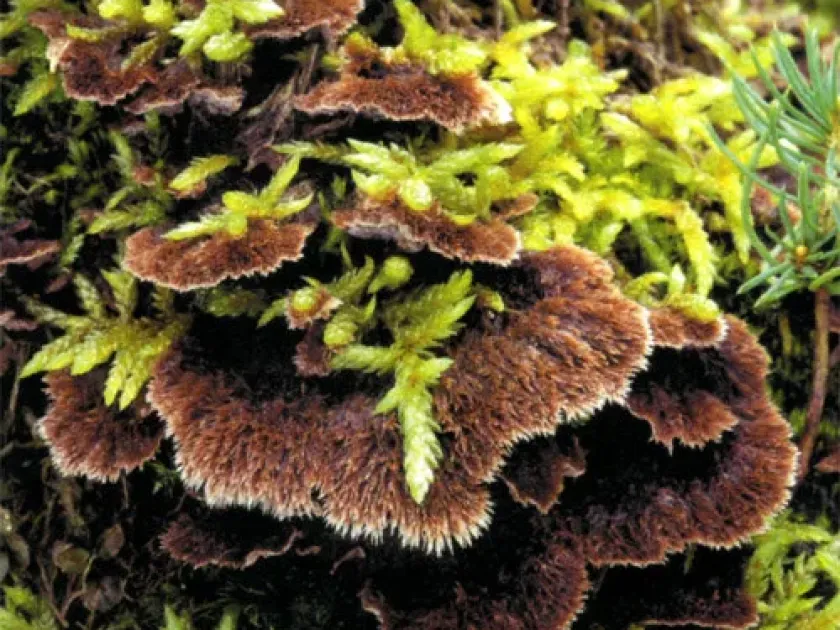
The most distinctive sign of infection is the presence of brown, leathery, rosette-like or fan-shaped fungal fruit bodies growing around the base of the seedlings.
The mycelium forms a dense collar around the root collar, physically attaching to the bark and extending upward along the lower portion of the stem.
Symptoms in the plant include a loss of turgor pressure, followed by chlorosis (yellowing) and eventual browning or necrosis of the needles and the whole plant.
Upon closer inspection, the bark of the affected seedlings often appears softened, discolored, or showing clear signs of necrosis where the fungus has adhered.
- Brown, leathery fungal structures around the stem base.
- A tight fungal sheath or "collar" around the root neck.
- Stunted growth compared to healthy neighboring seedlings.
- Yellowing and browning needles leading to plant death.
Pathogen
Thelephora terrestris is a basidiomycete fungus that often acts as a pathogen in forest nurseries, particularly affecting young conifer seedlings during their development.
Biologically, it manifests as a leathery, fan-shaped fungus that can live on decaying organic matter or establish itself as a facultative parasite on living stems.
The fungus develops mycelial mats that physically envelop the base of the stems, effectively strangling the young seedlings as they grow.
The life cycle of this pathogen involves the production of brown basidiocarps, which release large quantities of spores during periods of high humidity and rainfall.
These spores are wind-dispersed and can easily colonize new areas, especially in environments rich in decomposing wood or organic debris.
Conditions for development
Thelephora terrestris thrives in environments characterized by high soil moisture and stagnant air, which are common in dense nursery beds.
The use of fresh sawdust or wood chips as mulch provides a perfect substrate for the fungus to establish itself and eventually migrate onto the seedlings.
Inadequate drainage in nursery plots creates a microclimate that prevents the soil surface from drying, promoting continuous fungal growth.
Extended periods of wet, cool weather late in the growing season provide the necessary conditions for massive spore germination and colonization.
High planting densities that prevent sunlight from reaching the soil surface exacerbate the problem by maintaining a humid environment suitable for the pathogen.
Why it matters
The primary economic damage caused by Thelephora terrestris is the significant mortality rate of conifer seedlings (pine, spruce, larch) in nursery settings.
By encircling the stem, the fungus interferes with the plant's ability to transport water and nutrients, leading to physiological drought and death.
Affected seedlings are significantly weakened, becoming more susceptible to other secondary pathogens and environmental stressors that further devastate the nursery.
In cases of high infection pressure, entire sections of seedbeds can be lost, leading to substantial financial losses for forest nurseries.
The fungus is difficult to eliminate once it has established itself in the soil, often necessitating soil treatment or relocation of the nursery beds.
Protection
Effective management begins with proper cultural practices, such as ensuring adequate spacing between seedlings to promote airflow and soil drying.
Avoid using untreated wood-based mulches near seedlings, as these materials are primary sources of infestation for Thelephora terrestris.
Implementing a strict sanitation program is crucial, involving the immediate removal and destruction of any seedlings showing signs of fungal colonization.
Improve soil drainage and ensure that nursery beds are situated on sites that do not experience waterlogging during rainy periods.
When necessary, apply approved fungicides that target basidiomycetes as a preventative measure, specifically focusing on the root collar area of the plants.
Discussion
No discussions yet — be the first.