
Tanzanian lethal yellowing
Tanzanian lethal decline phytoplasma
Description
Symptoms
The initial symptom is the premature dropping of fruits, regardless of their developmental stage, often accompanied by blackening of the fruit stalks.
Death of inflorescences occurs, where the developing flower spikes blacken and wither before they can open or produce viable pollen.
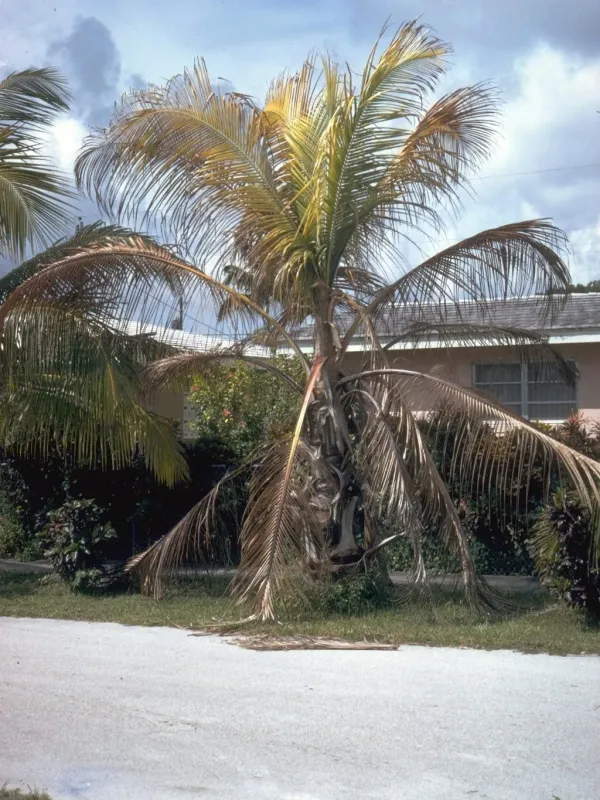
Leaves begin to yellow, typically starting from the lower parts of the canopy and progressing rapidly upward until the entire crown is discolored.
As the disease progresses, affected fronds become dry, brittle, and eventually snap at the base, hanging down around the trunk.
The final symptom is the death of the apical meristem, which leads to the total cessation of growth and the eventual death of the palm.
Pathogen
The disease is caused by phytoplasmas, which are small, cell-wall-less prokaryotes that colonize the phloem tissues of the host plant.
These pathogens are obligate parasites, surviving only within the vascular system of the palm or inside their specific insect vector.
The primary vector responsible for transmitting the disease in the field is the planthopper species Myndus adiopodoumeensis.
Transmission occurs when the insect feeds on the phloem sap of an infected tree and subsequently transfers the phytoplasmas to a healthy host.
Once injected into the palm, the phytoplasmas multiply and spread throughout the plant, systematically disrupting its vital functions.
Conditions for development
The prevalence of the disease is heavily influenced by the population density of Myndus planthoppers in the surrounding environment.
Favorable weather conditions, particularly high humidity and stable temperatures, facilitate rapid breeding and dispersal of the vectors.
High-density monoculture plantations provide a continuous source of food and breeding sites, fueling the rapid spread of the pathogen.
The movement of the vector between adjacent plantations and across regions is a key factor in the geographic expansion of the disease.
Neglected fields with overgrown weed cover provide additional habitats for vectors, increasing the overall risk of infection on the main crop.
Why it matters
This disease is devastating for coconut production because it causes rapid mortality in infected palm trees with no known chemical cure.
The economic impact is severe, as entire plantations can be wiped out, leading to total loss of income for farmers and local communities.
In addition to economic losses, the disappearance of palm stands alters the local landscape and threatens the food security of regions dependent on coconuts.
The inability to control the disease once established forces growers to abandon affected lands for long periods or replace them with other crops.
The cumulative damage from widespread outbreaks poses a systemic threat to the viability of the coconut industry in East Africa.
Protection
The standard management practice involves the rapid identification and immediate removal (roguing) of symptomatic palms to reduce the inoculum level.
The use of resistant or tolerant coconut varieties is the most effective long-term strategy to combat the disease in affected areas.
Vector management using targeted insecticide applications can help reduce insect numbers, though this is difficult on a large, landscape scale.
Strict quarantine measures are implemented to prevent the movement of potentially infected seedlings or planting material between regions.
Regular surveillance and community awareness programs are essential to detect and manage new outbreaks before they become uncontainable.
Discussion
No discussions yet — be the first.