
Sphacelia
Sphacelia
Description
Symptoms
The earliest symptom of Sphacelia infection is the appearance of droplets of sticky, viscous liquid, often called honeydew, on the surface of the cereal spikelets during the bloom period.
Upon closer inspection, infected florets may appear slightly distorted or forced open, as the fungal mycelium grows aggressively, often pushing the remnants of the ovary out of the glumes.
A noticeable white or creamy fungal mass covers the affected tissues, replacing the developing grain. This is the stage where the fungus is most active in producing asexual conidia for further infection.
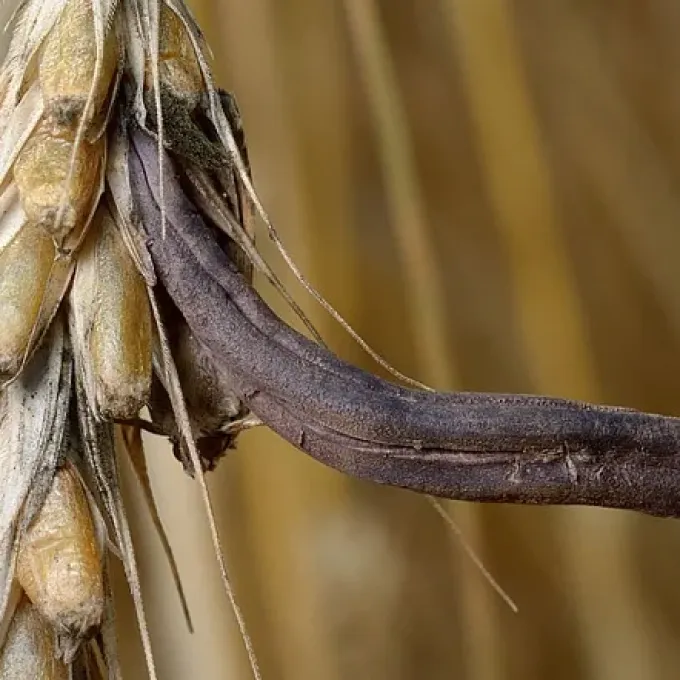
As the crop matures, the most distinct sign becomes apparent: the presence of dark, purple-to-black, horn-shaped sclerotia protruding from the spikelets where the grain kernels should be located.
In fields with high infection levels, a faint, sugary smell may be detected, and the sticky honeydew can lead to the growth of secondary saprophytic fungi, which may cause a black discoloration on the heads.
Pathogen
Sphacelia is the asexual, or conidial, stage of the parasitic fungus Claviceps purpurea, which is widely recognized as the cause of ergot disease. It belongs to the Ascomycota phylum and is a significant pathogen for various cereal crops and grasses.
The life cycle involves the formation of hard, dark fungal bodies called sclerotia in the grain head. When these sclerotia reach the soil, they germinate under favorable conditions to produce spores that infect host plants during the flowering stage.
During the primary infection, the fungus colonizes the ovary of the floret and replaces the developing grain with a mass of mycelium. This phase is characterized by the production of conidia within a sticky fluid known as honeydew.
Insects are attracted to this sweet, sticky honeydew and play a crucial role in spreading the conidia to neighboring, uninfected florets, thereby accelerating the secondary spread of the disease throughout the field.
Eventually, the fungal mass hardens into a mature sclerotium (ergot), which acts as the survival unit that persists in the field or gets harvested along with the healthy grain, ready to initiate the cycle again.
Conditions for development
Cool, wet weather during the flowering stage of cereals is the primary environmental driver for Sphacelia development. Sustained moisture is necessary for the germination of sclerotia in the soil.
A prolonged flowering period is a significant risk factor. Because the fungus infects the plant through open florets, crops that bloom unevenly or slowly are significantly more susceptible to infection.
The presence of wild grasses, such as couch grass or wild rye, in the vicinity of crop fields acts as a major reservoir for the pathogen, allowing it to bridge the gap between growing seasons.
Poor crop rotation practices, where susceptible cereals are grown consecutively, lead to a high accumulation of overwintering sclerotia in the top layer of the soil, increasing the primary infection pressure.
High relative humidity and frequent dew in the mornings promote the survival and germination of conidia, ensuring the fungus can successfully infect as many florets as possible during the critical pollination window.
Why it matters
The most immediate harm caused by Sphacelia is the direct loss of grain yield, as the infected florets fail to produce grain, resulting in lower harvest weights and reduced profitability for the farmer.
The presence of sclerotia poses a major health risk because they contain toxic alkaloids. If ingested by humans or livestock, these alkaloids cause ergotism, a serious condition affecting blood circulation and the nervous system.
Contaminated grain is subject to strict quality regulations. Producers often face heavy discounts, rejection of shipments, or the need for expensive secondary processing to remove sclerotia from the final product.
Using infected seed batches for planting spreads the pathogen to new fields. This complicates agronomic management and increases the cost of crop production due to the necessity of improved seed cleaning technologies.
Beyond the quantitative loss, the presence of ergot lowers the overall market value of the crop, making it unsuitable for premium-grade food processing or high-quality animal feed markets.
Protection
The most effective strategy for managing Sphacelia is the exclusive use of high-quality, ergot-free seeds. Seed cleaning systems using gravity and air separation are essential for removing sclerotia from seed lots.
Implementing a robust crop rotation plan, where cereals are alternated with non-host crops (such as legumes or broad-leaf plants), is crucial for breaking the disease cycle and reducing soil inoculum levels.
Effective management of wild grasses and weeds surrounding the fields is necessary to eliminate the primary sources of infection that can blow into the crop during the flowering window.
Deep plowing after harvest helps bury the sclerotia to a depth where they cannot germinate or release spores, thereby reducing the risk of disease for the subsequent year's crop.
- Selection of cereal varieties with short and uniform flowering periods.
- Optimal fertilization to promote rapid and uniform growth.
- Early harvest to prevent the shedding of infected grains and sclerotia back into the field.
Discussion
No discussions yet — be the first.