
Witches broom of broom
Spartium witches
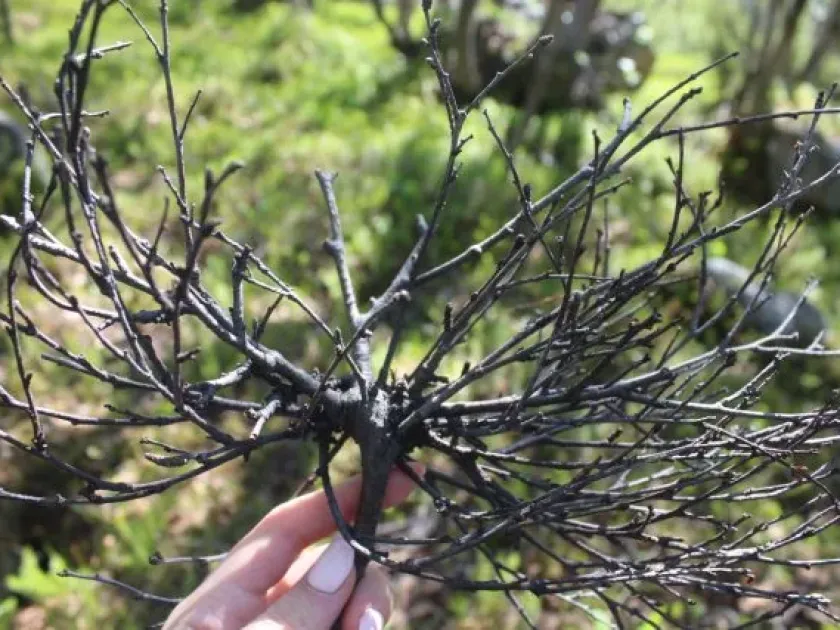
Description
Symptoms
The hallmark symptom is the formation of dense, tightly packed clusters of shortened shoots that resemble a broom. This condition occurs due to the breakdown of apical dominance, causing dormant buds to sprout prematurely.
Leaves on these abnormal clusters are usually undersized, chlorotic, or exhibit a pale yellow tint. This chlorosis is a direct result of impaired photosynthesis, as the plant struggles to process light effectively due to the systemic infection.
Flowering is significantly affected in broom plants with witches broom. The clusters either fail to produce flower buds entirely, or the flowers that do emerge are malformed, sterile, or fail to open, ruining the plant's ornamental appeal.
Over time, these distorted growths may develop necrosis, especially during winter months, as the tissues are often not properly hardened for cold weather. This further weakens the plant and invites opportunistic secondary infections.
- Proliferation of weak, broom-like shoots.
- Drastic reduction in internode length.
- Yellowing (chlorosis) of foliage.
- Inability to bloom properly.
- General decline and dieback of branches.
Pathogen
The disease known as "witches broom" in plants of the broom genus (Spartium) is primarily caused by phytoplasmas. These are small, cell wall-less microorganisms that reside and multiply within the phloem tissues of the host plant.
Phytoplasmas are obligate parasites, meaning they are entirely dependent on the host plant for their survival. By colonizing the plant's vascular system, they interfere with the translocation of nutrients and disrupt hormonal signals, leading to abnormal growth patterns.
The transmission of these pathogens is facilitated by insect vectors, most notably leafhoppers and psyllids. These insects acquire the phytoplasma by feeding on infected plant sap and then transmit it to healthy plants during their feeding cycle.
Because the disease is systemic, the phytoplasmas move throughout the entire plant, including the roots and crown. This makes the infection extremely difficult to eliminate once it has established itself within the plant's vascular tissues.
While phytoplasmas are the most frequent cause, certain viruses and fungal infections can also trigger the proliferation of adventitious shoots. Regardless of the specific agent, the biological response of the broom plant to these stresses is remarkably consistent.
Conditions for development
The spread of the disease is intrinsically linked to the population dynamics of insect vectors. Spring and summer months, when leafhopper activity peaks, are the most dangerous periods for healthy broom plants.
Environmental conditions that favor the rapid growth of these insects, such as warm temperatures and moderate humidity, significantly increase the risk of infection. Conversely, keeping insect populations in check is vital for disease prevention.
Plants subjected to environmental stress—whether through nutrient deficiencies, improper hydration, or site-related stress—are often more susceptible to colonization by phytoplasmas. However, even well-tended plants can become infected.
A plant can remain a latent carrier for a long period without showing dramatic symptoms. This "silent" phase is what allows the disease to propagate throughout garden collections or nursery stocks before it is finally noticed.
Weed management is critical as many common weeds act as alternative hosts for both the phytoplasmas and the insect vectors, creating a constant pressure of infection around the broom shrubs.
Why it matters
Witches broom is a lethal condition for the broom shrub. As the plant exhausts its metabolic resources trying to support the abnormal growth, its overall vitality declines, eventually leading to the death of the entire shrub.
The aesthetic harm is immediate and irreversible. A broom shrub affected by this malformation loses its characteristic graceful habit and becomes an eyesore, making it useless for landscape design purposes.
The infected shrub serves as a dangerous source of inoculum for other nearby susceptible plants. If not addressed, the infection can spread across the entire garden, necessitating the removal of multiple specimens.
In a nursery context, the presence of witches broom can cause severe financial losses. Infected batches must be destroyed to comply with phytosanitary standards and to protect the reputation of the nursery stock.
The systemic nature of the infection means that even vigorous plants can be brought to a state of total decline, leaving them vulnerable to other pests and diseases that finish off the weakened plant.
Protection
Currently, there is no chemical cure for phytoplasma infections in broom plants. The only effective strategy for managing witches broom is the immediate removal and destruction of the symptomatic plant to prevent further transmission.
Effective control relies heavily on integrated pest management, specifically targeting the insect vectors. Regular applications of insecticides can keep leafhopper populations low and significantly reduce the likelihood of disease spread.
Strict quarantine and inspection practices should be applied when introducing new nursery stock into your garden. Only purchase plants from reputable suppliers who implement rigorous plant health inspections.
Maintaining high standards of plant vigor is a key cultural practice. Providing adequate nutrition and ensuring proper soil conditions help the plant maintain its resilience against environmental stressors and potential pathogens.
All pruning tools used on infected or potentially infected plants must be disinfected thoroughly using alcohol or specialized disinfectant solutions. This prevents mechanical transmission of the pathogen from one branch or plant to another.
Discussion
No discussions yet — be the first.