
Sorosphaerula veronicae
Sorosphaerula veronicae
Description
Symptoms
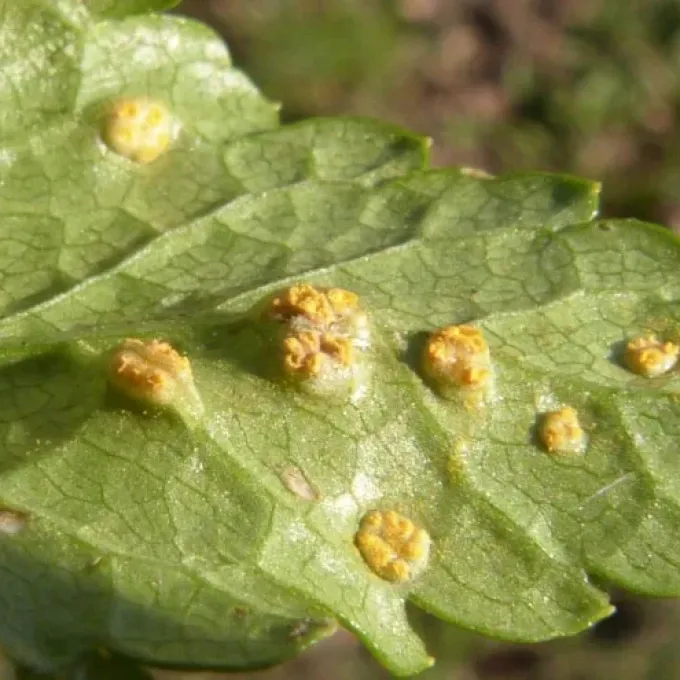
The most visible sign of the disease is the development of abnormal swellings, galls, or tumor-like growths on the roots, stems, or leaves of the affected plants.
Infected areas often lose their normal color, becoming pale or discolored. The overall structure of the plant becomes deformed as the parasite disrupts normal tissue development.
Plants severely affected by Sorosphaerula veronicae exhibit stunted growth, reduced vigor, and are often unable to produce healthy flowers or foliage.
In later stages, the gall tissue may begin to rot or decay due to the entry of secondary pathogens, which frequently leads to the total wilting and death of the plant.
Symptoms are typically most diagnostic during the peak growth phase of the plant, when the hypertrophy caused by the parasite becomes clearly apparent.
Pathogen
The disease is caused by Sorosphaerula veronicae, a microorganism classified within the Plasmodiophorids (Plasmodiophoromycetes). This obligate parasite is strictly dependent on its host plant species.
The pathogen's life cycle involves the formation of resting spores (cysts), which remain viable in the soil for several years, allowing the infection to persist even in the absence of a host.
Infection begins when resting spores release motile zoospores into the soil moisture. These zoospores actively swim toward the roots of the Veronica plants to initiate the colonization process.
Once inside the plant tissue, the pathogen develops into plasmodia, stimulating excessive cell division and tissue expansion, which results in the characteristic gall-like growths.
This parasite is highly host-specific, primarily affecting plants within the Veronica genus, and it creates significant physiological stress for the infected host.
Conditions for development
High soil moisture is the primary driver for the spread of Sorosphaerula veronicae. The pathogen relies on water films for its zoospores to travel effectively through the soil medium.
Moderate temperatures during the active growing season provide the ideal environment for the pathogen to infect its host and complete its life cycle stages.
Poorly drained, compacted, or waterlogged soils create a favorable environment for the pathogen to thrive and establish long-term infestations in the root zone.
Overcrowded plantings and high humidity levels further facilitate the rapid spread of the disease between neighboring plants within a garden or field plot.
Continuous cultivation of Veronica in the same location without appropriate crop rotation allows the pathogen population to build up to damaging levels in the soil.
Why it matters
The economic and aesthetic harm caused by Sorosphaerula veronicae is significant, as it leads to a decline in plant quality and overall productivity.
By interfering with the plant's vascular system and root function, the parasite prevents the uptake of nutrients and water, directly reducing the plant's health.
Infected Veronica plants lose their decorative value, making them unsuitable for landscaping or horticultural purposes, leading to potential loss of investment for growers.
The presence of the disease effectively ruins the site for the cultivation of susceptible species, as the soil remains contaminated with long-lived resting spores.
Without intervention, the infection can spread across an entire bed, necessitating the removal and disposal of all host plants to break the cycle of infestation.
Protection
Good agricultural practices are essential for managing this disease, with strict crop rotation being the most effective way to reduce pathogen pressure.
Prompt removal and destruction of infected plants are critical, ensuring the root systems are extracted entirely to minimize the return of spores to the soil.
Improving soil drainage and avoiding over-irrigation are vital measures to limit the movement of zoospores and prevent the onset of new infections.
Sanitation of tools and equipment used in areas where infection is present helps prevent the mechanical transfer of the pathogen to clean sections of the garden.
- Selection of disease-free planting material.
- Maintaining proper soil drainage to reduce waterlogging.
- Rigorous disposal of infected plant matter away from the site.
- Using fungicides if deemed appropriate for specific horticultural conditions.
Discussion
No discussions yet — be the first.